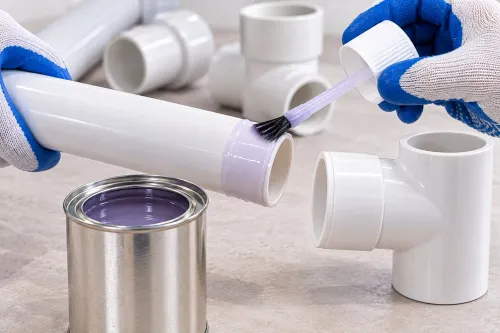
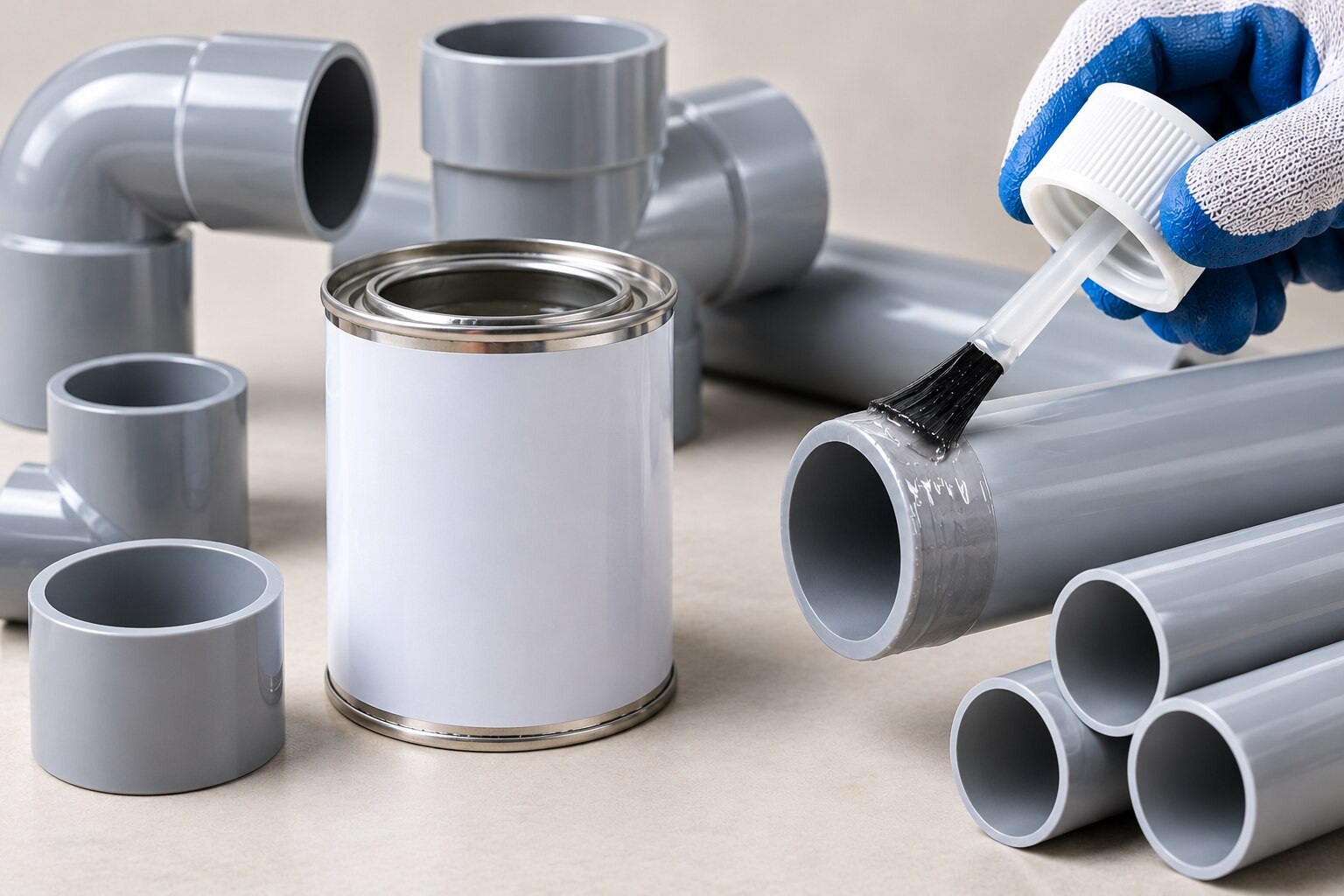
A solvent-weld socket joint needs the correct cement, but many pipe systems use gaskets, threads, compression fittings, flanges, or mechanical couplings instead. By identifying the pipe material, fitting design, service conditions, and manufacturer’s joining method, you can decide whether solvent cement is required before opening the container.
Key takeaways
- Use solvent cement only for manufacturer-approved solvent-weld joints.
- Clean, prime when specified, apply cement, and assemble before it skins over.
- Check pipe material, pressure rating, cement type, and manufacturer instructions first.
- Do not use solvent cement for threaded, compression, flanged, or incompatible joints.
Which pipe installations actually require solvent cement?
No: you need solvent cement only when the pipe and fitting are designed for a solvent-weld joint and the manufacturer specifies cement. The phrase do you need pvc solvent for every pipe installation bangalore has the same answer as anywhere else: no. Location does not change the joining method.
| Material or system | Joining method | Solvent-cement rule |
|---|---|---|
| PVC or UPVC | Solvent-weld socket, coupling, tee, valve, or adapter | Use cement specified for that material and system, including PVC electrical conduit and drainage installations. |
| CPVC | CPVC socket joint | Use cement labelled for CPVC. Ordinary PVC cement is not automatically suitable. Use a PVC-CPVC transition product only when its label and the applicable code permit it. |
| ABS | ABS socket joint | Use ABS-compatible cement, not a default PVC product. |
| Polyethylene or polypropylene | Heat fusion, electrofusion, or approved mechanical fitting | Do not use PVC solvent cement. |
| PEX | Crimp, clamp, press, or expansion system | Do not use solvent cement. |
| Gasketed, compression, threaded, flanged, union, or approved mechanical coupling | Mechanical or gasketed connection | Do not use solvent cement. |
A pvc solvent pipe installation need therefore depends on the pipe material, the fitting design, and the manufacturer’s instructions—not on the word “plastic” or the installation’s location. A rubber-gasket joint does not become solvent-welded because cement is added. Use only the specified cement; generic thinner or cleaning solvent cannot replace it.
How does a PVC solvent-weld joint get made?
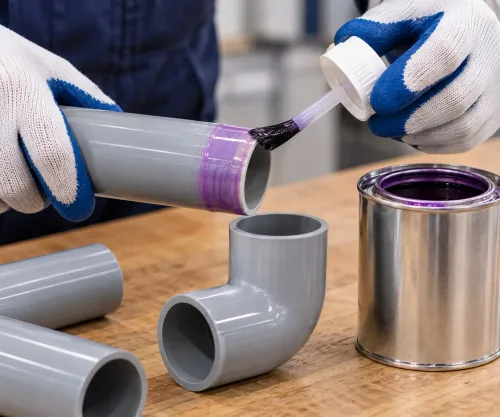
PVC pipe joining solvent explained in practical terms: the joint forms when prepared pipe and fitting surfaces are softened and bonded with the specified solvent cement. A dry-fit joint only checks alignment; it is not a finished connection.
1. Cut the pipe square. Remove burrs, and bevel or chamfer the outside edge when the pipe system instructions require it. A rough edge can scrape cement from the socket during insertion.
2. Clean and dry the pipe end and socket. Dry-fit the parts, push the pipe fully home, and mark the insertion depth. The mark shows whether the pipe bottoms out after cement is applied.
3. Apply the specified primer to both mating surfaces when required. Primer cleans and softens the plastic; cement contains the resin that forms the joint. Follow primer instructions for the pipe material, size, and cement system.
4. Apply solvent cement to the pipe and socket with the applicator supplied with, or recommended for, the container. Use cement made for that plastic. Generic thinner or cleaning solvent cannot replace solvent cement.
5. Insert the pipe fully with a slight quarter-turn, align the fitting, and hold it still during the initial set. Movement can weaken the bond or push the pipe out of its marked depth.
6. Wipe away excess cement without forcing a wet bead into the bore. Extra cement cannot compensate for dirt, moisture, incomplete insertion, or the wrong product.
That sequence answers when to use PVC solvent: use it for a specified solvent-weld socket joint, not for every pipe connection.
When is primer required, and how do you choose the cement?
Primer is not automatically mandatory. Check three controls: the cement label, the pipe and fitting instructions, and the plumbing code governing the project. Requirements change with material, diameter, cement system, and jurisdiction; a clear one-step cement does not prove that primer is universally unnecessary.
| Material and service | Cement choice | Key check |
|---|---|---|
| PVC or UPVC pressure water | PVC cement covered by ASTM D2564 | Match pressure class, diameter, and fluid |
| CPVC | Cement labelled for CPVC | Confirm operating-temperature rating |
| ABS | ABS-compatible cement | Do not substitute ordinary PVC cement |
| PE, PP, PEX, or threaded systems | Use the specified fusion, mechanical, or threaded method | Solvent cement is not the default |
Use this selection checklist before opening the container:
- Identify PVC, UPVC, CPVC, ABS, or another plastic.
- Check nominal diameter and pressure class.
- Confirm operating temperature and fluid.
- Classify the service as pressure water, irrigation, drain-waste-vent, conduit, or process piping.
- Confirm whether the joint is socketed or threaded.
- For pressure lines, match cement and fittings to the intended pressure and chemical exposure.
For potable water, verify approval for the complete pipe, fitting, primer, and cement system. NSF/ANSI/CAN 61 is a North American health-effects reference; Indian projects may specify BIS, local plumbing rules, or project documents. PVC solvent applications for contractors include several services, but each needs its labelled cement system.
Use PVC solvent only for the specified solvent-weld joint—not generic thinner or cleaning solvent.
How can you verify compatibility before opening the container?
Verify the markings and documents, not the colour of the liquid or the word “solvent” on its label. PVC solvent applications for contractors include pressure-water, irrigation, drain-waste-vent, conduit, and process piping, but each service can require a different cement grade and procedure.
1. Read the pipe marking. Record the material designation, nominal size, pressure or dimension class, and manufacturer’s product series. A marking such as CPVC, ABS, or PVC conduit changes the product you need.
2. Read the fitting marking next. Confirm the same material, socket size, and product series, then check that the fitting is a solvent-weld socket rather than a threaded, gasketed, or compression connection.
3. Inspect the cement label before opening the container. Confirm compatible plastics, diameter range, pressure or service limitations, primer instructions, potable-water status, and the cure-time table. Do not assume a cement rated for low-pressure drainage suits pressure water or chemical service.
4. Match the technical data sheet and installation manual to the exact pipe-and-fitting combination. ASTM D2564 identifies a standard for PVC solvent cements; it does not prove suitability for CPVC, ABS, chemical service, or drinking water.
For potable water, verify the complete system’s specified approval, such as NSF/ANSI/CAN 61 where required, or the applicable BIS, Indian plumbing, or project requirement.
Dharani and Company is worth considering only if it supplies the label, technical data sheet, safety data sheet, batch traceability, and compatibility information for your job. “Industrial grade” alone is not evidence of a match.
Related products
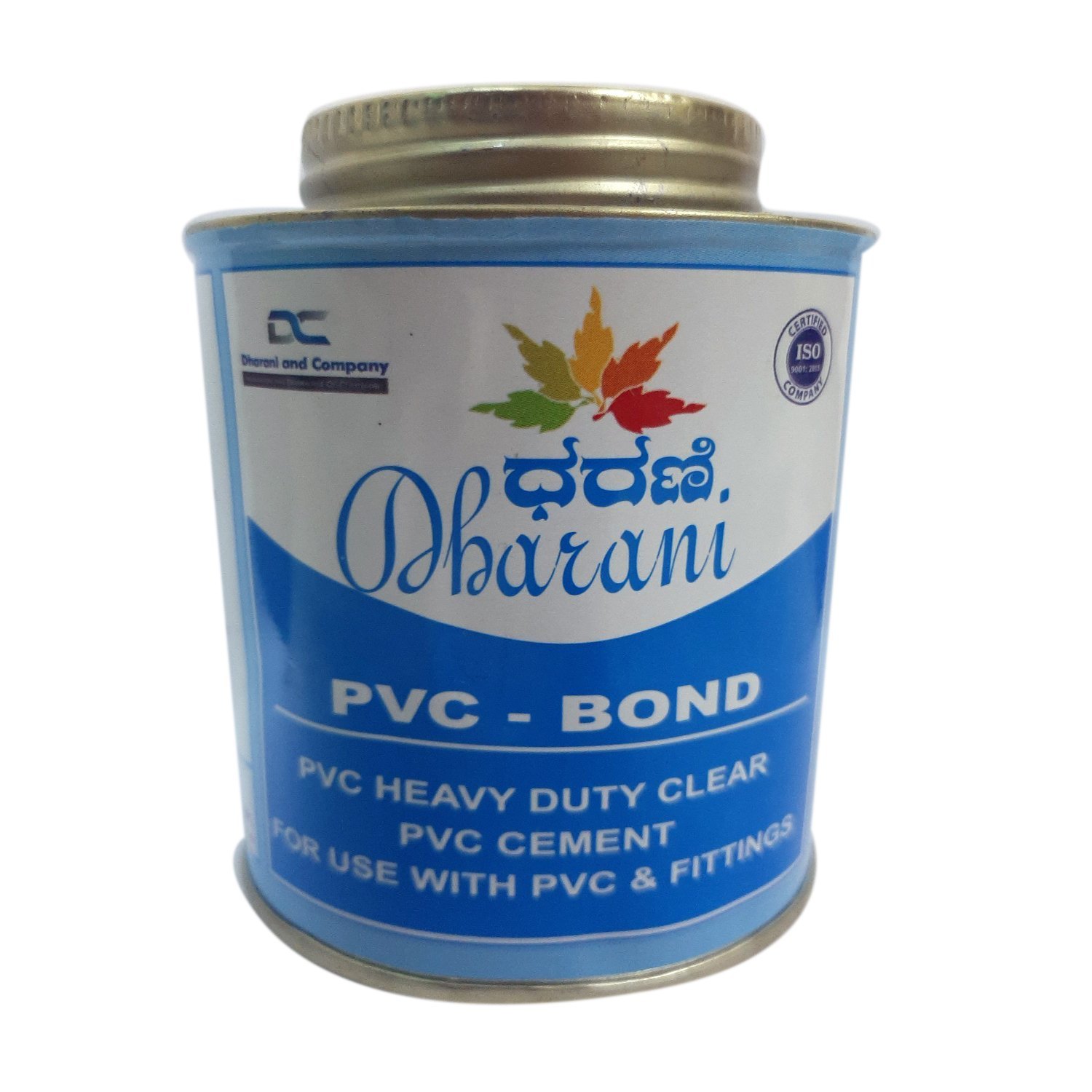 | PVC SOLVENT As a leading PVC solvent manufacturer, we take pride in delivering top-notch chemical solutions tailored to industrial needs. View product → |
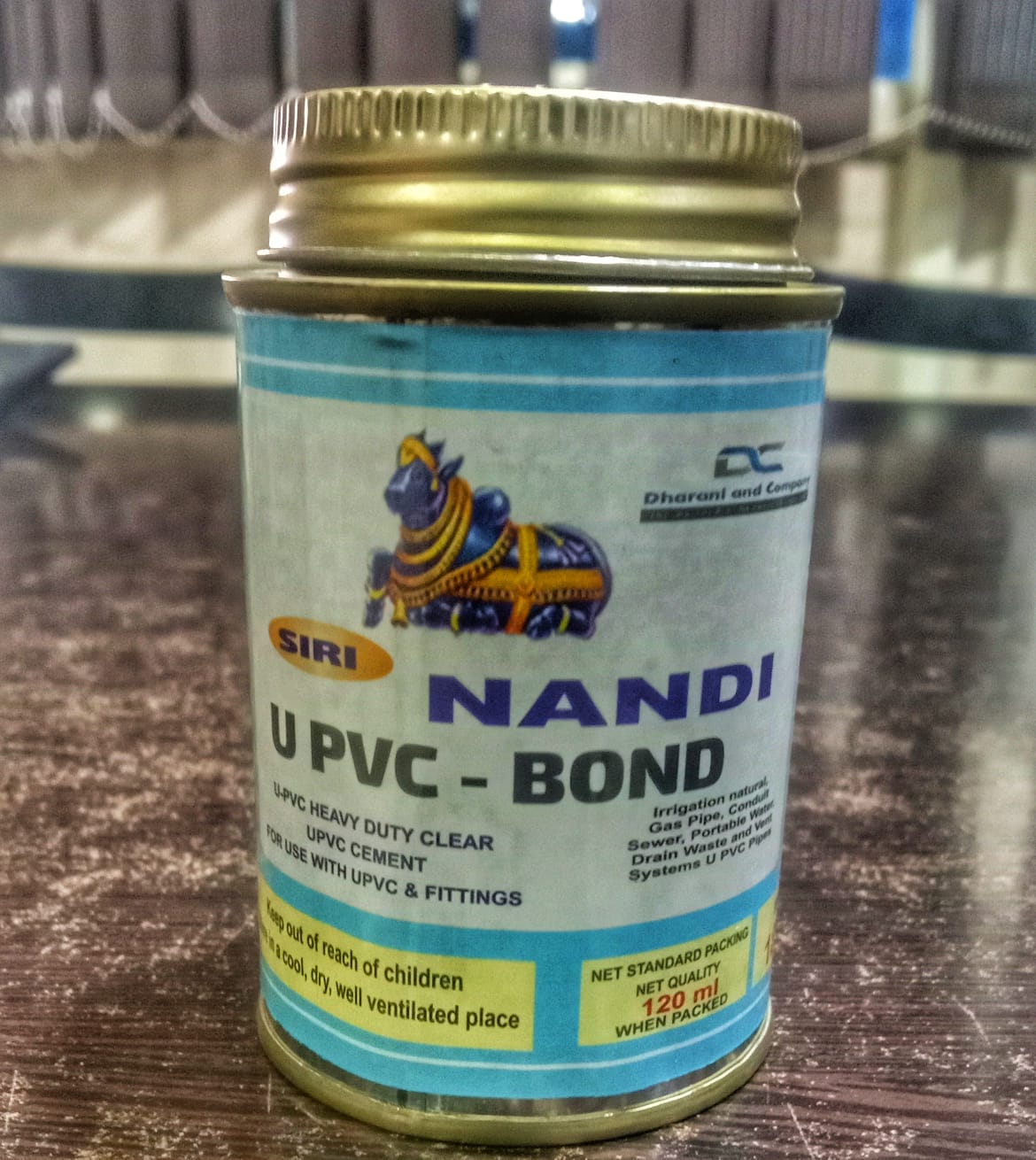 | UPVC SOLVEN CEMENT As a leading UPVC Solvent Cement manufacturer, we pride ourselves on delivering high-quality chemical solutions tailored to the specific needs of the... View product → |
When is solvent cement the wrong choice for the joint?
Choose a gasketed, threaded, flanged, union, compression, or approved mechanical coupling when you must remove a valve, pump, filter, or equipment section without cutting the pipe.
| Joint method | Practical result | Use it when |
|---|---|---|
| Solvent-weld socket | Effectively permanent; removal normally requires cutting out the fitting | The specified pipe and fitting system requires solvent cement |
| Gasketed or compression fitting | Separates without cutting | You need service access or movement accommodation |
| Threaded, flanged, or union joint | Allows equipment removal | A valve, pump, filter, or tank connection needs routine maintenance |
| Mechanical coupling | Joins sections without solvent | The system design or repair requires a demountable connection |
That is the key pvc solvent pipe installation need: solvent cement is not a universal pipe-installation chemical. For pvc solvent applications for contractors, use it only with the specified solvent-weld system.
Do not pressurize a joint because it feels firm. Follow the cement manufacturer’s cure table, which accounts for diameter, temperature, humidity, interference fit, cement type, and pressure.
In wet Bangalore conditions, shield the work from rain and condensation, then keep both surfaces clean and dry. Do not dilute cement or substitute thinner.
Solvent cement contains flammable volatile solvents. Remove ignition sources, provide ventilation, close containers promptly, and follow the safety data sheet for chemical-resistant gloves and eye protection, especially in pits, shafts, tanks, and other confined spaces.
Frequently asked questions
Which pipe installations require solvent cement?
Use solvent cement when the pipe and fitting are designed for a solvent-weld joint and the manufacturer specifies cement. Threaded, compression, flanged, and gasketed systems use different joining methods.
How do you make a PVC solvent-weld joint?
Cut the pipe square, deburr and dry-fit it, clean both surfaces, apply primer when specified, spread compatible cement, insert the pipe fully with a quarter-turn, and hold it briefly while the joint sets.
When is PVC primer required?
Use primer when the cement manufacturer or pipe-system manufacturer specifies it, especially for demanding service conditions. Choose a cement labelled for the exact pipe material and application.
How can you verify PVC solvent compatibility?
Compare the pipe and fitting material, size, pressure rating, cement label, primer instructions, temperature limits, and manufacturer technical data before opening the container.
When is solvent cement the wrong choice?
Do not use it for joints designed for threads, compression fittings, flanges, rubber gaskets, push-fit seals, or materials that the cement label does not name.
Related product
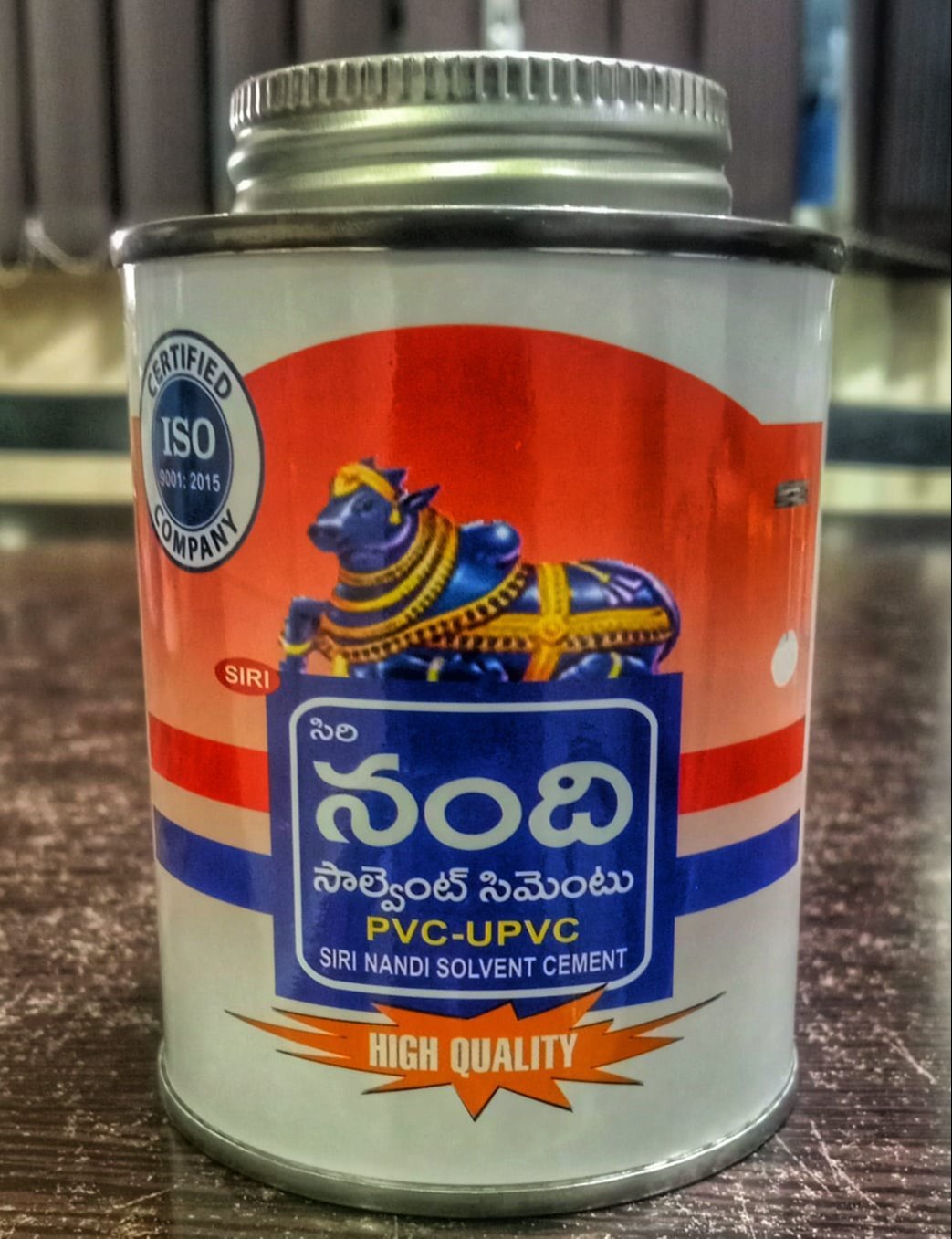 | PVC SOLVENT Siri Nandhi stands as a reputable PVC solvent manufacturer, delivering quality chemical solutions to meet industrial demands. View product → |
Keywords