Slow drying, blushing, orange peel, craters and weak adhesion do not prove that the thinner is defective. You can isolate the cause by checking the material, coating, environment and spray settings in a fixed order, then confirm any solvent change with a controlled test panel.
Key takeaways
- Compare suspect and retained thinner lots under identical temperature and viscosity conditions.
- Record temperature, humidity, surface preparation and coating-to-thinner ratio before changing the process.
- Match defects such as blushing, pinholes and slow drying to their likely process causes.
- Validate any new solvent blend with controlled panels, adhesion checks and drying-time records.
How do you confirm that the NC thinner is the source of the defect?
For NC thinner application problems, isolate the material before changing the coating or spray process. Compare the suspect lot with a freshly opened lot or retained sample at the same controlled temperature, then test identical NC lacquer samples while recording the coating-to-thinner ratio and viscosity.
1. Check the incoming container for the batch or lot number, intact seal, correct label, clear appearance, sediment, haze and evidence of evaporation. Quarantine any pack with a damaged closure or abnormal appearance.
2. Inspect storage for loose caps, water ingress and heat exposure. Absorbed water reduces solvency and can produce blush; evaporation changes the thinner’s blend ratio.
3. Test compatibility in the complete production formulation, not clear NC resin alone. Mix small samples and inspect immediately and after a defined hold period for precipitation, gel formation, settling, flocculation, viscosity drift, uneven flow and gloss loss.
4. Rule out contamination behind industrial NC thinner issues. Compare a solvent-wiped, cleaned test panel with an untreated panel, then inspect compressed-air condensate, filters, hoses and the spray gun for oil, grease, silicone polish or release agent.
Use the coating manufacturer’s technical data sheet as the mixing authority. If the suspect thinner fails against a retained or fresh lot under identical conditions, document that result before changing nozzle, pressure, reduction level or coating formulation.
Which temperature, humidity and surface conditions are changing the result?
A Bangalore climate or preparation problem changes with the work area or test panel; an NC thinner problem repeats under controlled conditions. For NC thinner troubleshooting in Bangalore, measure air temperature, relative humidity, dew point and substrate temperature at the spray location, not from a distant weather report.
Do not coat when the substrate is at or below the dew point: condensation can cause whitening, poor gloss and weak adhesion.
Run a small panel using the same lacquer, gun and surface, then record the following:
| Temperature | Relative humidity | Dew point | Substrate temperature | Thinner ratio | Mixed viscosity | Nozzle and pressure |
|---|---|---|---|---|---|---|
| Production panel | Actual booth readings | Actual booth readings | Actual panel reading | Weighed addition | Measured at controlled temperature | Recorded settings |
| Control panel | Stabilised conditions | Stabilised conditions | Above dew point | Same ratio | Same temperature | Same settings |
If the defect appears only on a humid or rainy shift, suspect moisture, air movement or surface preparation before rejecting the thinner. Water contamination and rapid evaporation can cool the wet film, producing milky blushing.
A hot production area can make the mix spray too thin; a cold mix can spray too viscously, causing orange peel and poor atomisation. Keep the test mix and lacquer at a controlled temperature, and retain wet and dry samples. Compare through-dryness, hardness, adhesion and solvent resistance after a defined conditioning period.
A fast-drying surface does not prove that solvent has left a thick film or recess. Confirm flash-off before recoating, because trapped solvent can cause lifting, wrinkling or bubbling.
What does each NC lacquer defect indicate?
Each defect narrows the search: compare the wet film, dry film, temperature, humidity and gun setting before blaming the solvent. This fault map addresses common NC thinner application problems.
| Defect | Likely causes | First check |
|---|---|---|
| Slow drying | Thick film, low temperature, weak airflow or slow solvent blend | Measure booth temperature, airflow and dry-film thickness; confirm the thinner blend. |
| Blushing | Water contamination, high humidity or rapid evaporation | Check relative humidity, airline condensate and the wet film for milky whitening. |
| Orange peel | High viscosity, cold coating, poor atomisation or excessive spray distance | Recheck viscosity at application temperature, nozzle and atomising pressure. |
| Pinholes | Entrapped air, porous substrate, excessive atomising air or fast solvent loss | Inspect the substrate and airline; compare a solvent-wipe test panel. |
| Cratering | Silicone, oil, grease, release agent or dirty equipment | Clean the panel, gun, hose, filters and airline, then repeat the spray test. |
| Fisheyes | Localised contamination or incompatible surface treatment | Wipe a clean test panel and compare it with the production surface. |
| Runs | Excess fluid, low viscosity, slow flash-off or insufficient atomisation | Check fluid delivery, film thickness and flash-off time. |
| Poor gloss | Blushing, dry spray, over-dilution or uneven film build | Record coating-to-thinner ratio and compare wet and dry thickness. |
| Weak adhesion | Contamination, poor preparation or recoating outside the flash window | Check cleaning, intercoat timing and adhesion on a prepared panel. |
| Wrinkling | Recoating before solvent release, excessive film build or thermoplastic re-softening | Verify flash-off under actual airflow and temperature. |
| Roughness | Dry spray, excessive air, wrong nozzle or low fluid rate | Reduce gun distance errors and establish one controlled gun setting. |
Industrial NC thinner issues frequently begin with contamination. Do not add thinner to cure poor atomisation; excessive dilution can reduce solids, hiding, gloss and film strength.
Which spray settings should you check before adding more thinner?
Before adding thinner, lock down the gun, coating temperature and film build. An incorrect nozzle-fluid combination, excessive atomising air, excessive gun distance or low fluid delivery can create dry spray and roughness that look like solvent failure. Too much fluid or weak atomisation can create runs, orange peel and trapped solvent.
Use a controlled panel and change one setting at a time. Record nozzle size, fluid pressure, atomising pressure, spray distance, coating temperature, viscosity, reduction ratio, wet-film thickness and dry-film thickness.
- Check the nozzle against the lacquer’s recommended range; a mismatch can make pressure adjustments misleading.
- Set fluid and atomising pressure separately. More air is not a cure for poor fluid delivery.
- Hold the gun at a consistent distance and overlap. A long distance lets solvent evaporate before the film lands.
- Confirm flash-off before recoating. A wet lower coat can cause lifting, wrinkling, bubbling or solvent entrapment.
- Compare reduction levels against the technical data sheet. Excess thinner lowers resin and pigment solids, causing poor hiding, low gloss and weak, easily damaged films.
| Setting | Defect that resembles solvent failure | Check |
|---|---|---|
| Nozzle and fluid pressure | Dry spray, roughness, runs | Match nozzle, pressure and fluid rate |
| Atomising pressure | Dryness or orange peel | Reduce excessive air; correct weak atomisation |
| Spray distance | Rough, powdery film | Keep distance and overlap constant |
| Flash-off | Blisters, lifting, wrinkling | Test the actual booth airflow and interval |
| Film thickness | Retention or poor coverage | Compare wet and dry readings |
| Reduction level | Low gloss or weak film | Add thinner only in measured steps |
This controlled method helps separate nc thinner application problems from equipment faults, including during NC thinner troubleshooting in Bangalore.
When should you change the solvent blend, and how should you validate it?
Change the solvent blend only after a controlled comparison shows that the current thinner, not spray settings or humidity, causes the defect. Hold coating, thinner, gun setup, film thickness, and booth conditions constant; adjust viscosity at the same measured temperature as production.
| Solvent option | What it changes | Safe comparison and use |
|---|---|---|
| NC thinner | Solvency, evaporation, flow and gloss | Use only a blend approved for the specific nitrocellulose lacquer |
| Retarder or blush-control thinner | Slows evaporation and reduces moisture-related whitening | Trial during high humidity or fast surface cooling; too much can trap solvent |
| General-purpose thinner | Blend strength and drying balance vary by supplier | Do not substitute without the lacquer maker’s compatibility approval |
| PU thinner | Designed for polyurethane resin systems | Do not assume it suits NC lacquer; test for precipitation, haze and adhesion |
| Epoxy thinner | Suits epoxy resin chemistry and cure demands | Keep it out of NC lacquer trials unless the coating supplier approves it |
| Acetone | Very fast evaporation and strong solvency | Test only in a tiny batch; it can cause dry spray, blushing or poor flow |
Make a small test batch, add the candidate solvent gradually, and record the coating-to-thinner ratio and temperature. Spray identical panels, then assess wet flow, dry time, through-dryness, hardness, gloss, adhesion and solvent resistance after the same conditioning period. Do not approve a blend from surface drying alone.
For industrial nc thinner issues, ask Dharani and Company for the technical data sheet, safety data sheet, batch number and compatibility guidance before changing solvent. Record humidity and panel results; that evidence is more useful than a search for nc thinner for causing application problems bangalore.
Related product
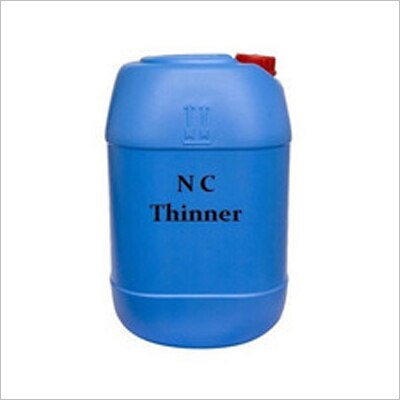 | NC THINNER As a distinguished NC Thinner manufacturer, we specialize in producing high-quality chemical solutions to cater to a wide range of industrial needs. View product → |
Frequently asked questions
How do you confirm that NC thinner is the source of the defect?
Test the suspect lot against a freshly opened lot or retained sample using identical NC lacquer, ratios, temperature and spray settings. Record viscosity and compare drying, gloss, flow and adhesion.
Which temperature, humidity and surface conditions affect NC thinner results?
Record ambient and surface temperature, relative humidity, ventilation, substrate cleanliness, moisture, oil contamination and surface porosity. These variables can change evaporation, adhesion, flow and blush formation.
What does each NC lacquer defect indicate?
Blushing points to moisture or rapid evaporation; orange peel points to viscosity, atomisation or flash-off problems; runs indicate excessive wet film or slow drying; pinholes suggest trapped solvent, contamination or substrate porosity.
Which spray settings should you check before adding more thinner?
Check fluid pressure, atomising pressure, nozzle size, spray distance, gun speed, overlap, wet-film thickness and flash-off time before changing the coating-to-thinner ratio.
When should you change the solvent blend, and how should you validate it?
Change the blend after confirming the thinner lot and spray process are not responsible. Test controlled panels at the same ratio, then compare appearance, drying time, adhesion, hardness and recoat performance.
Keywords