A factory cannot approve a product labelled “pipe adhesive” until it knows whether the material creates a solvent-welded UPVC joint or merely bonds two surfaces. By comparing chemistry, standards, joint design, installation controls, cure requirements and supplier documentation, you can select and receive a product that matches the pipe system rather than relying on a generic label.
Key takeaways
- Choose solvent cement when the joint must form a solvent-welded PVC-U connection.
- Request compatibility data, batch details, technical sheets, and test evidence before ordering.
- Clean, dry, deburr, fit, and hold pipe and socket correctly during assembly.
- Match cure time and pressure service to your production schedule and operating conditions.
What actually separates UPVC solvent cement from pipe adhesive?
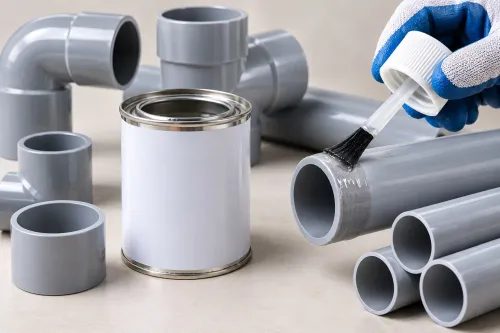
UPVC solvent cement and pipe adhesive are not automatically the same product. UPVC solvent cement softens or dissolves compatible PVC-U surfaces, so the pipe and socket fuse while the solvent evaporates. A conventional adhesive leaves a bond layer between surfaces; it does not create the same solvent-welded joint.
| Option | Bond formation | Gap-filling and pressure suitability |
|---|---|---|
| UPVC solvent cement | Softens compatible PVC-U and forms a fused joint | Limited gap filling; suitable for pressure systems only when the complete pipe-and-fitting system is qualified |
| Conventional adhesive | Forms a separate adhesive layer | Can tolerate a designed bond line, but is not a substitute for solvent welding in PVC-U pressure service |
| “Pipe adhesive” | May mean solvent cement, non-solvent adhesive, thread sealant, or cement for another plastic | The label alone gives no reliable substrate or pressure-service decision |
Solvent-welded joints usually develop system-specific strength as the cement sets and the solvent evaporates; handling time and full cure are different. Excessive clearance, an oval pipe or a damaged socket is not a gap that extra cement can safely repair.
For PVC-U, check ASTM D2564 or IS 14182 when the Indian project specification requires it. CPVC needs a CPVC-qualified cement, including ASTM F493 where specified. ASTM D2564 is not universal approval for CPVC, ABS, polyethylene or polypropylene. “UPVC adhesive” proves neither substrate compatibility nor compliance with either standard.
Verify the plastic grade, pipe and fitting standards, joint type, size range, pressure service, temperature and chemical exposure before purchase.
How should a manufacturer qualify the product before ordering?
Approve the cement only after matching it to the complete pipe-and-fitting system, not a flat coupon bond-strength result. A coupon can look strong while the actual socket, clearance, pressure, temperature or chemical service makes the joint unsuitable.
| Decision field | What to confirm before ordering |
|---|---|
| Plastic grade | PVC-U, not CPVC, ABS, polyethylene or polypropylene |
| Pipe and fitting standards | The standards named for both components and the joint |
| Nominal size and socket geometry | Size range, insertion depth and socket design |
| Service conditions | Pressure or non-pressure use, operating temperature and fluid carried |
| Chemical exposure | Compatibility with the conveyed fluid, cleaners and surrounding chemicals |
| Application method | Brush, dauber or other method specified by the cement supplier |
| Manufacturer’s instructions | Primer, fit-up limits, assembly method and cure schedule |
Match cement body or viscosity to pipe diameter, socket geometry, permitted fit-up and application method. Heavy-bodied cement cannot repair an oval pipe, damaged socket, excessive clearance or a surface contaminated with dust, oil or moisture.
Put these items in the purchasing specification:
- Technical data sheet and safety data sheet
- Stated standard, such as ASTM D2564 where applicable
- Primer requirement and compatible primer name
- Cure schedule for handling, testing and service
- Batch traceability, shelf life and manufacture or expiry marking
- Approved pack sizes and storage conditions
The phrase “upvc solvent cement versus pipe adhesive for industrial manufacturers bangalore” should be treated as a specification question, not a search-label decision. “Pipe adhesive” is too broad unless the supplier identifies every field above.
What joining procedure produces a reliable UPVC solvent-welded joint?
Reliable joint assembly starts with a square cut and a controlled dry fit; use this sequence:
1. Measure and cut square. Remove burrs, then chamfer the pipe end. Inspect for ovality, cracks, damaged sockets, or a dry fit that is loose or excessively tight.
2. Remove dust, moisture, oil, ink and debris from the specified surfaces. Mark the insertion depth, then dry-fit without cement to confirm full engagement and alignment.
3. Clean the specified surfaces with the approved cleaner. Apply separate UPVC primer when the pipe system or cement instructions require it; cleaning is not a substitute because primer helps soften the surfaces.
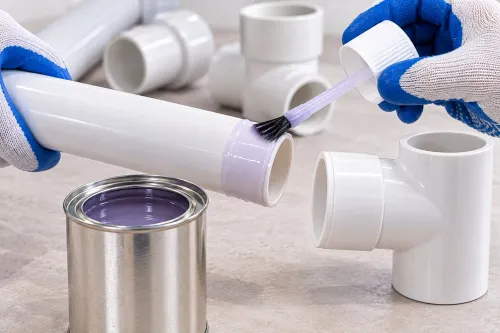
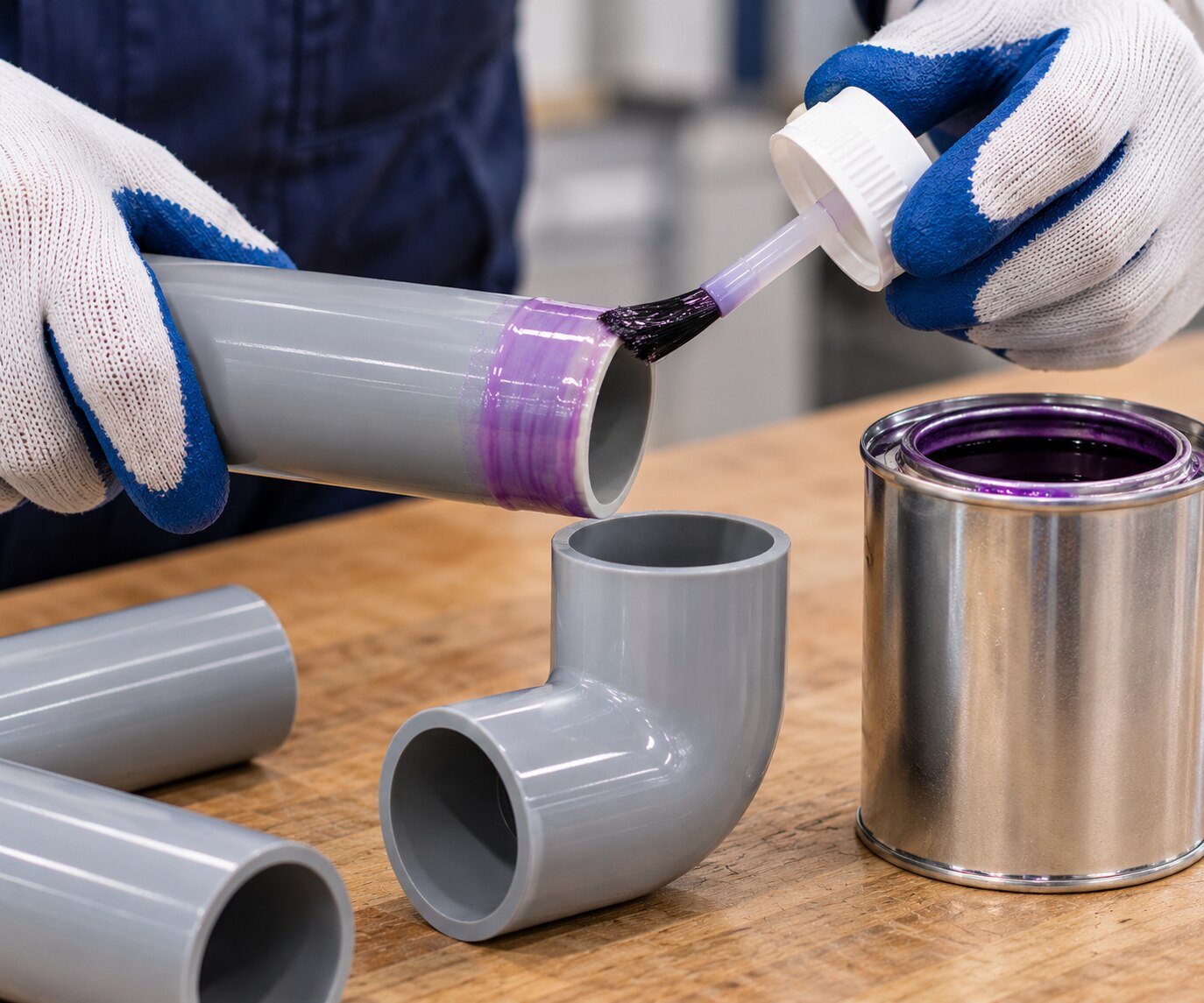
4. Apply compatible cement to the correct surfaces, using the specified upvc solvent cement or pipe adhesive only after confirming compatibility with the UPVC grade, fitting and service. Do not apply it to wet surfaces.
5. Insert the pipe fully to the depth mark with a twist. Hold the joint against movement during the initial set.
6. Remove excess cement without disturbing the joint, then leave it undisturbed for the stated cure period before pressurisation.
Skipping the dry fit can hide poor engagement, while incomplete insertion leaves too little welded area. Do not rotate the joint after setting begins, reuse damaged fittings, flood the socket with excess cement, or pressurise early. Follow ASTM D2855 and the supplier’s cure schedule; a generic 24-hour rule is not reliable.
How do cure time, pressure service and factory controls change the choice?
Do not release a joint for pressure testing because its outside feels firm. Initial set permits careful handling; full cure establishes the solvent-welded joint’s service readiness.
Cure time changes with temperature, humidity, pipe size, joint fit, cement type and service conditions. A generic 24-hour rule is not an adequate production specification.
- Set the handling time from the supplier’s cure schedule; moving the joint too soon can break alignment.
- Set the pressure-test time from that schedule and the pipe-system standard; testing early can expose an internally under-cured joint to leakage.
- Set commissioning time only after full cure and confirmation that the pipe, fitting, fluid, temperature and pressure are within their ratings.
Solvent cement cannot give an unsuitable pipe or fitting a pressure rating. For a search such as “pipe joining products for manufacturers bangalore”, the purchase decision still requires system compatibility, not a catalogue label.
Factory controls begin with the safety data sheet (SDS). Control volatile organic solvents through flammability precautions, vapour ventilation, suitable PPE, segregated storage, spill response and compliant waste handling.
Receiving inspection should record:
- Intact seals and unopened, undamaged containers
- Batch number, manufacture date or expiry date, and storage history
- Appearance and viscosity against an approved sample
Reject opened or contaminated cans for pressure-joint production: lost volatile components can change viscosity, while skin or debris can weaken application consistency. Keep PVC-U cement separate from CPVC cement and other pipe joining products for manufacturers bangalore.
What should a Bangalore factory demand from its UPVC cement supplier?
Do not approve a supplier from the words “pipe adhesive” on a catalogue. For pipe joining products for manufacturers Bangalore, issue separate purchase-order lines because each product has a different substrate, hazard, standard and acceptance test.
| Product | Specify separately because | Typical evidence to request |
|---|---|---|
| PVC-U solvent cement | Joins PVC-U pipe and fittings; ASTM D2564 or IS 14182 may apply | TDS, standard conformity and viscosity or application test |
| CPVC cement | CPVC needs its own formulation; PVC-U cement is not a substitute | ASTM F493 documentation and CPVC compatibility |
| Primer and cleaner | Primer softens surfaces; cleaner removes contamination, and neither is automatically interchangeable | System instructions, SDS and surface-preparation test |
| Thread sealant | Seals threaded joints rather than solvent-welding sockets | Thread and chemical-compatibility data |
| Gasket lubricant | Assists gasket assembly rather than bonding plastic | Material compatibility and assembly guidance |
| Repair compound | Repairs a defined defect; it does not replace a new solvent-welded joint | Repair limitations and acceptance method |
Qualify the UPVC cement supplier for factories against this checklist:
- Current technical data sheet and safety data sheet, including hazards, shelf life and cure conditions.
- Conformity or test documentation for the named standard, pipe grade and service.
- Batch number, manufacture date, expiry date and traceability to retained samples.
- Consistent pack sizes, sealed containers, storage limits and transport instructions.
- A written complaint process, investigation method and dependable replenishment plan.
The lowest price per can becomes the highest installed cost when viscosity changes, joints fail, technicians rework assemblies or production stops. Dharani and Company can be assessed as a potential supplier, but verify its exact product, documents, batch controls and compatibility against the project specification rather than accepting a broad catalogue label.
Related product
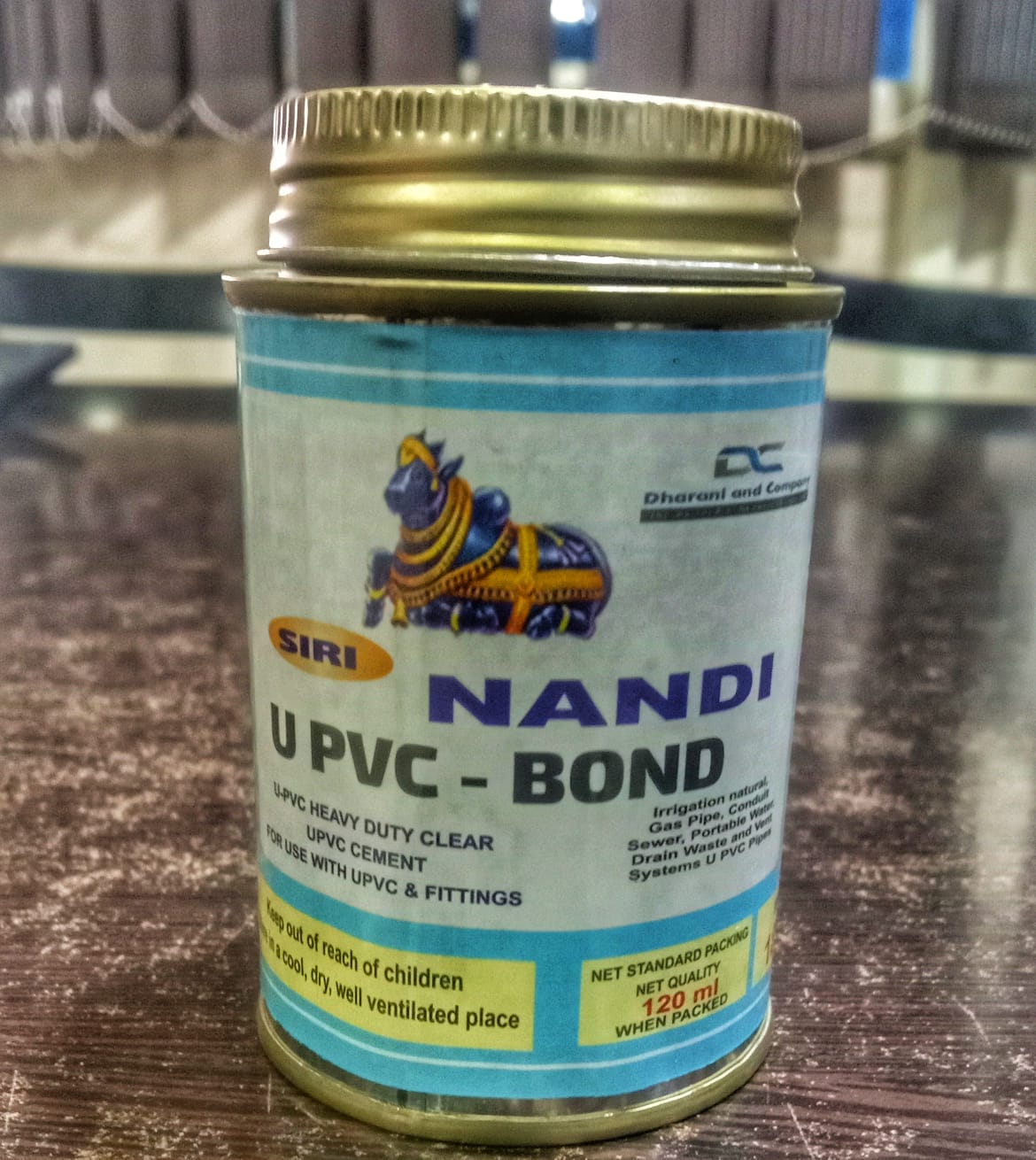 | UPVC SOLVEN CEMENT As a leading UPVC Solvent Cement manufacturer, we pride ourselves on delivering high-quality chemical solutions tailored to the specific needs of the... View product → |
Frequently asked questions
What separates UPVC solvent cement from conventional pipe adhesive?
UPVC solvent cement softens or dissolves compatible PVC-U surfaces, allowing the pipe and socket to fuse as solvent evaporates. Conventional adhesive leaves a separate bond layer.
How should a manufacturer qualify UPVC solvent cement before ordering?
Check PVC-U compatibility, technical data, safety data, batch identification, shelf life, packaging integrity, and evidence from relevant joint or pressure testing.
What joining procedure produces a reliable UPVC solvent-welded joint?
Cut the pipe square, remove burrs, clean and dry both surfaces, apply compatible cement evenly, assemble fully with a slight twist, and hold the joint during initial set.
How do cure time and pressure service affect product selection?
Select cement using the specified cure schedule, pipe size, temperature, humidity, and pressure conditions. Do not pressurise the line before the stated cure period.
What should a Bangalore factory demand from its UPVC cement supplier?
Ask for consistent batch documentation, technical and safety data sheets, traceable packaging, delivery conditions, usage guidance, and support for your pipe, fitting, and production process.
Keywords