Rain, humidity, condensation and temperature change how PVC solvent cement wets the joint, evaporates and develops strength. By checking surface condition, product temperature limits, cure tables and storage controls, you can separate weather-related failures from poor preparation or unsuitable cement.
Key takeaways
- Keep rainwater off pipe surfaces, fittings and solvent cement during assembly.
- Let cold or wet pipes reach clean, dry conditions before joining.
- Avoid direct sun and heat that accelerate solvent evaporation.
- Use batch rotation and sealed storage to protect PVC solvent quality.
How Bengaluru weather changes PVC solvent cement performance
Yes—does weather affect pvc solvent for performance in bengaluru? It does, through wetness, temperature, evaporation and cure time, not through rain alone.
PVC solvent cement contains PVC resin dissolved in volatile solvents. It works by softening the pipe and fitting surfaces; as the solvents evaporate, those surfaces fuse into the joint. High humidity slows evaporation and increases condensation on cool PVC, fittings and nearby metal.
Use this weather check before assembly:
1. Inspect every surface for rainwater, condensation or damp primer. Liquid water prevents proper wetting and softening, while a thin damp film can create voids that later leak.
2. Treat cloud cover correctly: it reduces direct heating but does not remove moisture from the air. Rain creates the greater risk because water can reach the socket, primer or cement.
3. Check the air, pipe, fitting, cement and primer temperatures. Cold materials slow wetting, solvent movement and joint set; a sun-heated pipe increases volatility, shortens open time and can make cement skin over before insertion.
4. Shade hot pipe and keep containers closed between applications. Do not add extra cement to compensate for humidity or cold.
There is no universal Bengaluru humidity cutoff for every product. Follow the manufacturer’s technical data sheet for its application range and cure table, using the actual surface condition. Low temperature and high humidity lengthen solvent escape, so pressure testing too early can expose a joint that looks dry but has not cured.
What to do when using PVC solvent in rainy weather
Stop jointing during active rain unless you can create a dry, ventilated enclosure. A canopy must block sideways spray as well as falling rain; a sealed tarpaulin enclosure without airflow can concentrate flammable vapour. Add ignition control, not just a dry place to work.
Before applying primer or cement:
- Dry the pipe and fitting completely.
- Inspect the socket for water, wipe away visible moisture and remove condensation by letting the surface reach the surrounding air temperature.
- Keep rain out of the socket, primer and cement containers.
- If rain reaches a prepared joint, stop. Follow the product instructions for drying and re-preparation; do not apply more cement.
Water inside the socket prevents proper wetting and softening. A damp film can leave voids that later leak.
| Rainy-weather condition | Required action | Risk if ignored |
|---|---|---|
| Active rain | Stop, or work inside a dry ventilated enclosure | Water interference and vapour buildup |
| Condensation | Wait until the surface reaches surrounding air temperature | Damp film and incomplete bonding |
| Prepared joint gets wet | Dry and re-prepare as directed | Hidden voids and leakage |
Keep lids closed so rainwater, dust and humid air do not contaminate the containers. Do not pressurise the line on a fixed schedule: high humidity and low temperature lengthen solvent escape and cure. Use the manufacturer’s cure table, which accounts for pipe diameter, pressure, temperature and humidity.
PVC solvent temperature problems: cold pipe versus hot pipe
Cold pipe and hot pipe create opposite PVC solvent temperature problems: cold conditions slow evaporation and set, while sunlight-heated surfaces shorten open time and can skin the cement before assembly.
Check these three temperatures before work:
- Ambient air
- The PVC pipe and fitting
- The cement or primer
Use the application range printed on the label or stated in the technical data sheet. Do not replace standard cement with a fast-setting or cold-weather grade until you confirm its temperature limits and cure schedule.
| Condition | What changes | Main risk |
|---|---|---|
| Cold pipe or cement | Slower wetting, solvent movement and evaporation; insertion force can change | Longer set time and condensation on a surface that looks dry |
| Hot, sun-heated pipe | Faster solvent loss and shorter open time | Primer or cement skins before insertion |
| Hot, open container | Greater volatility and thickening | Uneven application, trapped solvent or a gelled surface |
Shade the pipe before and during assembly, and close containers between applications. A pipe colder than surrounding air can carry condensation even without visible water.
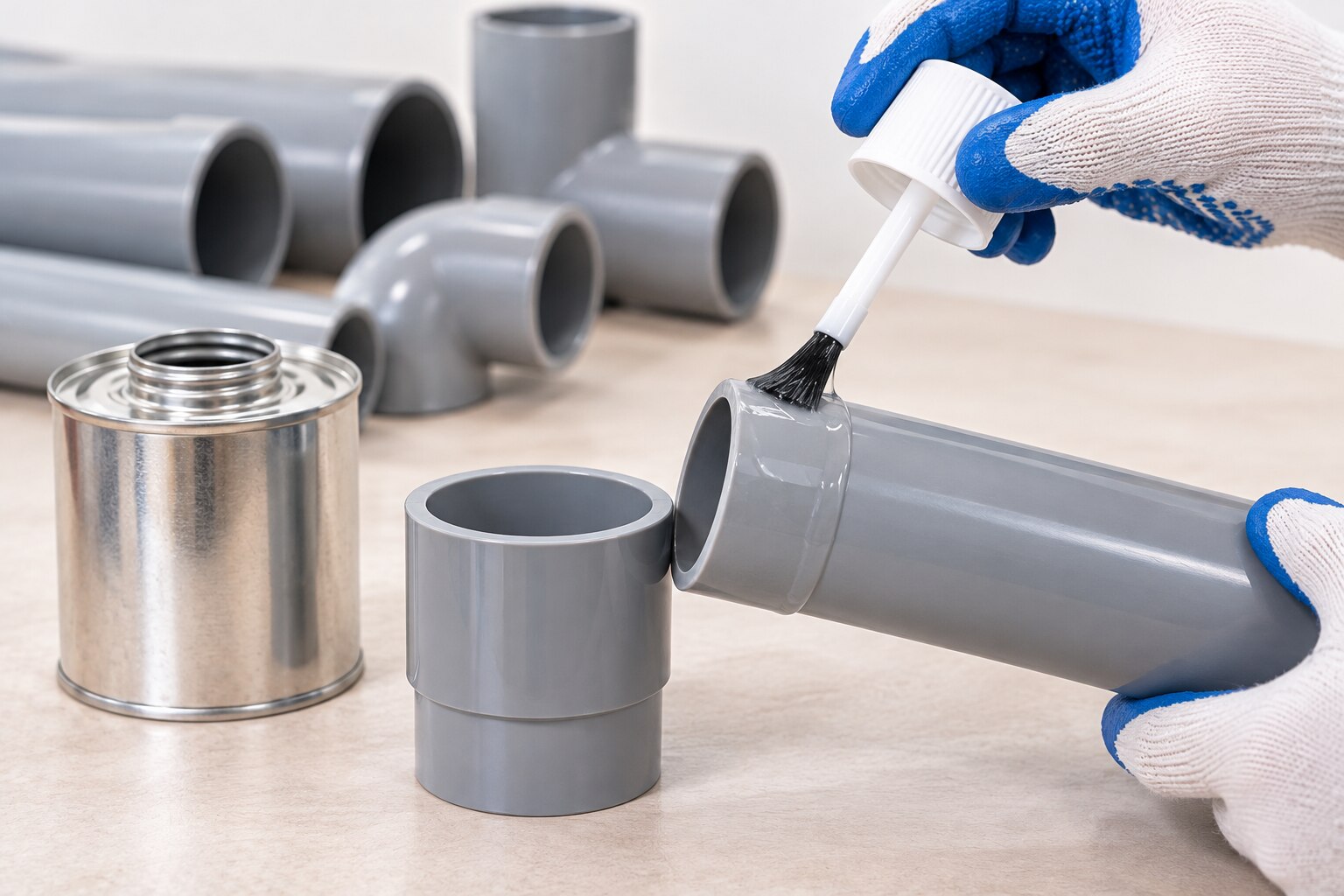
Cut square, deburr, dry-fit, apply the specified primer, and cover the full insertion depth. Never add extra cement to compensate for cold, humidity or heat; excess material can remain trapped, extend cure and cause solvent attack or voids.
Large-diameter, heavily interfering and pressure-bearing joints need longer cure because solvent entrapment can remain after the outside bead looks dry. Follow the product cure table before testing or pressurising the line.
How to identify a weather-related PVC joint failure
Whitening, patchy wetting, a dry-looking band inside the socket or incomplete insertion points to poor surface preparation or water interference. It is a warning, not proof that monsoon weather caused the failure.
Soft, sticky or gummy cement indicates incomplete solvent evaporation, excessive application, unsuitable temperature or aged material. A joint that separates under load, leaks during pressure testing or twists apart can result from premature testing, insufficient insertion, movement during set or the wrong cement for the pipe type.
Compare the visible evidence before choosing a cause:
| Finding | Likely cause | Check next |
|---|---|---|
| Whitening or patchy wetting | Water, condensation, dirt or oil | Inspect cleaning, drying and rain exposure |
| Dry band inside socket | Incomplete cement coverage or insertion | Check insertion depth and cement spread |
| Soft or gummy cement | Trapped solvent, excess cement, cold conditions or aged product | Check temperatures, application amount and shelf-life date |
| Twisted or separated joint | Movement during set, inadequate insertion or premature pressure | Check assembly movement and test timing |
Check for a square cut, burrs, dirt, oil, missing primer where the instructions require it and evidence that the pipe was twisted after assembly. Compare the batch number, shelf-life date and product grade with the job specification.
Record ambient, pipe and cement temperatures, rain exposure, preparation time, assembly time and pressure-test timing. A dry, sheltered joint can still fail when the socket was not cleaned, the cement was gelled, insertion was inadequate or pressure was applied before the specified cure period.
PVC solvent storage in Bangalore: control heat, moisture and stock age
For pvc solvent storage in bangalore, keep PVC solvent cement upright in a compatible, closed chemical-storage cabinet inside a cool, dry, well-ventilated area. Keep cans away from direct sunlight, hot roofs, sun-heated metal boxes, unventilated vehicles, sparks, flames, hot surfaces and oxidising materials.
| Location or condition | Risk to cement | Control |
|---|---|---|
| Sun-heated roof, vehicle or metal box | Excess volatility and shortened shelf life | Move stock indoors and log temperature |
| Damp store or condensation | Contamination and moisture-related performance loss | Keep the cabinet dry and containers closed |
| Near flames, sparks or oxidisers | Fire or hazardous reaction | Use separated chemical storage and ignition control |
Do not invent a Bengaluru-specific storage limit. Record warehouse temperatures and compare them with the storage range printed on the label or stated in the technical data sheet; find the shelf-life requirement there too.
Section 7 of the SDS covers handling and storage, while Section 10 identifies stability and reactivity hazards when the supplier provides that information.
Close every lid fully between uses to limit evaporation and contamination. Record manufacture dates, place newer stock behind older stock, and inspect cans for swelling, skinning, gelation, lumps or unusual thickening. Do not warm aged or partially gelled cement; reject it under your chemical-control procedure.
Before buying for Bengaluru work, ask Dharani and Company or another supplier for the current SDS, technical data sheet, batch identification, storage range and cure table. These documents connect warehouse conditions and installation weather to the actual product.
Related products
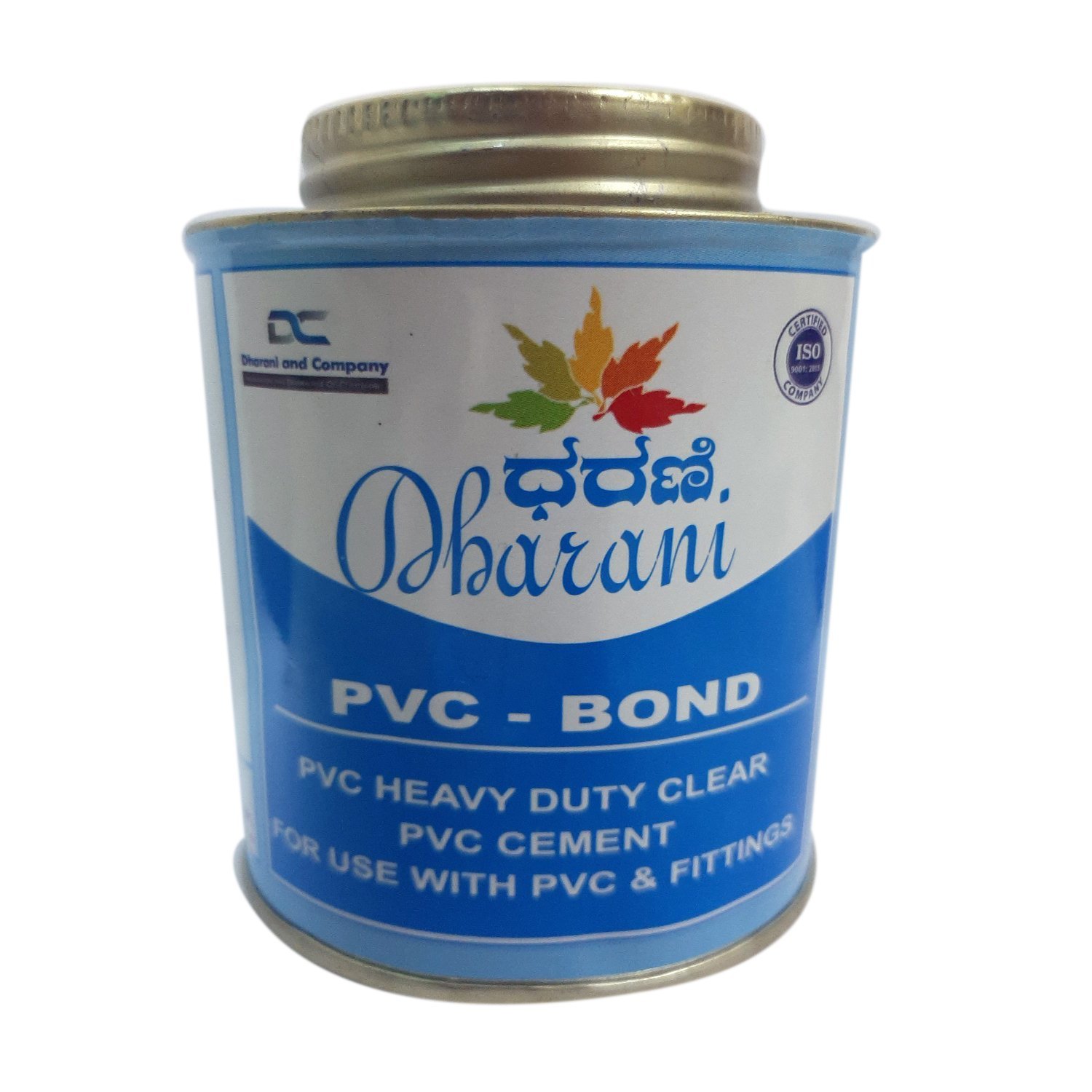 | PVC SOLVENT As a leading PVC solvent manufacturer, we take pride in delivering top-notch chemical solutions tailored to industrial needs. View product → |
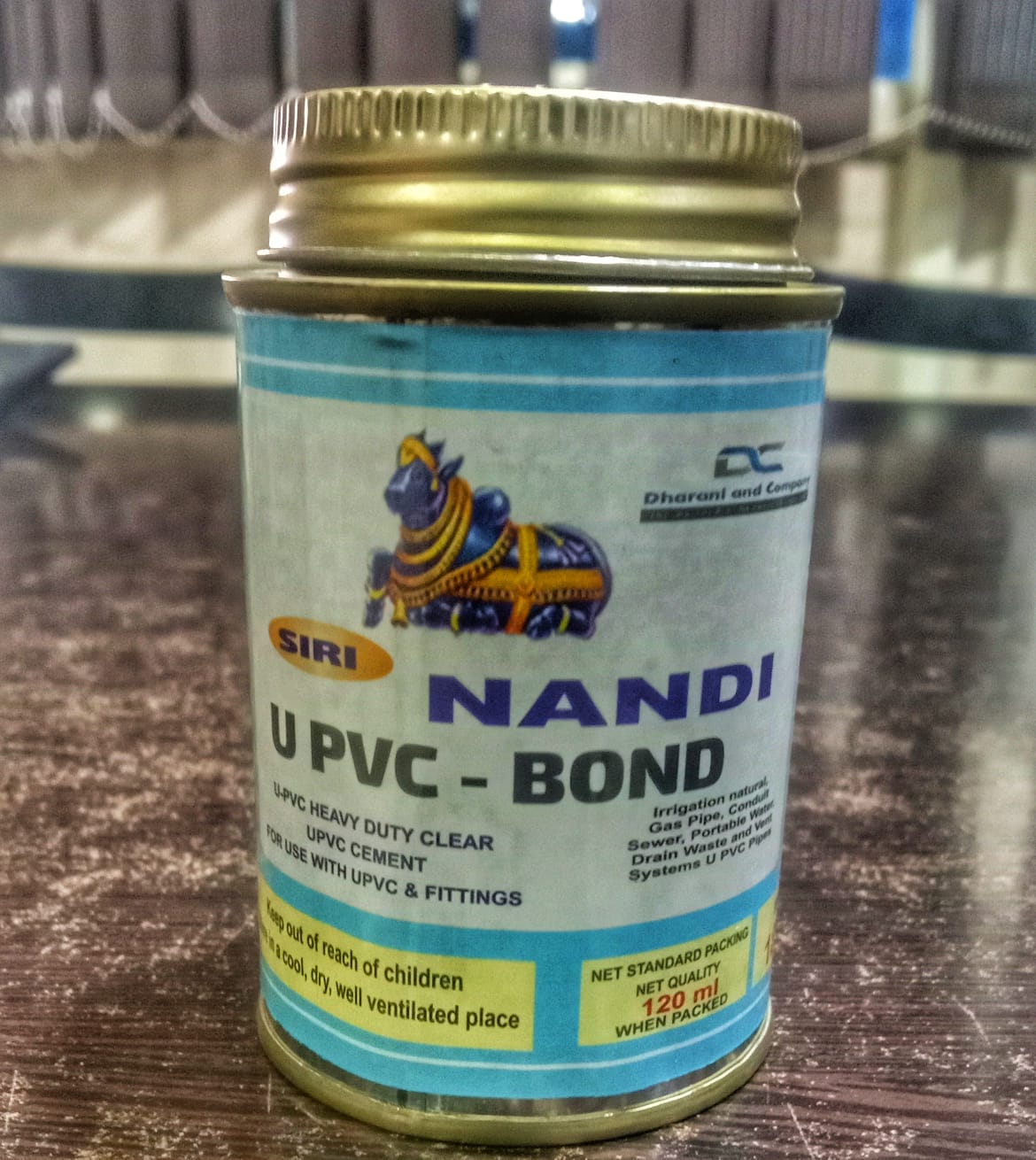 | UPVC SOLVEN CEMENT As a leading UPVC Solvent Cement manufacturer, we pride ourselves on delivering high-quality chemical solutions tailored to the specific needs of the... View product → |
Frequently asked questions
Does Bengaluru weather affect PVC solvent performance?
Yes. Rain, humidity, pipe temperature, solvent evaporation and cure time affect application and joint quality.
How should you use PVC solvent in rainy weather?
Work under a dry cover, keep water out of the joint, and do not assemble wet pipe or fittings.
What are common PVC solvent temperature problems?
Cold pipes can slow solvent action and curing, while hot pipes accelerate evaporation and shorten working time.
How can you identify a weather-related PVC joint failure?
Look for visible moisture, incomplete solvent coverage, soft or uncured cement, gaps, leaks or a joint that separates under light stress.
How should you store PVC solvent in Bangalore?
Keep containers tightly closed in a cool, shaded, dry, ventilated location and rotate stock by batch age.
Related product
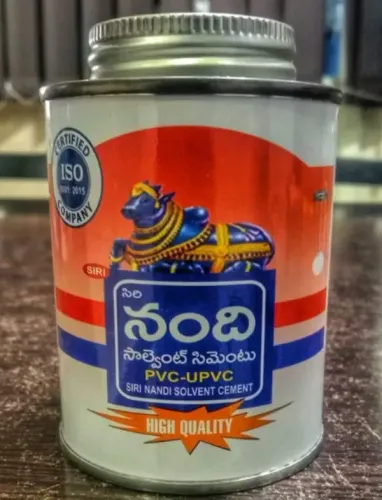
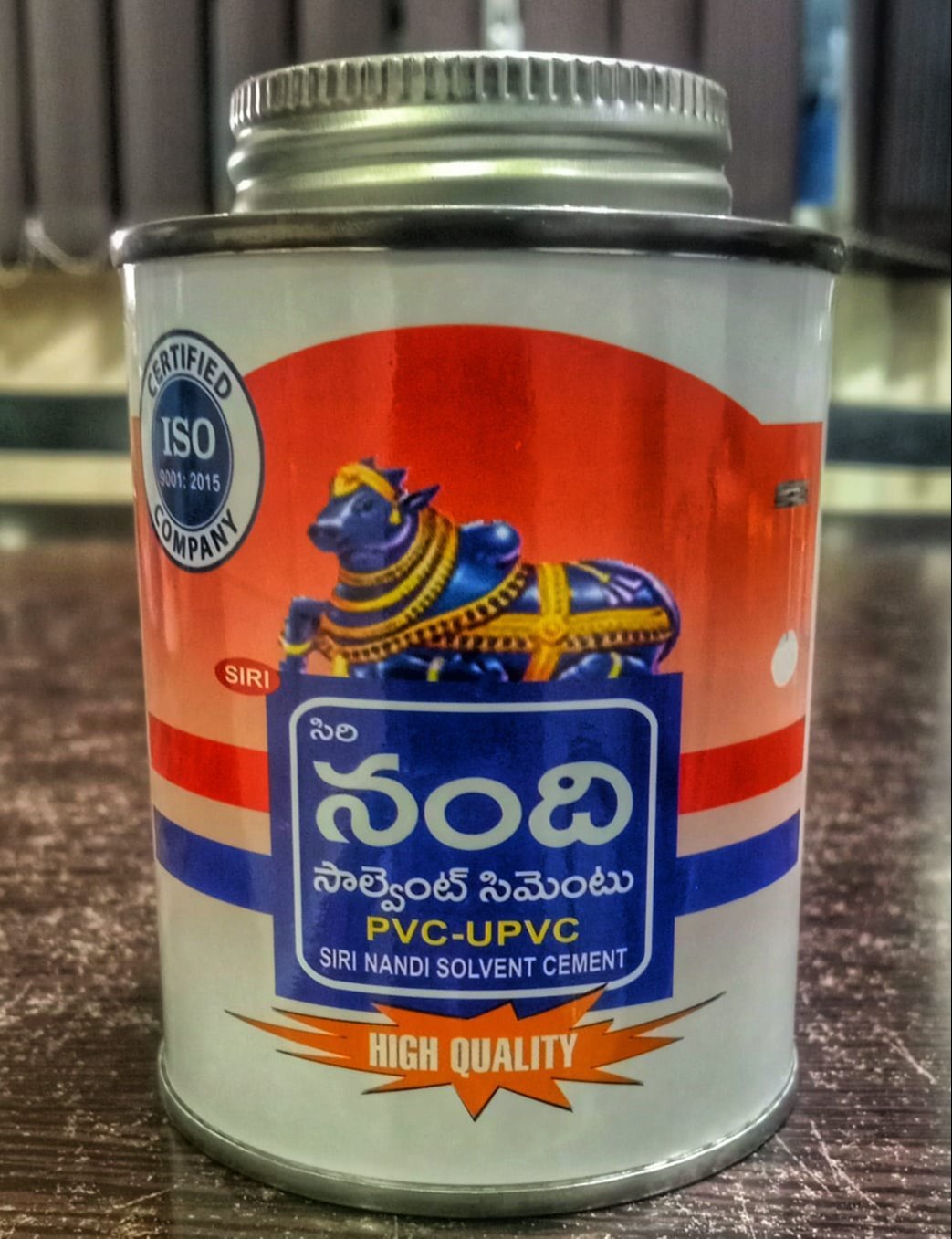 | PVC SOLVENT Siri Nandhi stands as a reputable PVC solvent manufacturer, delivering quality chemical solutions to meet industrial demands. View product → |
Keywords