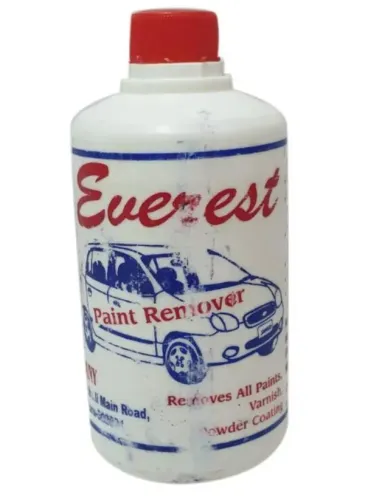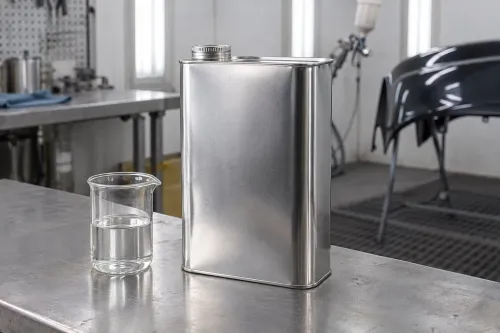
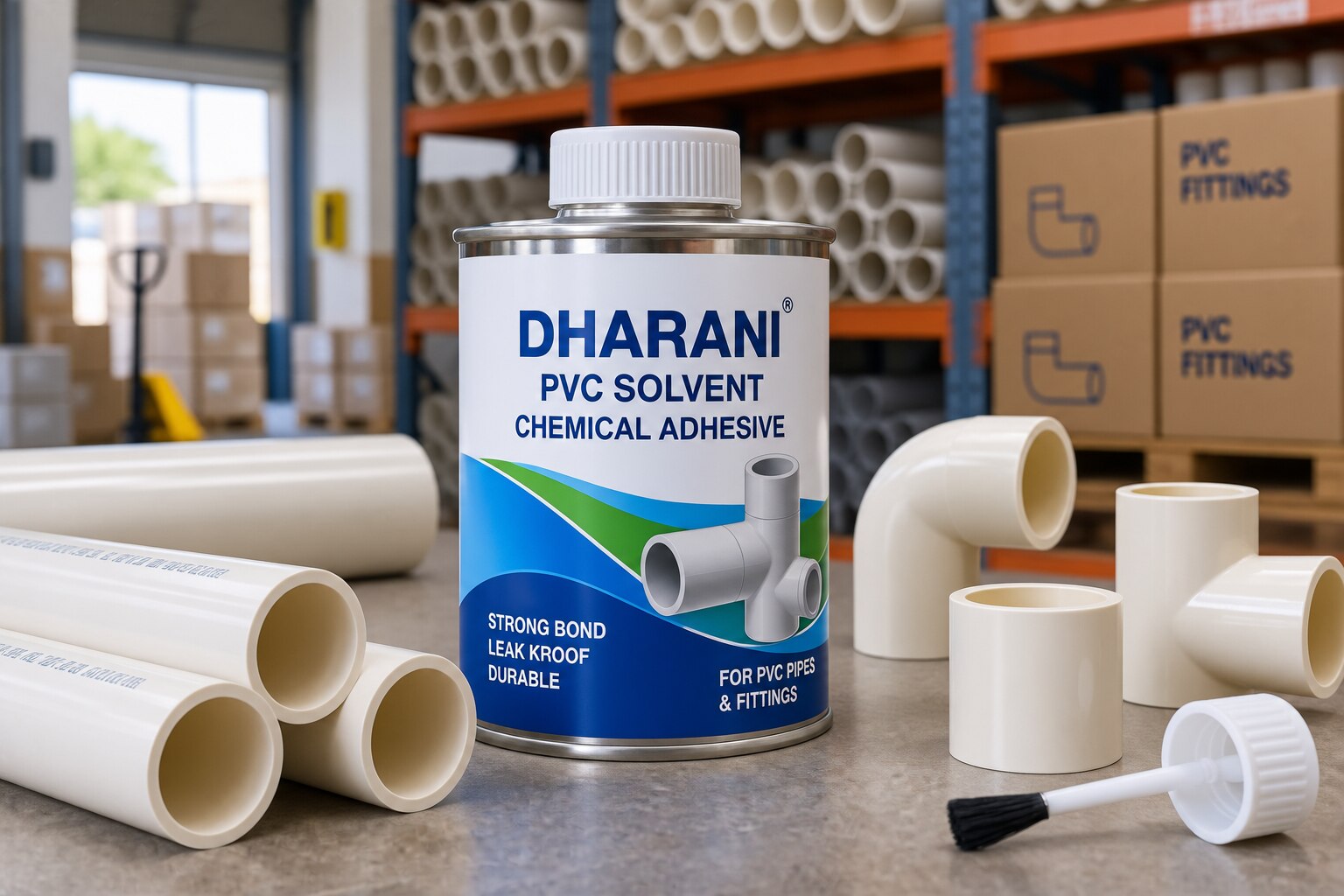
A PVC adhesive order is incomplete if it arrives as an unmarked can with no data sheet, batch traceability, or clear substrate specification. By the end, you will know which documents, container details, compatibility checks, and application instructions to require before accepting the supply or commissioning a joint.
Key takeaways
- Request product name, batch number, shelf life, SDS, and application instructions.
- Use cleaner or primer only when the pipe system and product instructions require it.
- Prepare dry, square-cut surfaces and respect the stated assembly and cure times.
- Require the Bangalore quotation to state pack size, grade, delivery, taxes, and documents.
What should be inside a complete PVC adhesive supply?
A complete PVC chemical adhesive supply includes both the product you use and the records that identify it. Request:
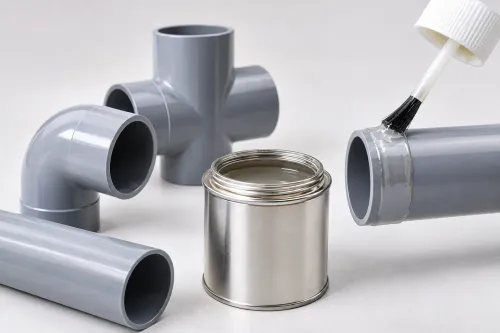
- Sealed container with an intact cap or brush-in-cap applicator
- Legible label showing net quantity, colour, viscosity or formulation designation, intended PVC or UPVC use, and pack size
- Batch or lot number, manufacture date, and expiry or re-test date
- Invoice stating the product, quantity, batch, and packaging configuration
A current 16-section Safety Data Sheet is essential. It identifies the solvent mixture and covers flammability, storage, ventilation, personal protection, first aid, fire response, spill control, transport classification, and disposal. Do not infer these controls from the word “adhesive” on a quotation.
| Document | What it should state | Why you need it |
|---|---|---|
| Safety Data Sheet | Solvent composition, hazards, controls, emergency measures, transport, disposal | Sets safe handling and storage controls |
| Technical Data Sheet | Application method, compatible pipe and fitting types, solids content where provided, shelf life, storage, cure guidance | Confirms suitability and installation limits |
| Certificate of Analysis or named test result | Batch result, claimed grade, or specified standard | Verifies a quotation claim |
If the quotation claims a grade or standard, request the Certificate of Analysis or named test result. Record the batch number against the invoice and SDS revision so a future complaint, recall, or investigation can be traced to the exact supply.
Is it solvent cement, cleaner, primer, or another solvent?
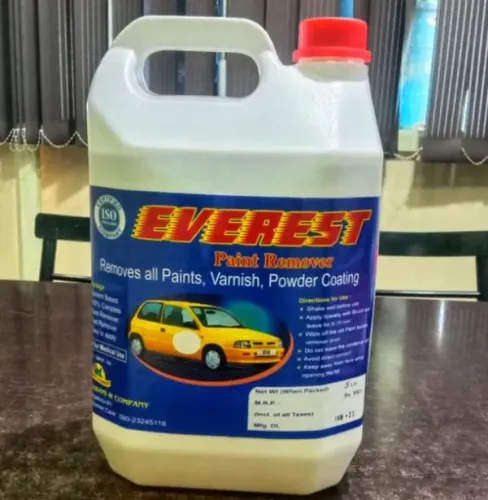
“PVC solvent” is not a product identity. PVC solvent cement is a formulated PVC chemical adhesive containing dissolved PVC resin and volatile solvents; it softens the mating PVC surfaces and adds resin to the joint. It is not interchangeable with a cleaner, primer, thinner, paint-removal solvent, or a single solvent such as tetrahydrofuran (THF).
The joint does not rely on adhesive-film strength alone. Pipe interference, insertion depth, square cutting, surface preparation, and curing determine whether the softened surfaces fuse into a reliable connection. ASTM F493 covers solvent cements for joining PVC pipe and fittings, while ASTM F656 covers primers used with ABS, PVC, and CPVC.
“Industrial grade” alone proves neither standard compliance nor potable-water suitability.
Before accepting a quotation, ask:
- Is the cement intended for rigid PVC or UPVC, CPVC, ABS, flexible PVC, conduit, drainage, pressure pipe, fabrication, or repair?
- Does the technical data sheet approve polyethylene, polypropylene, rubber, or metal? Without that express approval, use a different joining system.
- Is the quotation for cement, cleaner, primer, or another solvent, and does it state the compatible substrate, colour, viscosity, solids content, and pack size?
- If you found the seller through “pvc solvent supplier bangalore,” does the product actually match the required pipe and fitting material rather than merely the search wording?
A cleaner removes contamination; a primer prepares the surface; neither replaces solvent cement. Verify the exact grade before ordering.
How should you prepare, apply, and cure the joint?
A sound joint depends on solvent welding, not a thick adhesive film. The cement softens the mating PVC surfaces and adds resin, so poor fit, contamination, or rushed curing can defeat a good product.
1. Cut the pipe square and remove burrs from the outside and inside edges. A slanted cut reduces insertion depth and leaves an uneven contact area.
2. Dry-fit the pipe and fitting, check that both are correctly sized, and mark the full insertion depth. Do not force a loose or badly mismatched joint.
3. Remove water, dust, grease, and oil from the specified surfaces. Ask whether a separate PVC cleaner or ASTM F656 primer is required for the pipe type, pressure class, and installation conditions; cleaner, primer, and cement are different products.
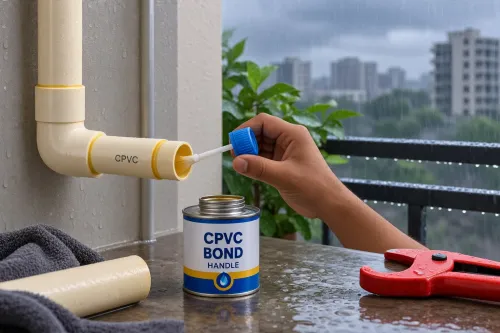
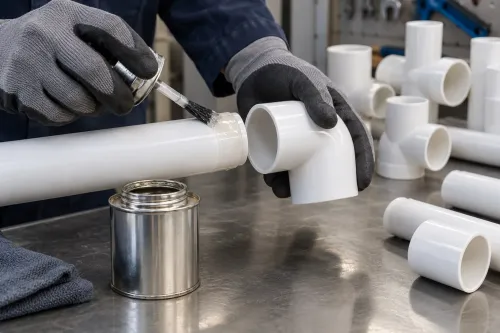
4. Apply the specified cement to the specified surfaces with the supplied applicator. Assemble immediately to the marked depth, using a quarter-turn only when the product and fitting instructions call for it.
5. Hold the joint so it cannot back out, then wipe away excess cement. Wet, oily, dusty, or overworked joints can leave weak or incomplete solvent-welded areas.
6. Keep the assembly undisturbed for the complete Technical Data Sheet cure period before pressure testing. Cure time changes with temperature, humidity, pipe diameter, cement quantity, ventilation, and service pressure.
Do not invent a universal cure time or pressure-test interval. A search for pvc solvent for chemical adhesive supplier bangalore should end with a supply backed by clear application and cure guidance, not merely a “fast drying” claim.
What must a Bangalore quotation specify before you place the order?
A quotation that says only “PVC solvent” is not precise enough to place an order. Ask a PVC solvent supplier Bangalore to state the following on the quotation:
- Exact product name and whether it is PVC solvent cement or primer
- Compatible substrate: PVC, UPVC, CPVC, ABS, flexible PVC, or another material
- Pressure or non-pressure use, intended application, and pipe diameter range
- Colour, viscosity or formulation designation, and solids content where relevant
- Pack type, net quantity, applicator format, and minimum order quantity
- Batch or lot number, manufacture date, expiry or re-test date, and traceability documents
- Current SDS, TDS, and any Certificate of Analysis, ASTM F493 claim, or other compliance certificate
- Delivery lead time, delivery condition, and storage temperature or location requirements
| Pack configuration | Practical advantage | Risk to confirm |
|---|---|---|
| Small tin with brush-in-cap | Controlled field use and less time exposed after opening | Confirm the brush size, net quantity, and closure condition |
| Large can | Fewer container changes for high consumption | Longer exposure after opening increases solvent loss, viscosity change, and poor wetting risk |
For Dharani and Company, request the grade, pipe and fitting material, pack configuration, batch traceability, current SDS, TDS, and delivery condition in writing. Compare those fields with chemical adhesive manufacturer Bangalore offers; brand names and search-result wording do not establish equivalent performance.
Related products
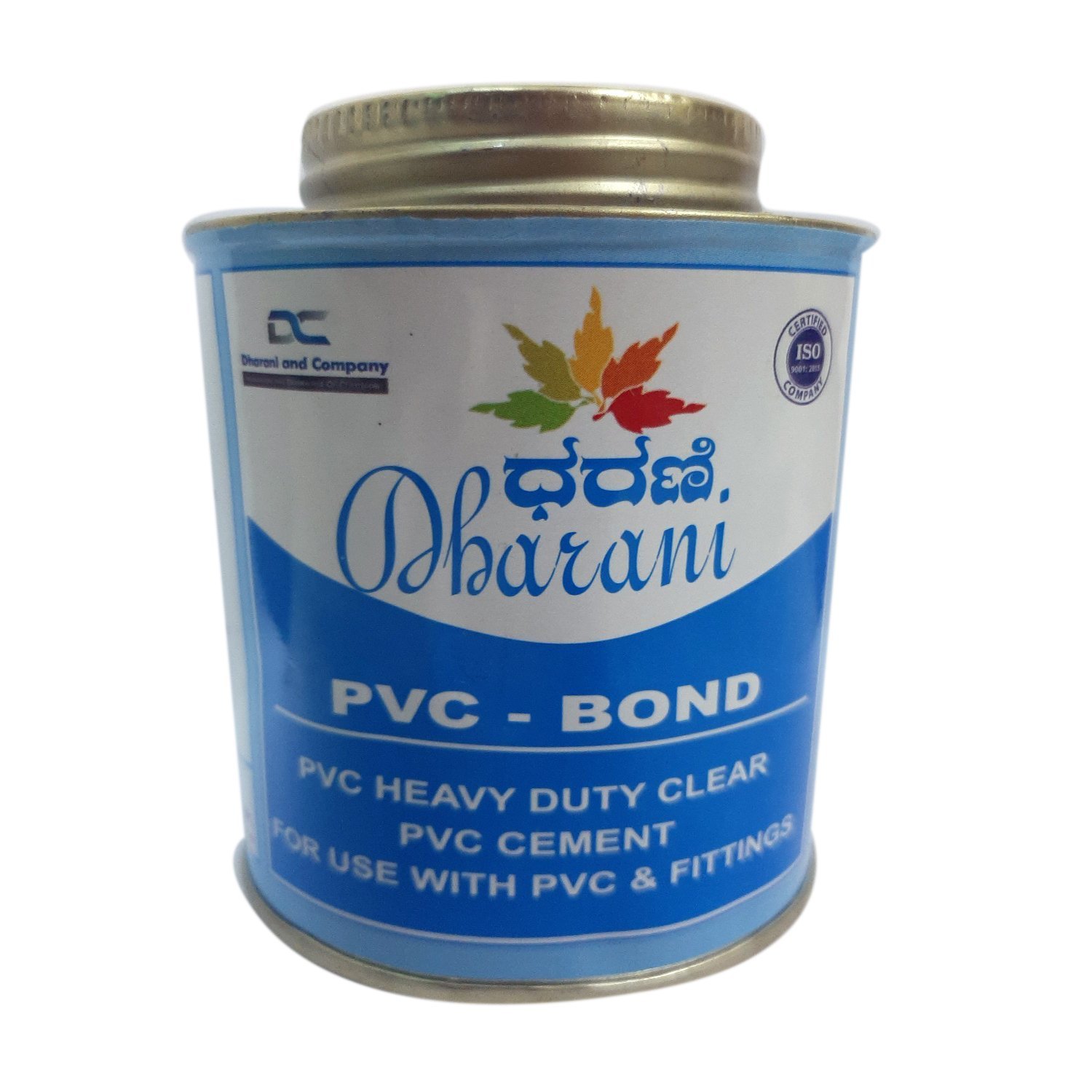 | PVC SOLVENT As a leading PVC solvent manufacturer, we take pride in delivering top-notch chemical solutions tailored to industrial needs. View product → |
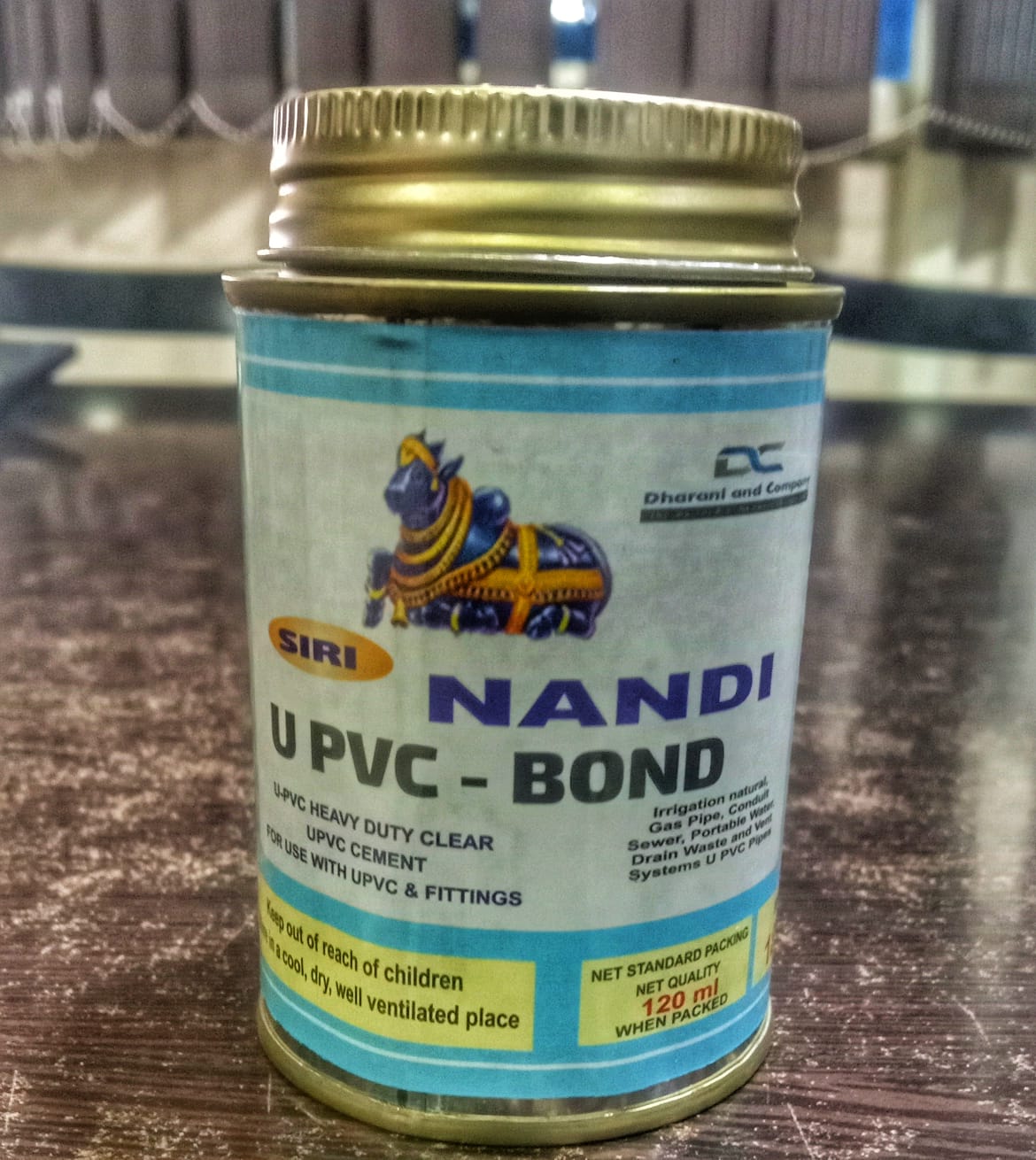 | UPVC SOLVEN CEMENT As a leading UPVC Solvent Cement manufacturer, we pride ourselves on delivering high-quality chemical solutions tailored to the specific needs of the... View product → |
Which product should you choose for the service condition?
Choose by service condition, not by the label “adhesive.” A pvc chemical adhesive for non-pressure drainage does not automatically suit pressure plumbing, conduit, or a repair exposed to heat and chemicals. Match the cement to the pipe, fitting, movement, exposure, and time available before commissioning.
| Option | Check before selection | When it applies |
|---|---|---|
| Non-pressure drainage | Drainage pipe and fitting specification, joint movement, waste-chemical exposure, commissioning time | Gravity drains and waste lines |
| Pressure plumbing | Cement grade, pipe classification, diameter range, cure schedule before hydrostatic testing, potable-water approval | Pressurised or drinking-water systems |
| Conduit, fabrication, or repair | Rigid PVC, UPVC, or other substrate; sunlight, heat, vibration, immersion, and chemical exposure | Electrical conduit, workshop work, and maintenance |
Ask for the TDS permitted temperature and humidity range, moisture limits, storage temperature, service-pressure conditions, and chemical-resistance data. A search for pvc solvent for chemical adhesive supplier bangalore is only a sourcing route; compare these technical fields, not the search wording or “fast drying” claim.
Drinking-water use requires approval for the complete cement, pipe, fitting, temperature, and pressure condition.
Before acceptance, inspect:
- Seal, label, applicator, batch number, and shelf-life date
- Sediment, skin formation, stringiness, and any viscosity change
Quarantine the can if traceability is missing, the seal is broken, or the product identity does not match the purchase order. Do not infer suitability from “adhesive”; use the TDS and named approval for the actual service.
Frequently asked questions
What should be inside a complete PVC adhesive supply?
Request the identified adhesive or solvent cement, sealed containers, batch number, manufacture or expiry information, safety data sheet, technical data sheet, and application instructions.
Is PVC adhesive solvent cement, cleaner, primer, or another solvent?
Solvent cement joins compatible PVC surfaces by softening the material and bonding the parts. Cleaner removes dirt and grease; primer prepares certain systems. A thinner or general solvent is not a substitute unless the product instructions explicitly permit it.
How should you prepare, apply, and cure a PVC joint?
Cut the pipe square, deburr it, dry-fit the parts, clean the contact surfaces, apply the specified cement evenly, assemble with a twisting motion, hold the joint briefly, and wait the stated cure time before pressure testing or service.
What must a Bangalore quotation specify before you place the order?
Ask the supplier to state the product grade, intended PVC type, pack size, quantity, batch and shelf-life policy, price, GST, delivery location, freight, lead time, payment terms, SDS, technical data sheet, and replacement terms for damaged or expired stock.
Which PVC adhesive should you choose for the service condition?
Match the cement to the pipe material, joint size, pressure rating, temperature, chemical exposure, and installation environment. Confirm compatibility with the manufacturer’s technical data sheet rather than choosing only by colour or price.
Related product
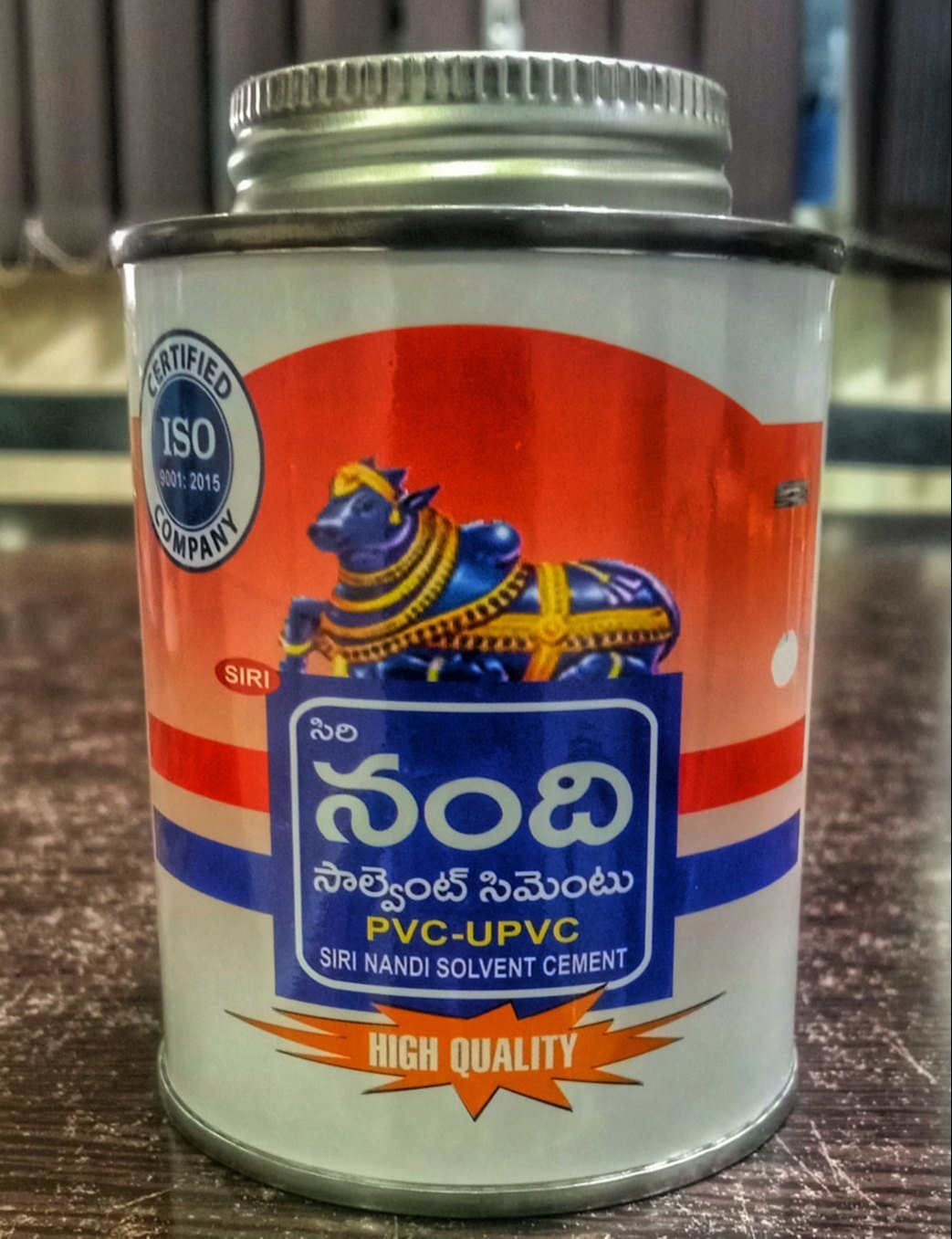 | PVC SOLVENT Siri Nandhi stands as a reputable PVC solvent manufacturer, delivering quality chemical solutions to meet industrial demands. View product → |
Keywords