An opened UPVC solvent cement can lose solvent, thicken, leak or become contaminated when the lid, applicator or storage location is mishandled. You will be able to close the container correctly, choose a safer storage area, assess the cement before reuse and set up a practical storage routine for workshop, vehicle and construction-site conditions.
Key takeaways
- Wipe the rim, threads and sealing surfaces before closing the container.
- Store cement upright in a cool, dry, ventilated place away from heat and flames.
- Secure the dauber and container upright before transporting partly used cement.
- Discard cement that is gelled, stringy, contaminated or incompatible with the product instructions.
How to close an opened container without shortening its usable life
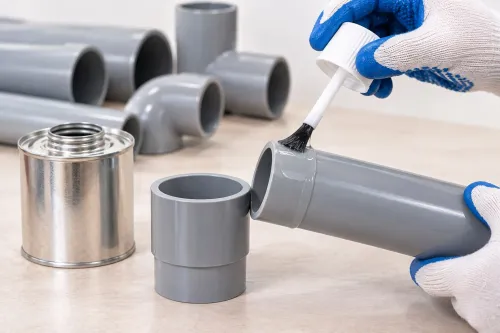
Close the container immediately after every application: wipe wet cement from the can rim, lid threads and sealing surfaces before it dries. A loose closure lets solvent escape, thickening the cement and shortening its usable life.
- Inspect the lid, brush cap or dauber assembly for cracks, dirt and hardened residue. Clean or replace damaged parts according to the manufacturer’s instructions.
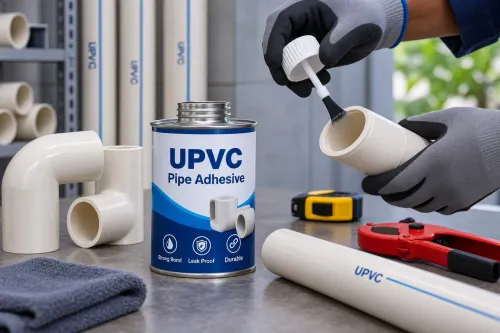
- Keep the applicator clean and use it only with the compatible cement specified for that pack. Do not leave a brush protruding if it prevents the lid from sealing.
- Fit the original closure and tighten it fully. Check that the lid sits evenly against every sealing surface.
- Mark the date opened on the label, then issue stock by first-expiry, first-out. Record the product’s expiry date and batch number with the opening date.
The printed shelf life normally applies to an unopened container, not a guaranteed period for UPVC solvent cement after opening. Solvent loss begins as soon as air enters, so a can that remains within its printed date can still become unsuitable after poor closure.
Keep the cement in its original labelled pack. The label preserves the product name, batch number, hazard information, expiry date and manufacturer instructions. Do not transfer it to a bottle or ordinary plastic container: incompatible plastics can be attacked by the solvent mixture, and an unlabelled replacement removes critical handling information.
Where to store UPVC solvent cement and how temperature changes it
Store UPVC solvent cement in a cool, dry, shaded, well-ventilated indoor area. A sound UPVC solvent cement storage arrangement includes:
- Keep it away from direct sunlight, hot warehouse roofs, boilers, steam lines, welding, sparks, flames, smoking areas and other ignition equipment.
- Keep it separate from strong oxidisers, oxygen cylinders, oxidiser containers, heat-producing chemicals, food and drinking water.
- Where flammable-liquid rules apply, use an approved flammable-liquid cabinet or another compliant arrangement. An ordinary metal cupboard is not automatically suitable.
- Keep the can upright on a stable surface, away from dampness, dust and unauthorised access.
| Storage choice | What temperature does | Action |
|---|---|---|
| Label or SDS range | Defines the product’s storage range or maximum temperature | Follow that instruction; do not substitute a universal “room temperature” rule |
| Hot location | Increases vapour generation and accelerates solvent loss, even with the lid apparently closed | Move the container to a cooler approved store |
| Refrigerator or freezer | Can cause condensation, viscosity changes, separation and gel formation; removal can create unsafe vapour conditions | Do not refrigerate or freeze unless the manufacturer expressly instructs it |
Ventilation prevents solvent vapour from accumulating in cupboards, vehicles, site containers and enclosed work areas. It does not make welding, smoking or other ignition sources safe. A leak or loose closure can release flammable vapour, so control ignition sources around the container even when it appears sealed.
How to protect the brush, dauber and partly used container during transport
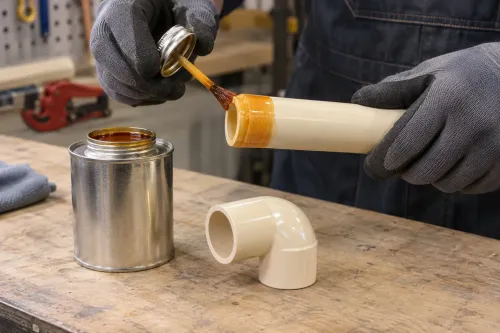
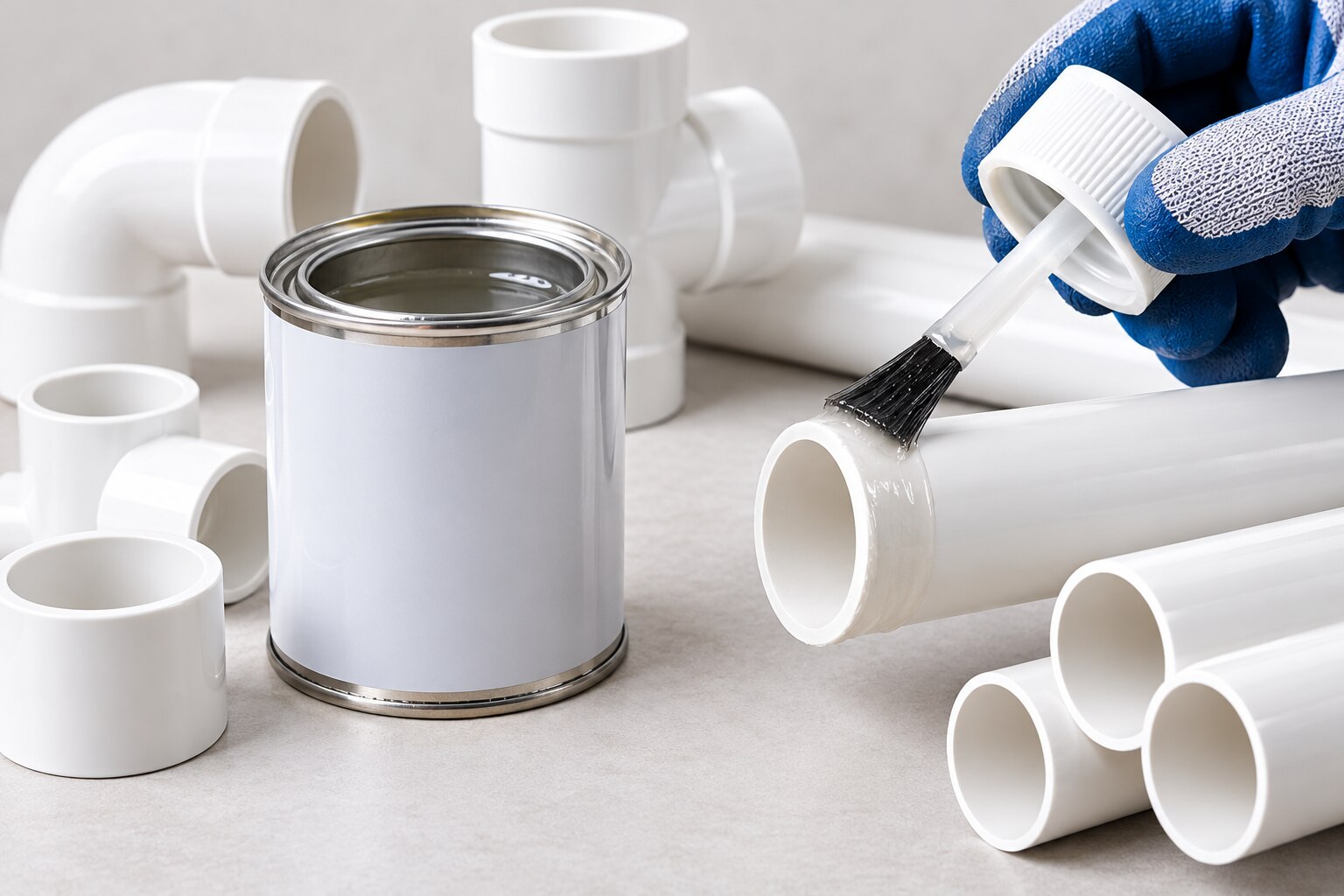
A wet brush or dauber can prevent a lid from sealing, collect dust and leave dried cement blocking the applicator. Follow the manufacturer’s closure instructions: brush-in-lid, screw-in dauber and separate applicator designs do not close in the same way.
1. Keep the applicator clean and use it only with the compatible cement specified for that pack. Never balance an open lid on the brush, leave a wet brush on a dusty surface or allow debris into the can.
2. Before moving the pack, remove cement residue before it hardens and confirm that the brush cap, dauber assembly or separate applicator is fitted as the label directs. Do not return contaminated cement to the container unless the label expressly permits it.
3. Keep the partly used can upright on a stable, level surface inside secondary containment that can catch a leak. This applies in the workshop, vehicle and construction site.
4. During transport, secure the can so it cannot roll, tip or strike another container. Keep it out of direct sun, away from passengers and food, and out of hot vehicle compartments.
For solvent cement care in Bangalore, use an indoor, shaded position during loading and unloading rather than leaving the pack on a vehicle bed. A sealed container still needs ventilation and ignition-source control: a loose closure or leak can release flammable vapour, so keep it away from flames, welding, sparks and smoking areas.
How to decide whether stored cement is still fit for use
1. Start with the record, not the appearance. Check the product label, expiry date, batch number, date opened and storage history. The printed shelf life normally covers an unopened container; it is not a guaranteed life after opening.
For UPVC solvent cement after opening, note whether the can was left open, exposed to heat, frozen, or stored without a reliable temperature record.
2. Inspect the cement in good light before applying it. Reject it if you find a skin, lumps, gel particles, pronounced stringiness, irreversible separation or a major change from its normal viscosity.
Do not use a container that has passed its labelled shelf life or has an uncertain storage history for pressure, potable-water or other critical joints unless the manufacturer approves it.
3. Stir only when the product instructions permit stirring, and only to homogenise ordinary settling. Stirring cannot replace solvent lost through a loose lid or reverse polymerisation. Never add thinner, acetone or another solvent: dilution changes the solvent balance, resin concentration and viscosity, creating a liquid that looks usable but can fail in service.
4. ASTM D2564 is commonly referenced for PVC solvent cements, but it does not establish one universal opened-container life. Follow the specific label, technical data sheet and manufacturer decision for the UPVC solvent cement storage history.
5. Put rejected cement through the site’s hazardous-waste procedure. Never pour it into a drain, onto soil or into a watercourse.
How to build a safer Bangalore storage routine around product-specific instructions
Make the indoor store the default for how to store upvc solvent cement bangalore workshops use. Choose a shaded, well-ventilated room instead of an outdoor or semi-open rack, protecting cans from daytime heat, monsoon moisture, dust and unauthorised access. Do not treat dampness as ventilation; moisture and dust can contaminate a rim or applicator.
| Option | What it means | When it applies |
|---|---|---|
| Indoor shaded store | Controlled exposure, ventilation and restricted access | Routine warehouse, workshop and site storage |
| Outdoor or semi-open rack | Heat, rain, dust and theft exposure | Reject as the normal storage location |
| Flammable-liquid cabinet | Approved containment for flammable products | Use when the label, SDS or local fire rules require it |
Keep a written stock record with the product name, batch number, expiry date, date opened, storage location and inspection result. Store only compatible products together, separated from oxidisers, oxygen cylinders, food, drinking water and heat-producing materials.
Before accepting or issuing an opened can, check its label, safety data sheet and technical data sheet. Confirm the specified temperature range, closure method, applicator-cleaning instruction and disposal route; pack designs and solvent formulations differ.
Dharani and Company can help Bengaluru buyers obtain documents for the exact pack, but request written opened-container guidance rather than assuming room temperature is safe. This is the practical basis of solvent cement care bangalore teams can repeat:
- Close the original container fully.
- Label the opening date and segregate it.
- Ventilate the store and inspect the cement.
- Reject it when its condition or history is uncertain.
Related product
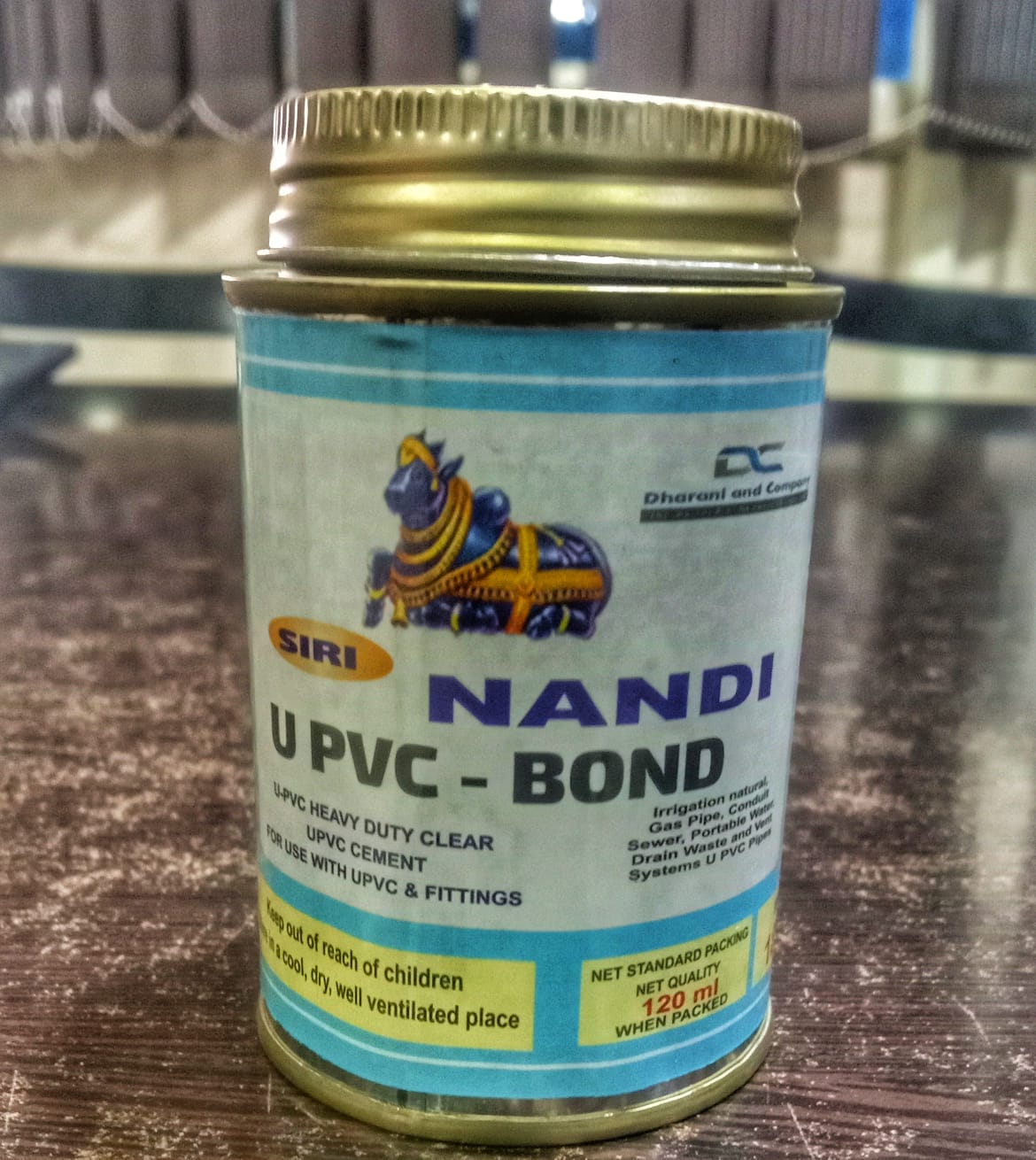 | UPVC SOLVEN CEMENT As a leading UPVC Solvent Cement manufacturer, we pride ourselves on delivering high-quality chemical solutions tailored to the specific needs of the... View product → |
Frequently asked questions
How should you close an opened UPVC solvent cement container?
Close it immediately after application. Wipe wet cement from the can rim, lid threads and sealing surfaces before tightening the lid. Clean contact surfaces prevent a poor seal and reduce solvent loss.
Where should you store opened UPVC solvent cement in Bangalore?
Store it upright in a cool, dry, well-ventilated area away from direct sunlight, ignition sources and incompatible chemicals. Follow the storage temperature printed on the product label or safety data sheet, because heat accelerates solvent loss and thickening.
How do you transport partly used UPVC solvent cement safely?
Tighten the container, protect the dauber from damage and keep the container upright in a secured secondary tray or box. Prevent movement, leaks and exposure to heat during transport.
How can you tell whether stored UPVC solvent cement is still fit for use?
Check the product against its original appearance and instructions. Do not use it if it is gelled, stringy, unusually thick, contaminated, separated or difficult to spread evenly. Confirm the container remains sealed and check the product-specific shelf-life guidance before use.
Keywords