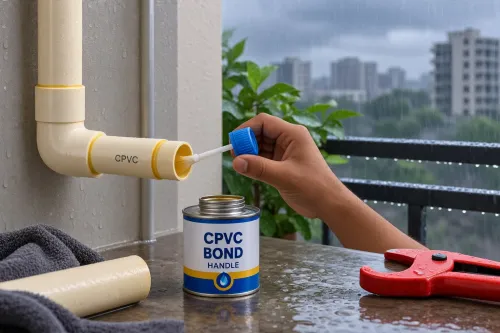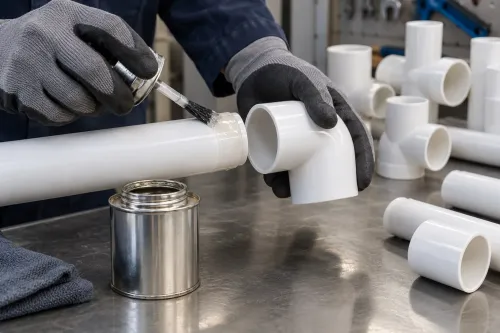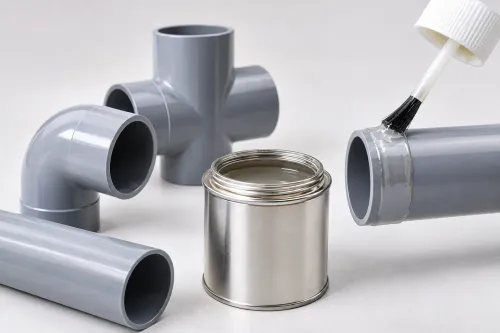


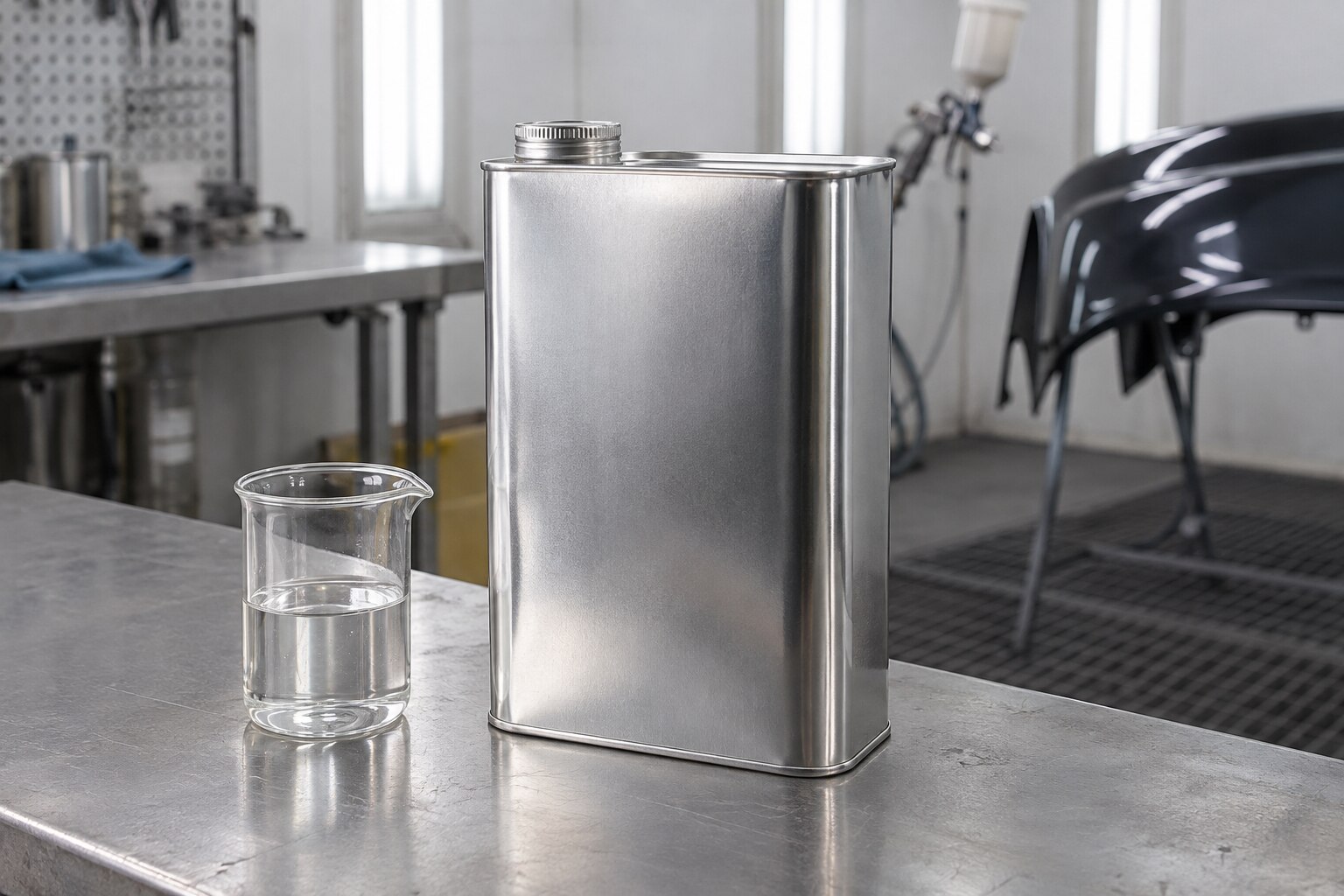
NC thinner is usually formulated for nitrocellulose coatings, while CPVC solvent cement is engineered to soften compatible pipe surfaces and deposit a resin film that forms the joint. By separating these products, checking ASTM F493-related documentation, and following a controlled bonding sequence, you can decide whether thinner has any legitimate place in your operation or belongs outside the jointing process.
Key takeaways
- Do not use general-purpose NC thinner as CPVC bonding cement.
- Use CPVC primer and CPVC cement specified for your pipe system.
- Never dilute CPVC cement with NC thinner; it can weaken the joint.
- Verify pipe fit, cement coverage, cure time, and leak-test results.
Is NC thinner chemically suitable for bonding CPVC pipe?
No: general-purpose NC thinner is not chemically suitable as the bonding agent for CPVC pipe. “NC thinner” is not a standardized chemical product; it usually means a variable blend of ketones, esters, aromatic hydrocarbons, and sometimes alcohols intended for nitrocellulose coatings.
The same trade name can therefore hide different solvency, evaporation rate, resin compatibility, nonvolatile content, and levels of CPVC attack.
- Request the current safety data sheet (SDS), technical data sheet, and batch specification.
- Check the stated viscosity, density, flash point, evaporation rate or evaporation profile, and nonvolatile content.
- Ask for documented compatibility with the exact CPVC compound, pipe, and fitting materials—not merely a demonstration that the liquid softens plastic.
- Require a recommended application method and written confirmation of whether any auxiliary use is permitted.
This matters to anyone searching for nc thinner for cpvc bond bangalore: a quick shop trial proves almost nothing about joint performance. CPVC solvent cement contains compatible solvents, dissolved CPVC resin, and the formulation needed to create a solvent-welded joint.
NC thinner does not provide that resin film, so it cannot replace approved CPVC cement, even if it cleans or softens the surface. Use it only for a separately validated auxiliary task.
Which product belongs at each stage of a CPVC bonding job?
Each product has one job in a CPVC bonding operation; using a cheaper solvent across every stage can produce a joint that looks sound but fails under pressure.
| Product | Function | Do not assume |
|---|---|---|
| CPVC solvent cement | Dissolves and deposits CPVC resin to form the solvent-welded joint | A general-purpose thinner is not a substitute |
| Approved primer | Chemically prepares the CPVC surface for the specified cement system | A visibly clean surface is not automatically ready for bonding |
| Cleaner | Removes grease, dust, oil, or loose contamination | Cleaning does not prove chemical preparation is complete |
| Acetone-based cleaner | Removes selected surface contamination when the pipe, fitting, and cement instructions permit it | Acetone is not automatically an approved primer |
| NC thinner | Solvent for coating-related work or separately validated auxiliary cleaning | It may leave residue or cause swelling, softening, crazing, poor wetting, or cure failure |
Use the primer named by the pipe or cement manufacturer. A cleaner can remove grease while leaving the polymer surface chemically unsuitable for the cement system; an incompatible solvent can also attack the pipe or fitting before assembly.
If you search for a cpvc bond supplier bangalore, request separate identification for:
- CPVC solvent cement, including its ASTM F493 conformity documentation
- Primer or cleaner, with the permitted pipe and fitting materials
- NC thinner, with its SDS and stated coating or tool-cleaning use
Reject a mixed description such as “solvent” or “bond chemical” until the supplier identifies the exact product, intended stage, and compatibility limits. Keep any auxiliary thinner away from bonding surfaces unless the written instructions approve its use and confirm residue control.
What happens when NC thinner is added to CPVC cement?
Do not add NC thinner to CPVC cement unless the cement manufacturer’s technical data sheet explicitly permits that exact product and ratio. A cement that has become thick is not automatically safe to restore with thinner; its original solvent balance, resin concentration, and application properties may already have changed.
| Changed property | What dilution can do |
|---|---|
| Viscosity | Make the cement run, drain from the joint, or form an uneven coating. |
| Solids content | Reduce the CPVC resin deposited between pipe and fitting. |
| Wet-film behaviour | Produce a film that is too thin, uneven, or prone to skinning. |
| Open time | Shorten the working window or make it unpredictable. |
| Solvent balance and polymer dissolution | Prevent the formulation from softening and dissolving the CPVC surfaces as designed. |
| Surface wetting | Leave dry spots, poor coverage, or trapped voids. |
| Cured-joint strength | Reduce polymer interdiffusion and leave a weak or brittle joint. |
Faster flash-off does not mean a stronger bond. Excessive evaporation can skin the surface before the joint closes, reduce working time, trap voids, and prevent complete interdiffusion. The unauthorized mixture can then cause unreliable cure, leaks, rejected joints, loss of warranty, or invalidation of potable-water and other approval conditions.
Use NC thinner around the operation only for a documented tool-cleaning task when the SDS and compatibility checks cover the tool, pipe, fitting, gasket, and coating materials. Keep residue away from bonding surfaces; even a thin film can alter cement wetting and cure.
How do you make and verify a CPVC solvent-welded joint?
- Cut the pipe square.
- Deburr the inside and outside edges.
- Chamfer the pipe end.
- Dry-fit the joint and confirm full insertion.
- Mark the required insertion depth on the pipe.
- Clean both surfaces with the specified product.
- Apply the approved primer when the pipe-and-cement system requires it.
- Apply CPVC solvent cement evenly to the specified surfaces.
- Assemble fully with a quarter-turn.
- Hold the joint still for the time printed on the cement label.
A good joint shows complete insertion to the depth mark, an even cement bead, and no movement during the hold period. Do not judge readiness by solvent flash-off alone: cure time depends on pipe diameter, temperature, humidity, interference fit, and ventilation.
Excessively fast evaporation can reduce wetting and working time, leaving skinning, voids, incomplete polymer interdiffusion, or a brittle joint.
Document or question | What to verify | Decision
Pipe manufacturer’s instructions | Cutting, chamfering, primer use, insertion depth, assembly, and cure schedule for the exact pipe and fitting | Follow these instructions where they are more specific
Cement technical data sheet | CPVC suitability, temperature and humidity cure tables, storage limits, and application method | Reject a product with no CPVC instructions
Cement compliance claim | Product is intended for CPVC and covered by ASTM F493 | Do not treat general-purpose thinner as compliant
Supplier documentation | Written compatibility confirmation for the exact CPVC compound and proposed process | Treat “nc thinner manufacturer bangalore” as a documentation-search starting point, not proof of compatibility
Get that confirmation in writing; a dealer’s verbal recommendation is not process validation.
Is buying NC thinner worth the cost for your CPVC operation?
NC thinner is usually not worth buying for the CPVC bonding step itself. A lower drum price can disappear through rework, leaking joints, rejected assemblies, production downtime, and loss of warranty or approval. Keep the joint under the specified CPVC primer-and-cement system.
A separate purchase can make commercial sense only for a documented coating-cleanup or compatible tool-cleaning process. Control dispensing, provide ventilation, eliminate ignition sources, and prevent residue from reaching pipe, fitting, gasket, or bonding surfaces.
Qualify an industrial thinner dealer bangalore using this procedure:
- Reject drums with damaged seals, bulging, leaks, unreadable labels, or altered packaging.
- Record drum age, storage history, temperature exposure, and whether the container was opened.
- Require the supplier’s re-sealing practice for partially used drums; volatile loss and contamination can change performance.
- Obtain a current SDS carrying the product name, lot number, hazards, flash point, and handling controls.
- Match each delivery to a certificate of analysis covering the declared batch.
- Ask whether the supplier retains samples from every lot and for how long.
- Obtain written change notification for solvent-blend, raw-material, or packaging changes.
- Preserve traceability from delivery drum to your cleaning record and production batch.
Dharani and Company can be compared with other Bengaluru suppliers only against those documents and the intended auxiliary use, not against price alone. Do not transfer NC thinner into CPVC cement or treat it as primer; the approved cement and preparation products remain the cost-control decision.
Related products
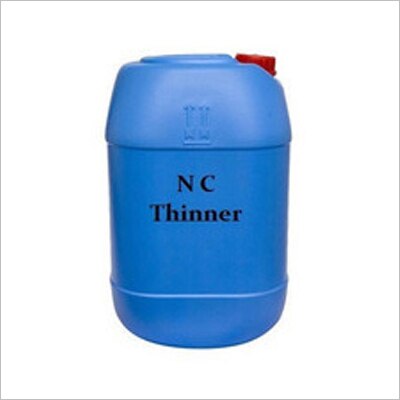 | NC THINNER As a distinguished NC Thinner manufacturer, we specialize in producing high-quality chemical solutions to cater to a wide range of industrial needs. View product → |
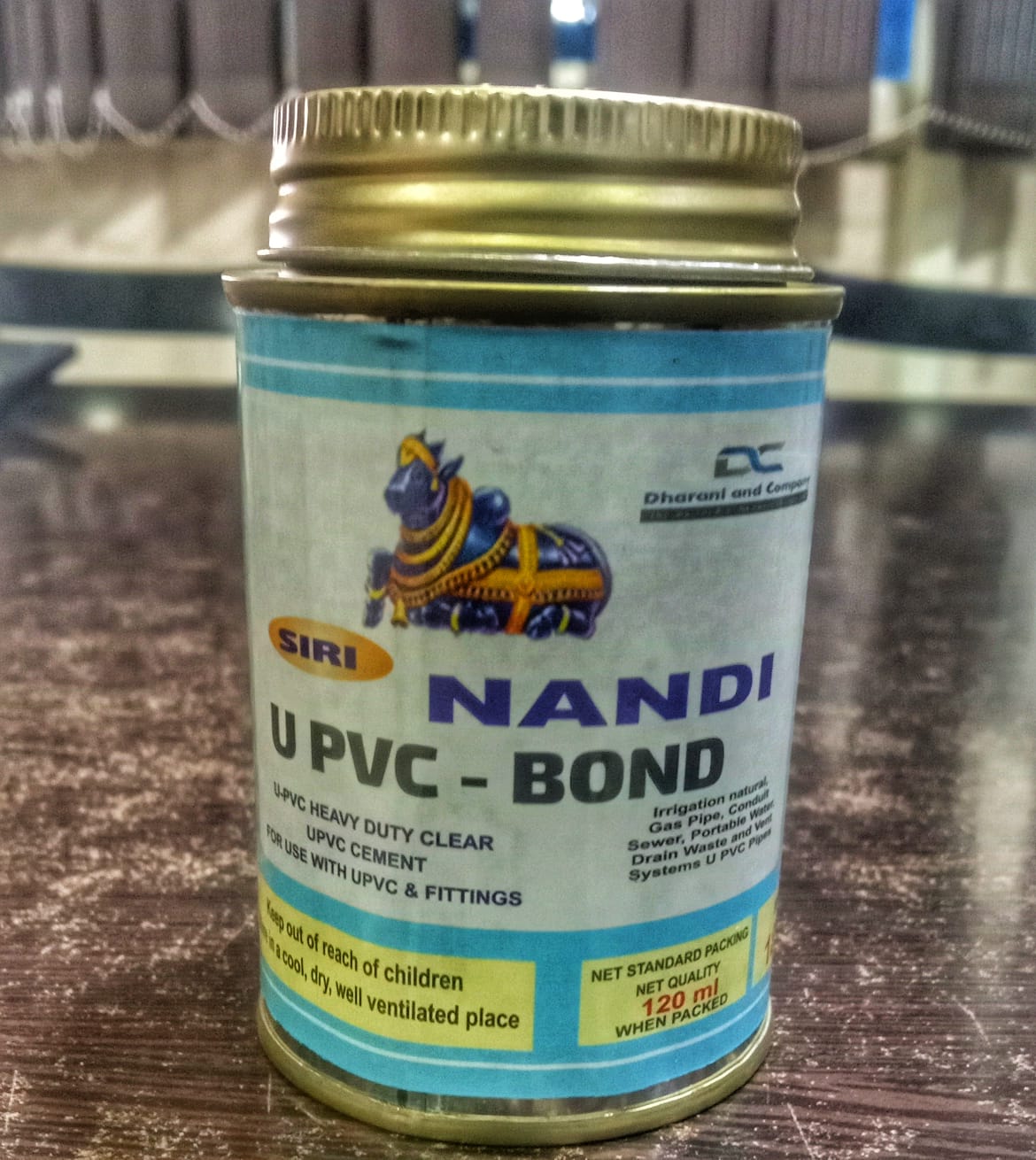 | UPVC SOLVEN CEMENT As a leading UPVC Solvent Cement manufacturer, we pride ourselves on delivering high-quality chemical solutions tailored to the specific needs of the... View product → |
Frequently asked questions
Is NC thinner chemically suitable for bonding CPVC pipe?
No. NC thinner is a variable solvent blend intended for nitrocellulose coatings, not a controlled CPVC solvent-welding formulation. Use CPVC primer and CPVC cement specified for the pipe system.
Which product belongs at each stage of a CPVC bonding job?
Use a clean, dry cloth for preparation, CPVC primer when the cement system requires it, and CPVC solvent cement for joining. Do not substitute general-purpose NC thinner for any of these products.
What happens when NC thinner is added to CPVC cement?
It changes the cement's solvent balance and viscosity, which can reduce softening, interfere with fusion, shorten shelf life, and produce an unreliable joint. Do not dilute CPVC cement with NC thinner.
How do you make and verify a CPVC solvent-welded joint?
Cut the pipe square, remove burrs, clean and dry the surfaces, apply the specified primer and CPVC cement, assemble fully with a twist, and hold the joint. Follow the cement label's cure schedule, then inspect coverage and perform the specified pressure or leak test.
Related products
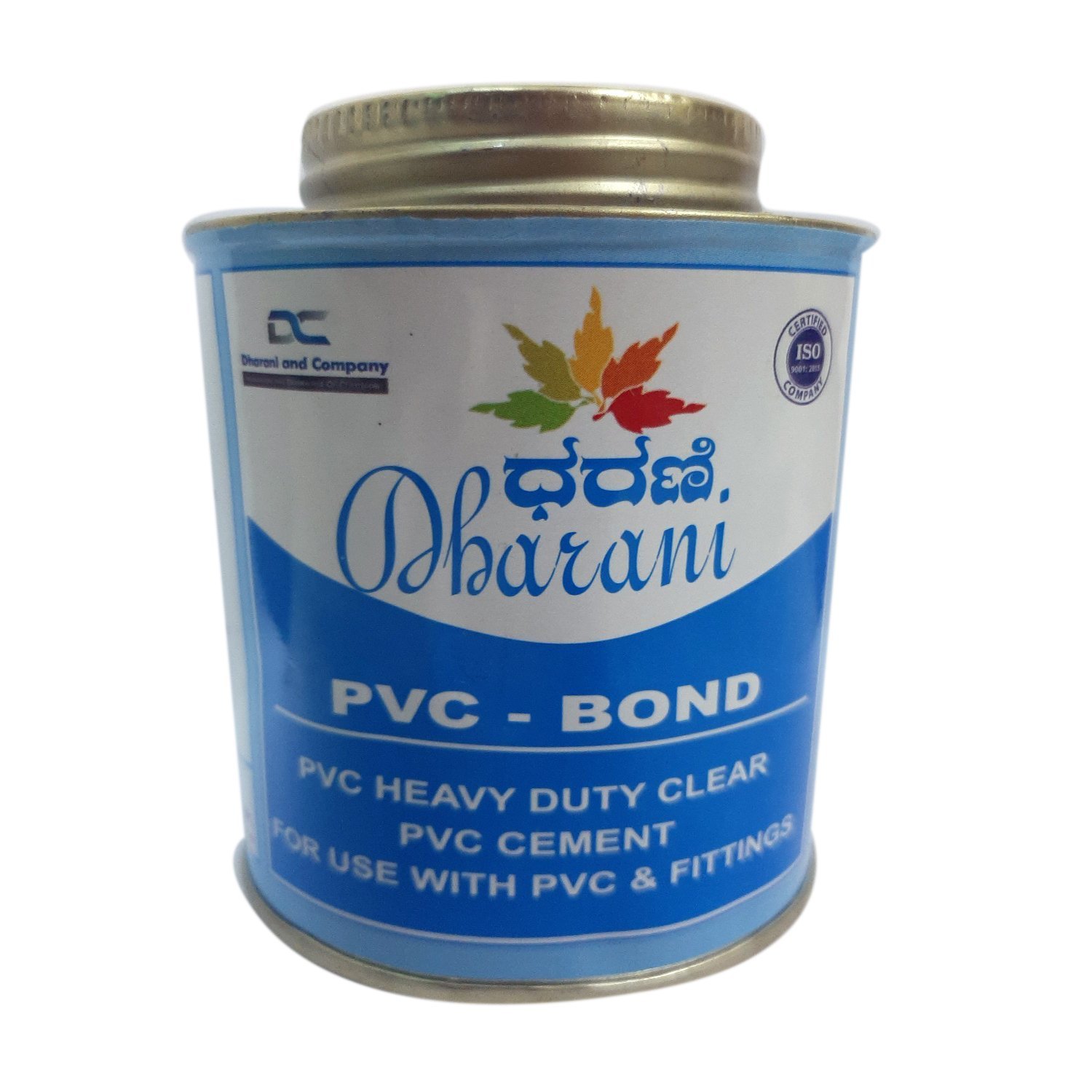 | PVC SOLVENT As a leading PVC solvent manufacturer, we take pride in delivering top-notch chemical solutions tailored to industrial needs. View product → |
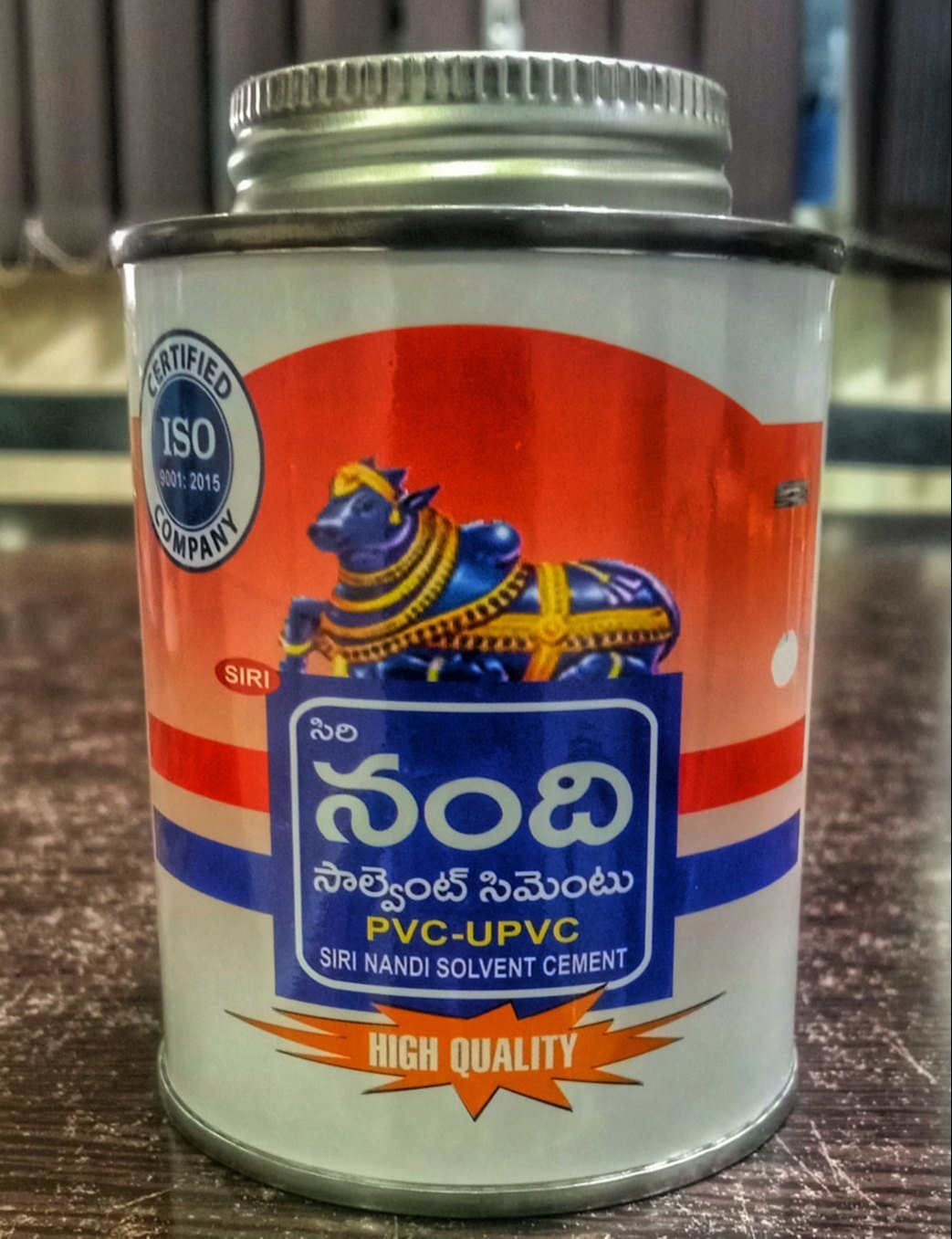 | PVC SOLVENT Siri Nandhi stands as a reputable PVC solvent manufacturer, delivering quality chemical solutions to meet industrial demands. View product → |