
A solvent that wipes wet paint from a tool may do nothing to a fully cured epoxy film, while a strong stripper can damage plastic, rubber, or a finished surface. You will be able to distinguish these product categories, test compatibility, choose an application method, and specify the information needed before buying or using one.
Key takeaways
- Use paint remover for cured coatings, not as a substitute for every thinner.
- Test compatibility on a hidden area before treating plastic, rubber, wood, or painted metal.
- Apply a controlled film, wait for softening, then scrape and neutralise as directed.
- Request the SDS, technical data sheet, batch number, and application guidance from suppliers.
Paint remover, stripper, thinner, or cleaning solvent: what is the difference?
The job defines the product. Paint remover or paint stripper penetrates, swells, softens, or chemically breaks an existing coating, especially after it has cured. A thinner reduces paint viscosity or changes its application properties; it is not automatically a stripping product. A degreaser targets oil, grease, and process contamination.
| Product | Primary job | What it does not promise |
|---|---|---|
| Paint remover or stripper | Lift, soften, or break cured coating | Safe use on every substrate or immediate recoating |
| Thinner | Reduce viscosity or adjust paint application | Removal of cured paint |
| Degreaser | Remove oil, grease, and process soil | Removal of a sound coating |
| General cleaning solvent | Dissolve wet paint, overspray, adhesive, or residue | Stripping an intact cured film |
“Cleaning solvent for paint” is incomplete purchasing information. State whether the target is wet alkyd, cured acrylic, epoxy, polyurethane, lacquer, powder coating, or 2K automotive paint, and identify whether you are cleaning equipment or removing a coating.
A paint remover becomes a cleaning solvent only for a defined task, such as removing softened coating residue or uncured paint from tools. An industrial paint cleaning solvent can clean without attacking an intact finish, while a strong remover can lift paint yet leave alkaline residue, surfactant, retained solvent, corrosion, or moisture.
Removal and recoating readiness are separate tests. After stripping, follow the specified wipe-down, rinse or neutralisation process, dry the surface fully, and check cleanliness and adhesion before applying new paint. These names describe performance categories, not interchangeable labels.
Which paint and substrate combinations can a remover handle?
Compatibility depends on both the coating chemistry and the surface beneath it. Identify the film before choosing a remover: enamel or alkyd, acrylic, lacquer, polyurethane, epoxy, water-based emulsion, powder coating, or two-component automotive paint.
| Coating | Typical compatibility question | Failure if mismatched |
|---|---|---|
| Enamel or alkyd | Will the remover penetrate the cured film? | Wrinkling without full removal |
| Acrylic or lacquer | Will it dissolve or soften the binder? | Tackiness or loss of gloss |
| Polyurethane or epoxy | Can it break a highly cross-linked film? | Excessive dwell time and scraping |
| Water-based emulsion | Is the film cured and water-sensitive? | Smearing or residue |
| Powder coating or 2K automotive coating | Is a specialist process required? | Surface damage before stripping |
Then identify the substrate: carbon steel, stainless steel, aluminium, wood, concrete, glass, PVC, UPVC, rubber, a plated finish, an adhesive joint, an existing painted substrate, or a composite binder. A formula that strips steel quickly can stain aluminium, soften PVC or UPVC, swell rubber, attack adhesive, lift sound paint, or cause pitting and stress cracking.
Test a concealed area or spare part at the intended application rate, temperature, thickness, and dwell time. Inspect immediately, after drying, and during a delayed check for whitening, swelling, tackiness, staining, embrittlement, fibre lift, or gloss loss. Record the scraping method and result; a clean patch seconds after wiping proves little.
A buyer searching for paint remover Bangalore should demand this trial evidence, not rely on the product name.
How do you apply paint remover and judge whether it has worked?
Start with a clean, controlled test area, then scale the process to the full part or surface only after the coating softens as expected.
1. Remove loose dirt, oil, and dust. Mask adjacent paint, plastic, rubber, glass, and joints that must remain untouched.
2. For a large surface, apply a thick, wet layer with a brush or spreader. Use a cloth for a small spot or residue wipe. Immerse only compatible small parts in a controlled container. Spray only when the technical data sheet permits it and ventilation, overspray control, and equipment compatibility are established.
3. Keep the film wet for the stated dwell time. Do not scrape a hard coating early or let the remover dry; a thin or dried film can stop penetration and increase substrate damage.
4. Scrape the softened coating with a suitable plastic or metal tool. Collect the waste, then wipe away the slurry. If the first pass only wrinkles or softens the top layer, apply another coat rather than forcing the scraper through it.
5. Follow the product instructions for absorbent wipe-down, water rinsing, neutralisation, or washing. Dry the surface fully, then check for residue, corrosion, moisture, and adhesion before recoating.
Wet paint usually needs wiping or washing. Fully cured paint increases waiting, scraping, reapplication, labour, and waste-disposal costs. A search for “paint remover for cleaning solvent Bangalore” should therefore distinguish wet-film cleaning from cured-coating removal, not treat fast evaporation as proof of performance.
When is a paint remover suitable for cleaning tools and equipment?
Match the product to the cure state. Use an industrial paint cleaning solvent to remove uncured paint, overspray, oil, grease, or process residue from tools, spray components, fixtures, and machine surfaces without stripping the underlying finish. Choose a remover only when cured paint must be lifted.
| Choice | Target | Main trade-off | Use it when |
|---|---|---|---|
| Cleaning solvent | Wet paint, grease, oil, residue | Fast wiping but limited attack on cured film | The existing finish must remain intact |
| Paint remover | Cured paint film | Requires dwell time, scraping, and post-cleaning | The coating itself must be removed |
| Highly volatile solvent | Rapid evaporation | Can dry before penetration, redeposit resin or pigment, and increase vapour exposure | Quick wipe-off matters and the residue risk is controlled |
| Slower formula | Extended wet contact | More dwell time but longer drying and possible residue | The film needs time to soften |
Compare cleaning rate, wipe efficiency, residue, dwell time, drying time, ventilation load, and recoat compatibility. Do not select the fastest-evaporating liquid by default.
Check the finished formulation’s SDS for:
- Flash point, which is not boiling point
- Ventilation, ignition-source control, storage, dispensing, and grounding requirements
- Composition and waste-handling instructions
“Methylene-chloride-free,” “low-VOC,” and “NMP-free” are specific claims, not complete safety assessments. Methylene chloride presents serious inhalation hazards, while NMP is subject to reproductive-toxicity restrictions in some jurisdictions, including EU REACH controls. Collect used solvent and paint waste separately; never pour either into a drain.
What should you request from a paint-removal chemical supplier in Bengaluru?
Ask a paint removal chemical supplier Bangalore for documents and process limits, not a generic solvent name. Request the current SDS, technical data sheet, and hazardous-ingredient disclosure where legally available.
| Document | What to request | Why it matters |
|---|---|---|
| SDS and composition | Flash point, hazardous ingredients, VOC information, and transport classification | Sets handling, storage, ventilation, and shipping controls |
| Performance data | Compatible coating types, approved substrates, application method, dwell-time and temperature range | Prevents failed stripping and substrate damage |
| Process data | Coverage or consumption rate, scraping method, and post-strip washing or neutralisation instructions | Reveals labour, material use, and recoat preparation |
| Traceability | Packaging size, batch identification, and waste guidance | Supports stock control, complaint investigation, and lawful disposal |
Describe the job precisely: name the coating chemistry and cure state, substrate, part size, production volume, required finish, and whether you will recoat. Include whether the target is wet alkyd, cured epoxy, polyurethane, powder coating, or 2K automotive paint; “cleaning solvent” alone is not enough.
- Coating: chemistry and wet or cured condition
- Surface: steel, aluminium, PVC, UPVC, wood, concrete, or painted substrate
- Process: brush, immersion, wipe, or permitted spray; temperature and dwell time
- Output: parts per shift, acceptable residue, and recoat requirement
A buyer searching for paint remover for cleaning solvent Bangalore or paint remover Bangalore can use these details to separate a production-grade formulation from a generic thinner. Consider Dharani and Company alongside other Bengaluru suppliers only when its documents match your substrate, coating, process, and safety controls. Choose documented performance, not the product name.
Related product
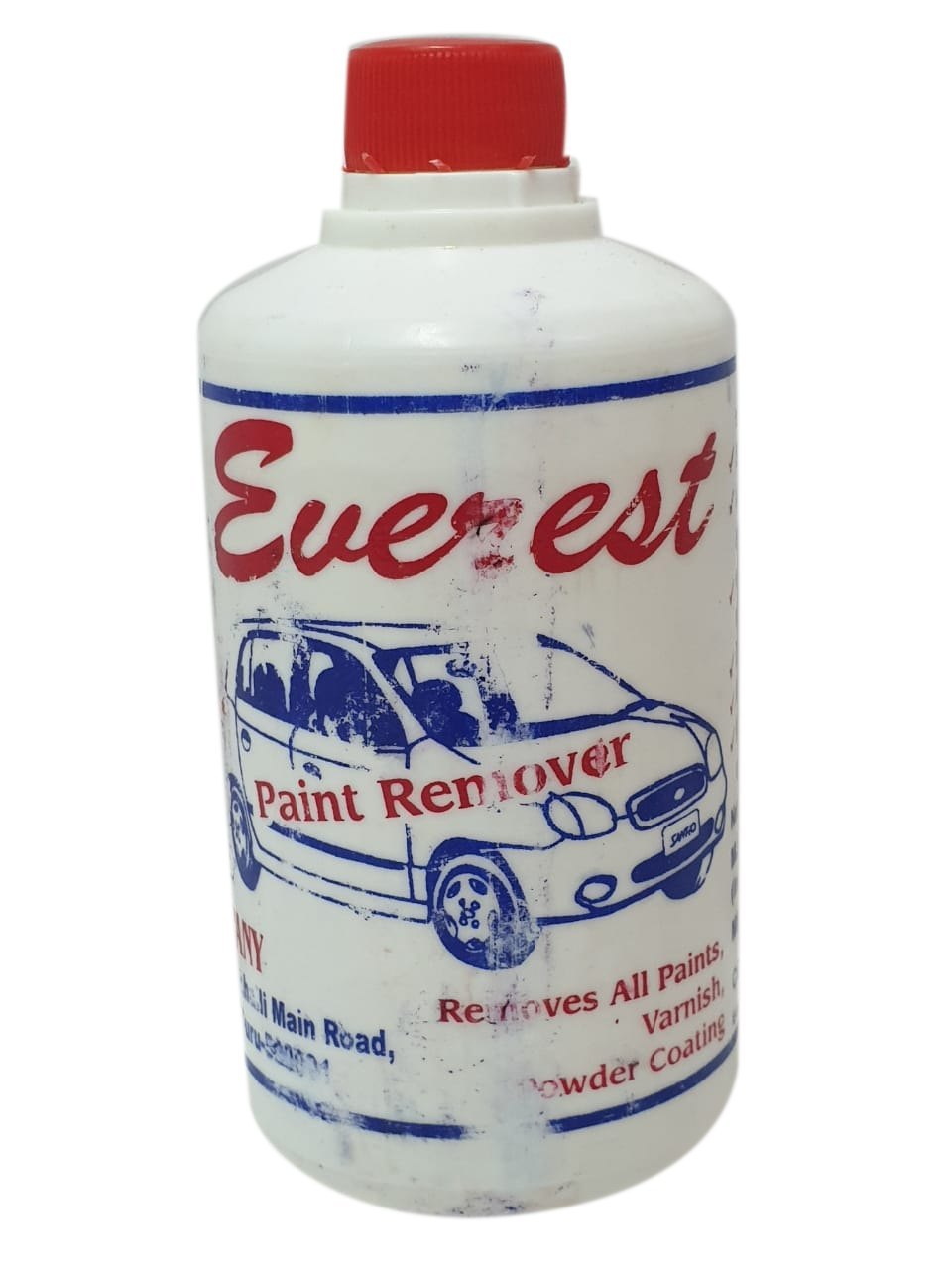 | Paint Remover Everest Paint Remover is a trusted solution for efficient paint removal. View product → |
Frequently asked questions
What is the difference between paint remover, stripper, thinner, and cleaning solvent?
Paint remover or stripper softens, swells, penetrates, or chemically breaks cured coatings. A thinner reduces paint viscosity or changes application properties. A cleaning solvent removes uncured paint, resin, oil, grease, or process residue from tools and equipment.
Which paint and substrate combinations can a paint remover handle?
Compatibility depends on the coating and substrate. Check the product’s technical data sheet, then test a hidden area before treating steel, aluminium, wood, concrete, PVC, UPVC, rubber, or previously painted surfaces.
How do you apply paint remover and judge whether it has worked?
Remove loose dirt, apply an even film, follow the stated dwell time, and test a small area with a scraper. The coating has softened when it wrinkles, blisters, lifts, or scrapes away without excessive force. Remove residue using the supplier’s specified method.
When is a paint remover suitable for cleaning tools and equipment?
Use it for cured paint that ordinary cleaning solvents cannot dissolve, after confirming compatibility with the tool material and seals. For fresh paint, brushes, spray equipment, and general grease, use a purpose-matched cleaning solvent instead.
What should you request from a paint-removal chemical supplier in Bengaluru?
Request the Safety Data Sheet, technical data sheet, coating and substrate compatibility table, application and dwell-time instructions, storage and disposal guidance, batch number, shelf life, and required personal protective equipment.