

A PVC-U pipe joint is not the same as a glued surface or sealed connection: solvent cement softens the pipe and fitting so their polymer surfaces interdiffuse. By matching the cement to the pipe material, pressure duty, diameter, temperature and installation conditions, you can reject unsuitable adhesives and standardise a reliable jointing process.
Key takeaways
- Use solvent cement designed for the exact PVC-U pipe system.
- Match cement to pressure, temperature, fluid and installation conditions.
- Clean, dry, deburr and assemble the joint within the product’s open time.
- Check batch details, technical documents and stock before every purchase.
What “UPVC bond” means compared with other joining methods
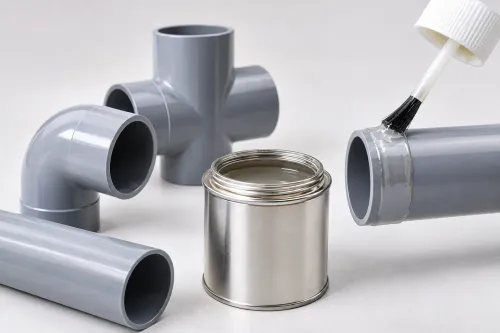
For PVC-U pipework, the right joint is usually a solvent-cemented socket joint, not a glued surface bond. Solvent cement softens and partly dissolves the pipe and fitting surfaces; as solvents evaporate, the PVC chains interdiffuse and form a continuous joint. That is why a product labelled “PVC compatible” is not automatically suitable for pressure service.
| Option | Joint mechanism | Cure, gap and service limits | Correct use |
|---|---|---|---|
| Solvent cement | Solvent-welds compatible PVC-U surfaces | Product-specific open time and cure; limited gap filling; suitable for rated pressure only when the system permits it | PVC-U pipe and socket fittings |
| Contact adhesive | Dries as a film between surfaces | Poor structural gap filling; pressure and chemical resistance depend on the adhesive | Labels, sheets and non-pressure repairs |
| Epoxy | Two-part resin bonds surfaces | Fills gaps, but cure time, temperature and fluid resistance vary | Repairs or supports where the pipe maker allows it |
| Compression fitting | Mechanical seal from gasket and tightened fitting | No solvent cure; size, pressure and temperature depend on the fitting | Demountable or repairable connections |
For a meaningful UPVC solvent cement comparison, fix the pipe material, diameter, pressure rating, carried fluid and installation temperature first. Then check viscosity, gap-filling range, primer requirement, colour, cure schedule, shelf life and applicator size. ASTM D2564 identifies PVC solvent-cement requirements; ASTM D2855 covers joint preparation and assembly.
ASTM F493 is for CPVC cement, not a substitute for PVC-U cement. A compliant cement still fails if the joint is dirty, poorly fitted or moved before curing.
Choose the cement by pipe system, service and installation conditions
Start with the complete pipe-and-fitting system, not the tin alone. Confirm pipe material (PVC-U or CPVC), dimensional series, diameter, pressure class, service temperature, fluid, and project standard. Cement cannot increase the pipe’s pressure rating or compensate for a loose or mismatched joint.
| System or duty | Cement choice | Checks before purchase |
|---|---|---|
| Non-pressure drainage | PVC-U cement approved for drainage duty | Confirm diameter range, joint fit, and non-pressure use |
| Pressurised water or irrigation | PVC-U cement explicitly approved for pressure service | Match pipe pressure class, fluid approval, and required cure time |
| Chemical service | Cement with documented resistance to the carried fluid | Check concentration, operating temperature, and exposure duration |
| CPVC or elevated-temperature service | CPVC cement specified by the pipe-and-fitting manufacturer | Do not treat ASTM F493 cement as interchangeable with every PVC-U system |
Diameter affects viscosity and gap-filling. Use the regular- or medium-viscosity product specified for smaller, close-fitting joints; use heavy-bodied cement only when its label covers the diameter and joint gap. A thicker cement does not fix incorrect cutting or excessive clearance.
Treat temperature, humidity, dust, standing water, and ventilation as selection and scheduling constraints. Cold conditions extend curing; heat can flash off solvent before assembly. Primer is separate from cement: use it only when the system instructions require it.
For any pipe adhesive for businesses, reject “PVC compatible” alone for potable water, pressure, or chemical service; require the approval named by the project or local standard. Short set time is not full cure, so follow the product’s diameter, temperature, and pressure-service cure table.
Prepare and assemble a solvent-cemented PVC-U joint correctly
A leak-resistant PVC-U joint depends on surface preparation more than on using extra cement. The upvc chemical adhesive softens the pipe and fitting surfaces, so dirt, moisture, burrs and a poor fit interrupt the fused zone.
- Cut the pipe square to its axis with a sharp wheel cutter or fine-tooth saw. Remove every burr, then chamfer the outside edge without thinning the wall.
- Measure the fitting socket depth and mark that distance around the pipe. Push the dry pipe fully into the fitting once; it must seat firmly without excessive looseness. Reject damaged, oval or contaminated parts.
- Clean the pipe’s outside and the socket’s inside with the cleaner specified for the cement. Wipe until both surfaces are dry and free from oil, dust and moisture. Apply primer where the product instructions or system specification requires it.
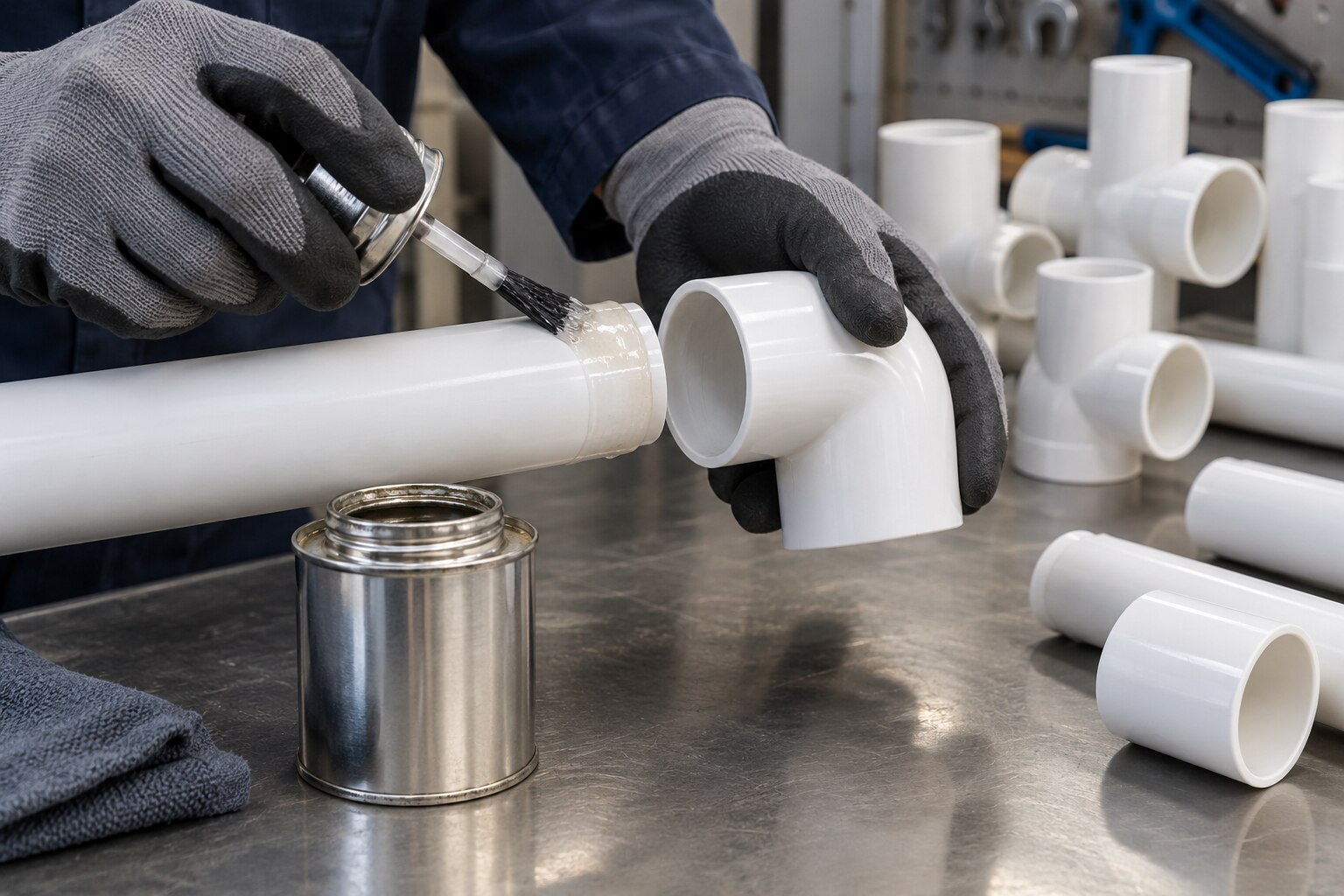
- Stir the cement without whipping air into it. Use the stated applicator, coat the full insertion length of both surfaces, and keep excess cement out of the pipe bore. An incomplete stripe leaves a leak path; a heavy internal bead restricts flow.
- Align the marks, push the pipe fully home in one firm motion, and twist only if the cement instructions permit it. Hold the joint motionless for the specified set time, then wipe away the external bead without disturbing alignment.
- Keep the assembly free from load, water and pressure during the label’s cure schedule. Cure time increases with larger diameter, low temperature, high humidity and wet conditions; follow the product table before testing gradually. Never pressure-test an uncured joint.
Check the label, technical documents and stock before buying
Reject a tin that cannot identify its manufacturer, batch and usable life. The words “UPVC bond” or “PVC compatible” alone do not prove that the product is a solvent cement for your pipe system.
1. Match the label to the job. Confirm PVC-U, not CPVC; pressure or drainage service; pipe diameter range; viscosity or gap-filling class; primer requirement; colour; and the applicable specification, such as ASTM D2564. Check that the cement suits the pipe’s dimensional series, fluid, temperature and fitting manufacturer’s instructions.
2. Request the current technical data sheet and safety data sheet. Compare the stated open time, assembly time, cure schedule, application method, shelf life and storage temperature with your installation conditions. A generic epoxy, contact adhesive or construction sealant is not a substitute for PVC-U solvent cement.
3. Verify traceability before payment. The tin should show manufacturer name, product identity, batch or lot number, manufacture date, expiry or retest date, net quantity and sealed packaging. Ask the distributor to match those details to the invoice and supply batch records or conformity documents.
Whether you buy from Dharani and Company or another distributor, keep these documents with the project file.
4. Inspect stock on arrival. Reject leaking, swollen, rust-damaged or previously opened tins, and do not accept labels obscured by relabelling. Store sealed tins upright in a shaded, ventilated area within the manufacturer’s stated temperature range, away from direct sunlight, ignition sources and hot vehicle interiors.
Rotate by batch and use the earliest valid expiry first.
5. Record the approved brand, batch, pipe system and purchase date before issuing material to the crew.
Related products
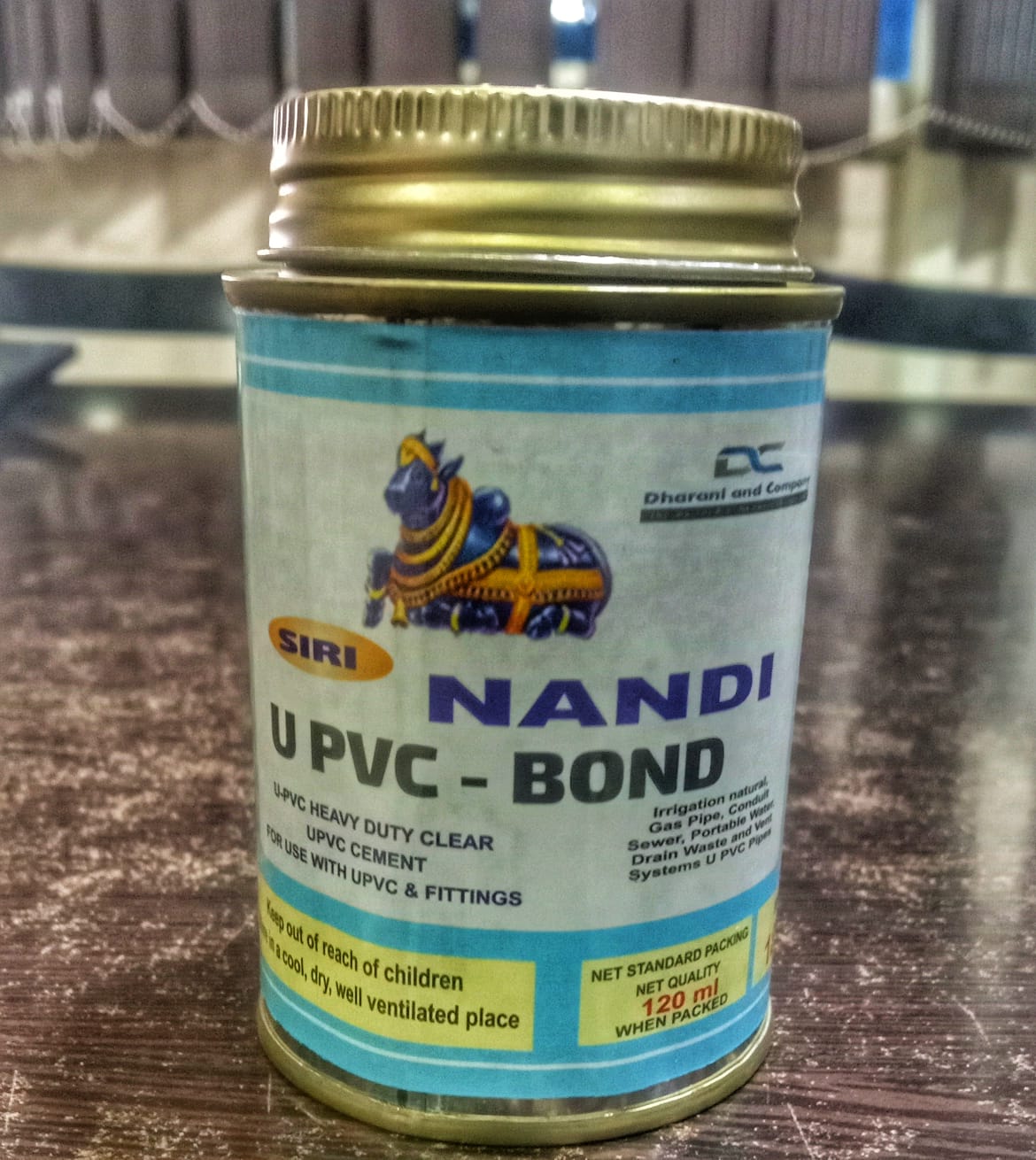 | UPVC SOLVEN CEMENT As a leading UPVC Solvent Cement manufacturer, we pride ourselves on delivering high-quality chemical solutions tailored to the specific needs of the... View product → |
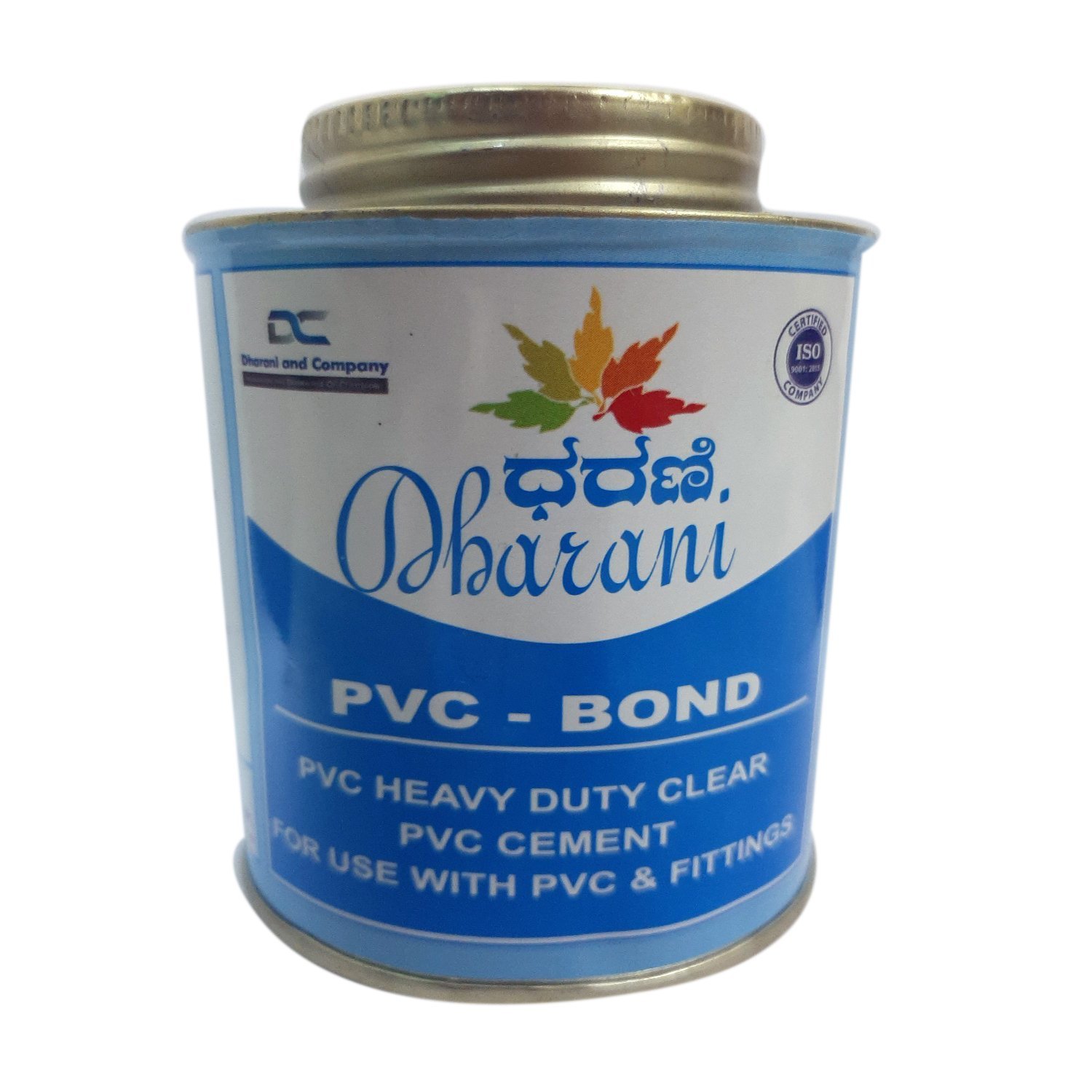 | PVC SOLVENT As a leading PVC solvent manufacturer, we take pride in delivering top-notch chemical solutions tailored to industrial needs. View product → |
Set a purchase and quality-control rule for every job
Approve the cement only after matching it to the complete pipe-and-fitting system, not to the word “UPVC” on the tin. An upvc bond for pipe fitting businesses must suit the PVC-U material, dimensional series, diameter, pressure or drainage duty, fluid, service temperature, and project standard.
Cement cannot raise the pipe’s pressure rating or correct a poor pipe-to-fitting fit.
1. Record the pipe and fitting manufacturer, material, diameter range, pressure class, service fluid, temperature, and installation conditions on the job sheet.
2. Confirm the cement’s specification and intended use. ASTM D2564 covers PVC solvent cement; ASTM F493 covers CPVC solvent cement. Do not substitute a CPVC product for PVC-U without written system instructions.
3. Check the technical data sheet for viscosity or body grade, gap-filling range, cure schedule, application temperature, shelf life, and chemical-service limits. A meaningful upvc solvent cement comparison fixes these details before comparing price or cure speed.
4. Confirm whether the system requires primer. Use the specified primer when required, and do not add one where the manufacturer prohibits it.
5. Quarantine tins with broken seals, missing batch numbers, expired dates, thickened contents, or storage damage. Keep the batch number and supplier document with the job record.
6. Inspect a representative joint after assembly: the pipe must reach the fitting stop, the bead must be continuous, and the joint must pass the specified pressure or leak test after the stated cure time.
Reject the product or installation when any record, compatibility check, or test fails. Never approve a generic adhesive, epoxy, sealant, or “PVC compatible” label for a pressure joint without system evidence.
Frequently asked questions
What does UPVC bond mean for pipe fitting businesses?
UPVC bond usually refers to a solvent-cemented socket joint, where solvent cement softens and fuses compatible PVC-U surfaces rather than merely gluing them together.
How do you choose solvent cement for a PVC-U pipe system?
Match the cement to the pipe and fitting material, pressure service, temperature, conveyed fluid, joint size and installation conditions shown in the technical documents.
How should you prepare and assemble a solvent-cemented PVC-U joint?
Cut the pipe square, remove burrs, clean and dry both surfaces, apply compatible cement evenly, push the pipe fully into the socket, and hold it in position during initial set.
What should you check before buying UPVC solvent cement in Bangalore?
Check the label, material compatibility, application range, batch number, manufacture date, shelf life, safety instructions, technical data sheet and available stock.
How can a pipe fitting business control solvent-cement quality on every job?
Record the product, batch number, pipe system, installation conditions and installer, then inspect preparation, insertion depth, curing time and joint appearance before testing.
Related product
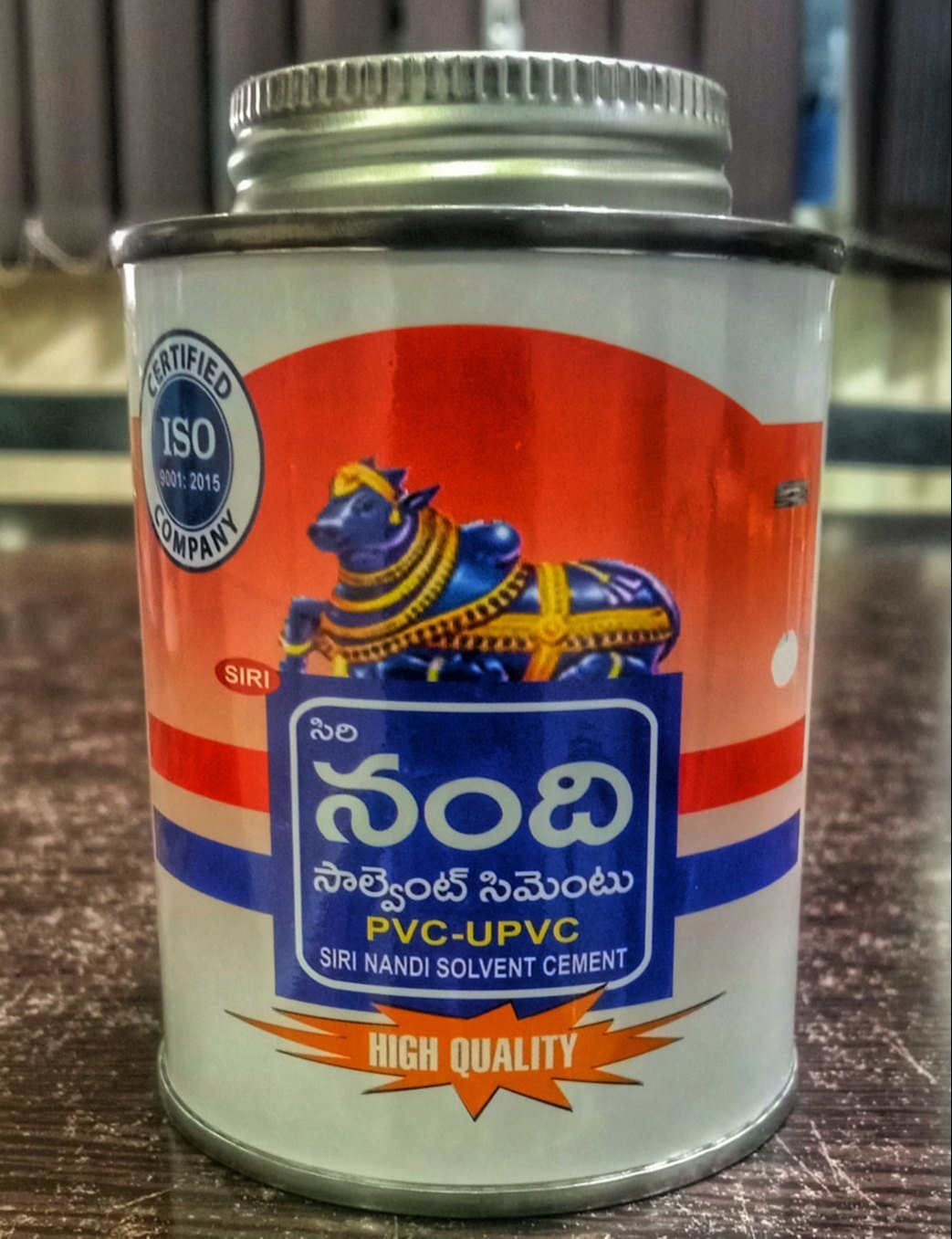 | PVC SOLVENT Siri Nandhi stands as a reputable PVC solvent manufacturer, delivering quality chemical solutions to meet industrial demands. View product → |