

A leaking PVC joint is rarely fixed by choosing a stronger-looking adhesive; the pipe resin, cement formulation, joint fit, preparation and cure schedule all have to match. By the end, you will be able to specify the right solvent cement, check its evidence and prepare the joint without relying on the label alone.
Key takeaways
- Match cement viscosity to pipe diameter, fit, and installation conditions.
- Check chemical compatibility, operating temperature, pressure, and required approvals.
- Clean, prime when specified, assemble fully, and respect cure time.
- Specify resin type, viscosity, colour, pack size, standards, and batch traceability.
How solvent cement creates a welded PVC joint
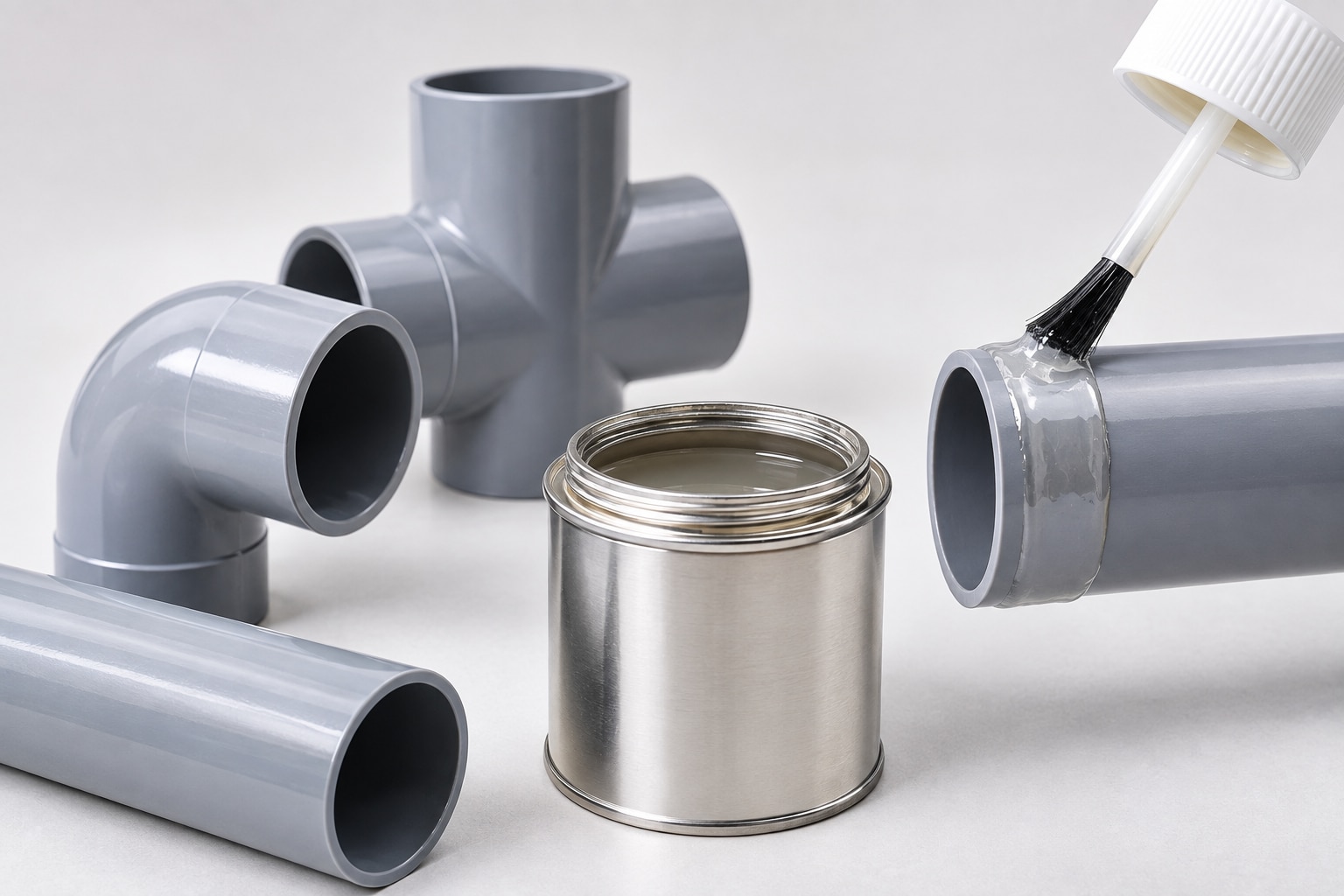
A solvent-welded PVC joint is formed by chemistry, not by glue sitting between two surfaces. The solvent in a PVC pipe bonding solution softens the pipe and fitting surfaces; when you insert the pipe, softened polymer chains interdiffuse across the socket.
As the solvent evaporates, those chains lock together into one welded joint with no threaded metal parts and no heat source at the joint.
Before selecting cement, identify:
- The plastic resin: PVC or PVC-U, CPVC, ABS, or another plastic. These systems are not interchangeable by default. PVC cement is covered by ASTM D2564; CPVC cement is covered by ASTM F493. ASTM D3138 concerns ABS-to-PVC transition joints in non-pressure piping, not automatic approval for a PVC-to-ABS pressure line.
- The joint details: pipe outside diameter, socket depth, pressure or non-pressure service, expected gap, and whether the joint is overhead, vertical, or horizontal. These details determine the suitable cement body and application class.
- The service: chemical concentration, operating temperature, pressure, and exposure duration. A cement’s chemical-resistance claim applies to the cemented joint under stated conditions, not every chemical carried by the line.
- The required documents: pipe and fitting manufacturer instructions, ASTM designation, primer requirement, and potable-water or chemical-service approval where applicable.
The pvc solvent cement benefits for industrial pipe joints Bangalore buyers seek—compact joints and solvent-welding compatibility—depend on this match. Treat “PVC glue” or a location-based search term as a starting point, not a specification.
Match cement viscosity to the joint and installation
Choose solvent-cement body by the joint’s geometry, not pipe diameter alone. A small pipe with a deep socket can need more controlled coverage than a large pipe with a close, well-machined fit. Confirm the cement’s stated viscosity or application class under ASTM D2564.
| Cement body | Joint and installation fit | Main risk |
|---|---|---|
| Regular body | Small diameters, close interference fits, shallow sockets, and horizontal work | Runs out of a loose or vertical joint; limited gap-filling ability |
| Medium body | Moderate diameters, normal socket depth, and routine pressure-pipe assembly | Too little working time if the joint requires slow alignment |
| Heavy body | Larger diameters, wider permitted tolerances, deeper sockets, or vertical and overhead installation | Excess cement can puddle, run, or trap solvent |
A deeper socket needs enough cement to wet the full engagement length, but not a pool at the socket shoulder. A wider gap needs a heavier body only within the pipe and fitting manufacturer’s allowable tolerance; cement cannot correct an undersized, oval, badly cut, or unsupported pipe end.
Heavy cement also demands controlled application because excess material slows solvent escape and can weaken the finished joint.
For a vertical or overhead assembly, use the lowest viscosity that stays on the surfaces during insertion. Keep the pipe fully supported while the joint sets. Searching for industrial pipe adhesive bangalore should lead to a technical request stating resin type, diameter range, joint class, and viscosity—not simply “PVC glue.”
Check service conditions, standards and approvals
A cement marked “PVC” is not automatically suitable for every PVC system. Match the product to the pipe and fitting resin—PVC, PVC-U, CPVC or ABS—and confirm compatibility in the cement manufacturer’s technical data and the pipe manufacturer’s installation instructions.
Check these points before approval:
- Identify the pipe standard, diameter range and pressure or non-pressure service. Confirm the cement meets ASTM D2564 where that specification applies, then match its stated viscosity or application class to the joint design.
- Compare the cement’s pressure and temperature limits with the line’s maximum operating pressure, temperature and required cure time. A joint that survives a pressure test can still fail after premature service.
- Request chemical-resistance data for the actual chemical, concentration, temperature and exposure duration. The claim covers the cemented joint under stated conditions; it does not replace compatibility checks for the PVC compound, gasket and fitting.
- Treat ABS-to-PVC as a specific transition joint. ASTM D3138 covers solvent cements for transition joints in non-pressure piping, not automatically a PVC-to-ABS pressure line.
- For drinking-water service, verify certification for the exact formulation, colour and pack, such as NSF/ANSI/CAN 61 where specified. “Industrial grade” is not a health-effects approval.
A search for pvc solvent cement bangalore identifies a supplier location, not suitability. Put the resin, pipe standard, pressure class, chemical exposure, required primer, approval, pack size and minimum shelf life on the purchase request, then obtain the product data sheet and certificate before ordering.
Prepare, assemble and cure the joint correctly
A leak-resistant joint starts with a square, clean pipe end and ends only after the cemented assembly has cured. A pvc pipe bonding solution cannot compensate for an oval pipe, an undersized socket, poor support or a contaminated surface.
- Cut the pipe square to its axis with a wheel cutter or fine-tooth saw and guide. An angled cut reduces socket engagement.
- Remove burrs from the outside and inside edges, then bevel the outside lightly if the pipe and cement instructions require it. Dry-fit the pipe fully into the fitting and mark the insertion depth.
- Wipe dust, oil and moisture from both surfaces with a clean, lint-free cloth. Do not bond wet PVC; trapped water weakens solvent penetration.
- Apply the specified primer first when the cement system or pipe standard requires it. Allow the surface to reach the stated condition before applying cement.
- Brush an even coat over the full socket depth and pipe insertion area. Excess cement creates runs and voids; too little leaves dry sections.
- Insert the pipe completely to the depth mark while the cement remains wet. Turn it about a quarter-turn during insertion, hold it briefly, and wipe away the bead without disturbing the joint.
- Keep the assembly aligned and supported during the label’s handling and full-cure period. Do not pressurise, bury or thermally cycle the line early.
These steps deliver the pvc solvent cement benefits for industrial pipe joints bangalore searches often seek: compact, solvent-welded joints without threaded metal parts or a joint-side heat source. The phrase itself is not a cure schedule; follow the product label, pipe size, temperature and service-pressure requirements.
Turn the purchase into a complete technical specification
A complete order states the pipe resin—PVC/uPVC, CPVC, or ABS—the pipe standard, diameter range, pressure or non-pressure service, and the required primer. PVC and CPVC are separate systems: compare PVC cement against ASTM D2564 and CPVC cement against ASTM F493.
Specify these points in the purchase request:
- Cement viscosity or application class, matched to the stated diameter, socket depth and joint gap.
- The pipe and fitting manufacturer’s joining instruction, including whether the product is approved for that system.
- Potable-water approval, such as NSF/ANSI/CAN 61, or the exact local approval required for the project. “Industrial grade” is not health-effects certification.
- Chemical-service compatibility with the named fluid, concentration and operating temperature.
- Pack size, minimum shelf life remaining at delivery, and the required delivery condition.
- SDS, batch or lot number, manufacture date, expiry or shelf-life limit, and storage requirements.
ASTM D3138 applies to PVC-to-ABS transition joints in non-pressure piping; do not treat it as approval for a PVC-to-ABS pressure line. A search for PVC solvent cement Bangalore or industrial pipe adhesive Bangalore identifies a location, not a technical grade.
If comparing Dharani and Company with another PVC solvent cement supplier in Bangalore, request identical documents and compare the stated formulation, viscosity, approvals and traceability. Reject decanted or unlabelled containers; retain the original tightly closed pack away from ignition sources and excessive heat.
Related products
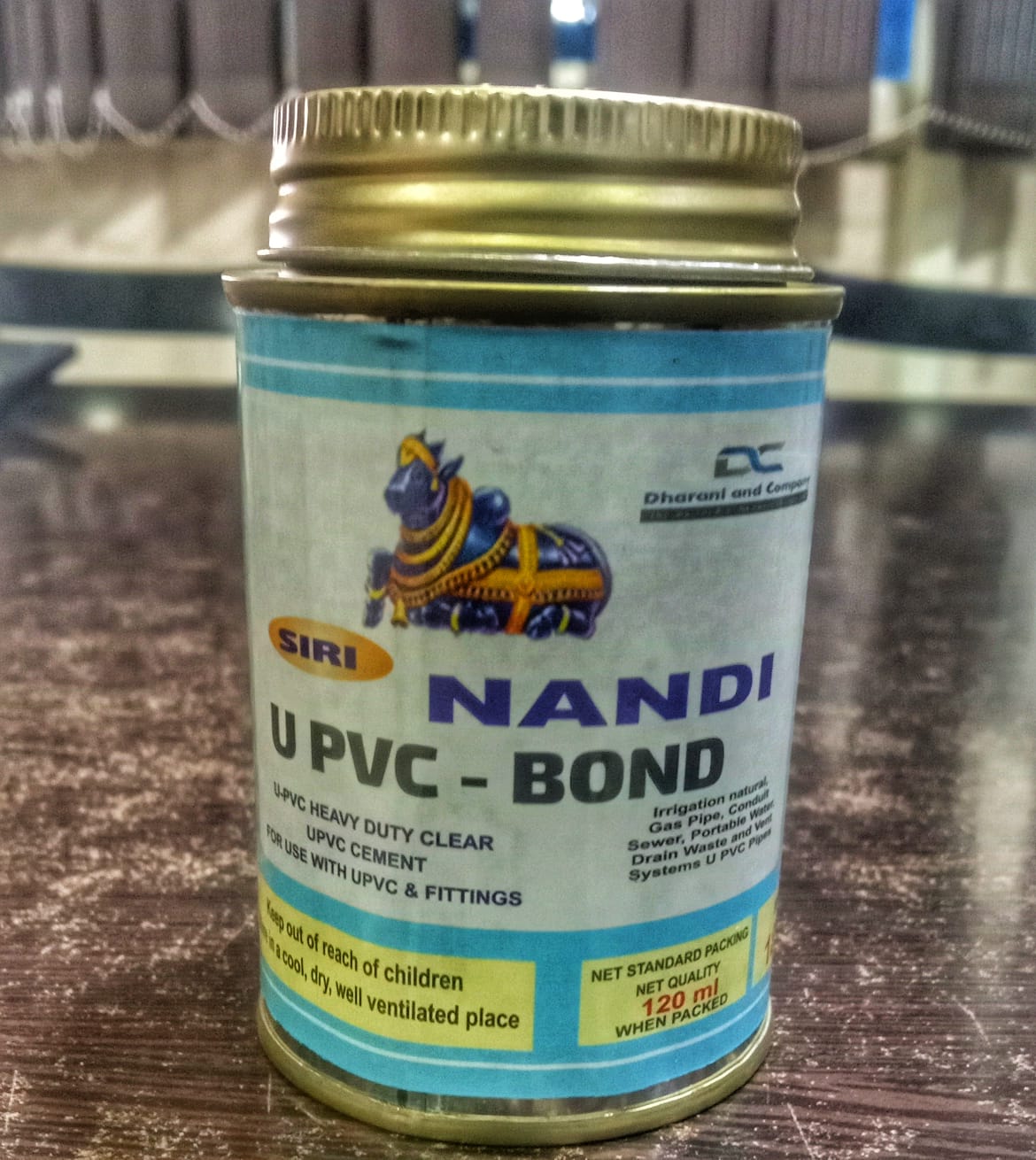 | UPVC SOLVEN CEMENT As a leading UPVC Solvent Cement manufacturer, we pride ourselves on delivering high-quality chemical solutions tailored to the specific needs of the... View product → |
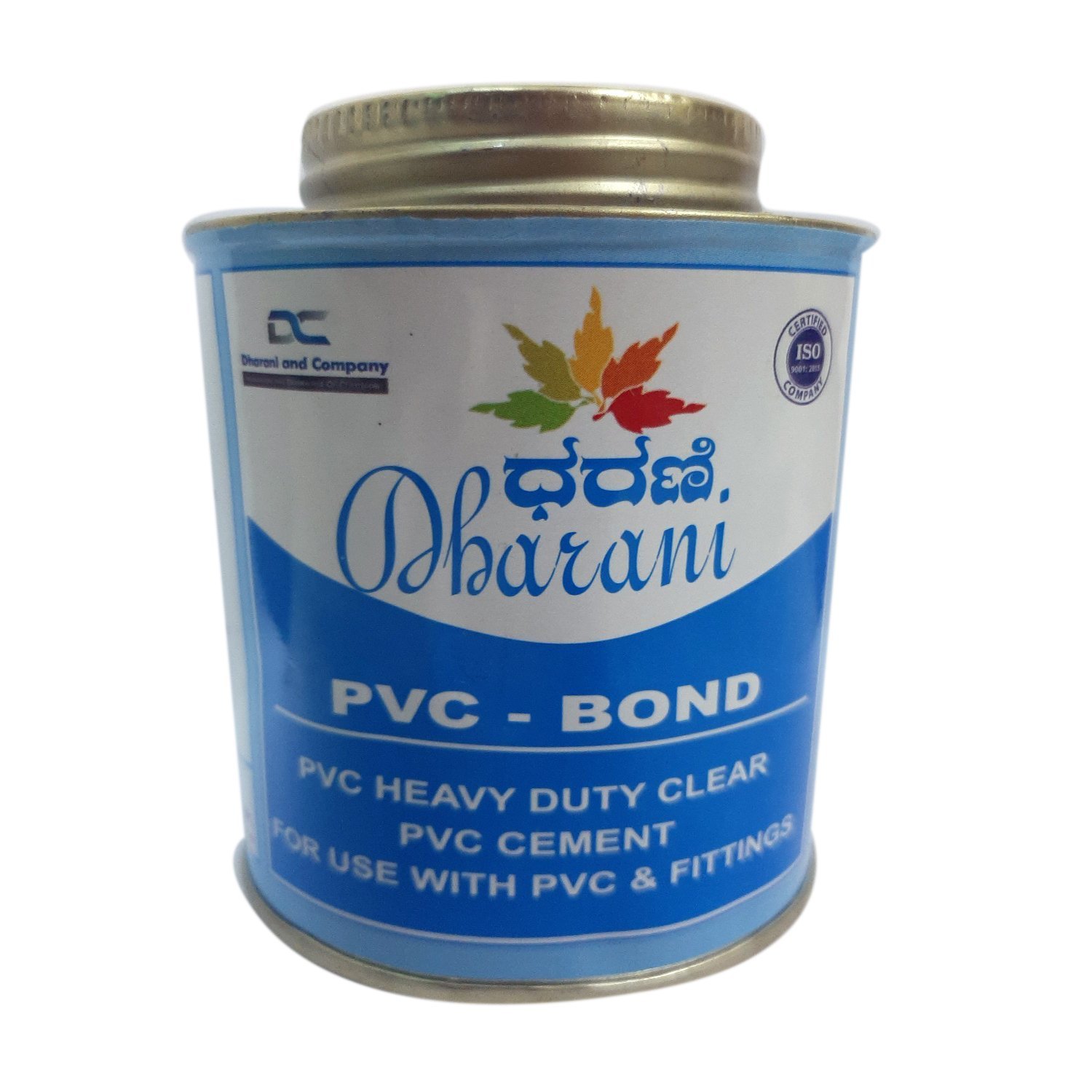 | PVC SOLVENT As a leading PVC solvent manufacturer, we take pride in delivering top-notch chemical solutions tailored to industrial needs. View product → |
Frequently asked questions
How does PVC solvent cement create a welded joint?
Solvents soften the PVC surfaces, allowing polymer chains to interdiffuse as the pipe enters the fitting socket. The solvent evaporates during curing, leaving a continuous joint.
How do you choose solvent cement viscosity for a PVC joint?
Match viscosity to pipe diameter, socket fit, application method, and installation position. Use a higher-viscosity cement when the joint has a larger gap or the cement must resist running.
What service conditions must you check before buying PVC solvent cement?
Check the PVC type, fluid chemistry, operating temperature, pressure, pipe size, and required standards or approvals. Confirm that the cement is approved for the intended system.
How should you prepare and cure a PVC solvent-welded joint?
Cut the pipe square, remove burrs, clean and dry both surfaces, apply cement evenly, insert fully with a twist, and hold the joint still for the specified set time. Wait for the product's full cure time before pressure testing.
What should an industrial PVC solvent cement specification include?
State the PVC material, cement type, viscosity, colour, pack size, application method, standards, approvals, shelf life, storage conditions, batch number, and technical data sheet requirements.
Related product
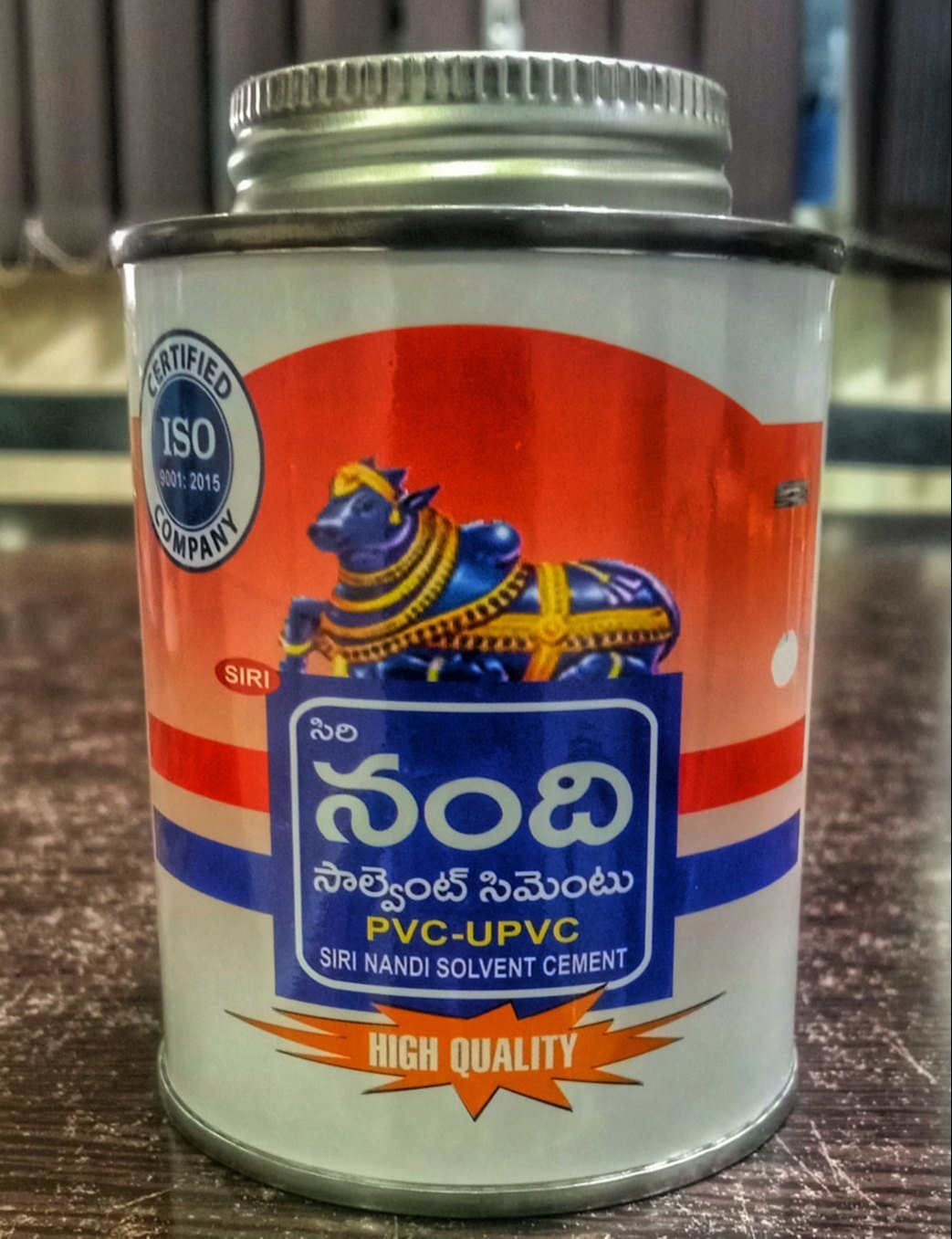 | PVC SOLVENT Siri Nandhi stands as a reputable PVC solvent manufacturer, delivering quality chemical solutions to meet industrial demands. View product → |