

A CPVC solvent-cement joint can withstand Bangalore’s monsoon service conditions when the mating surfaces are dry, correctly prepared and shielded from rain while the cement cures. You will be able to distinguish harmless humidity from conditions that require work to stop, follow a rain-safe joining method and verify the evidence needed before testing the line.
Key takeaways
- Keep CPVC surfaces free from droplets, condensation and trench water.
- Use a rain shelter and allow the joint to set before disturbance.
- Control cure time using temperature, humidity and the cement label.
- Inspect joint coverage, alignment and bead condition before pressure testing.
When Monsoon Moisture Makes CPVC Bonding Unsafe
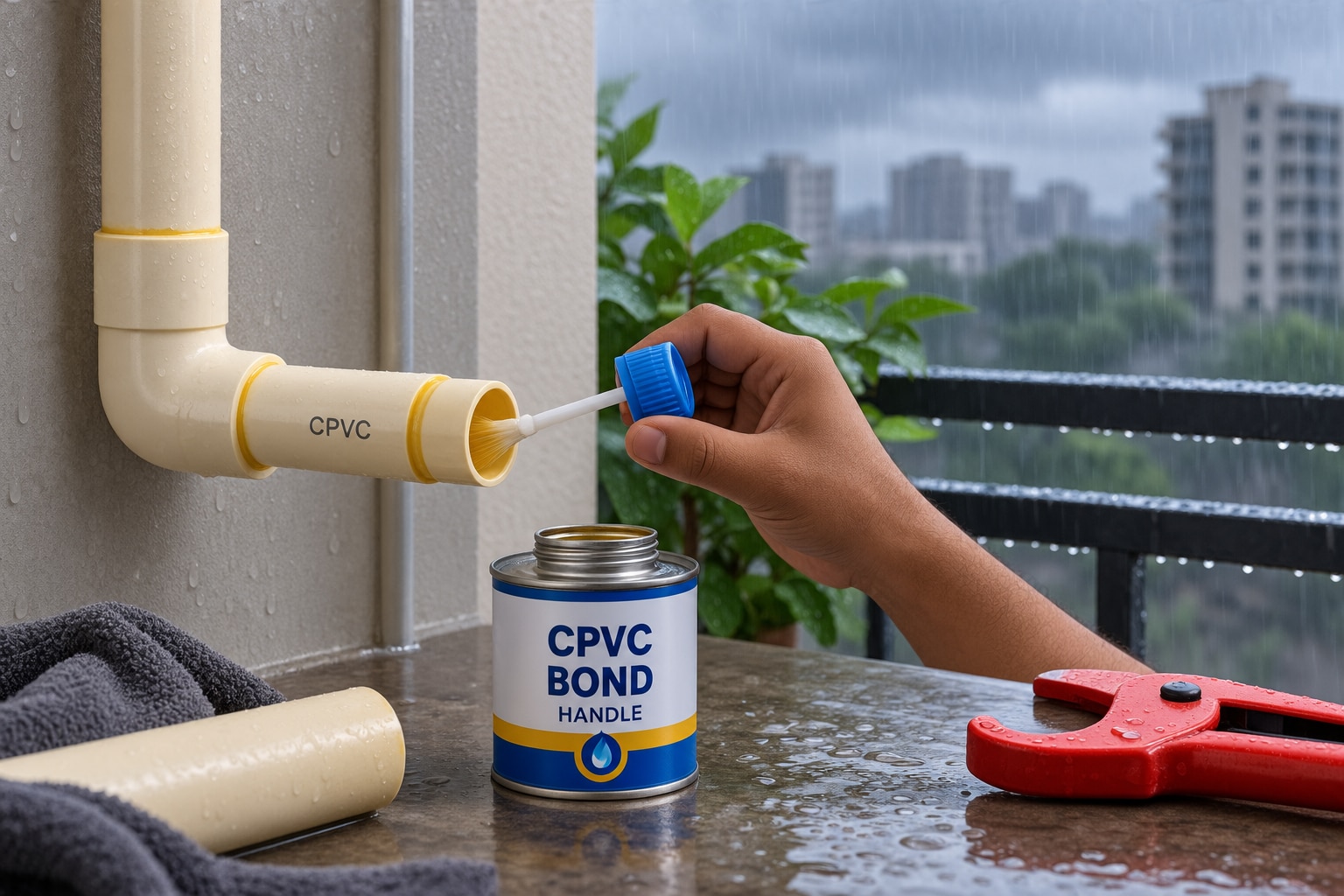
A cpvc bond for monsoon conditions Bangalore is viable only when the jointing surfaces remain dry and rain cannot reach the assembly during initial set and curing. Humid air alone does not equal liquid-water contamination, but visible droplets, condensation, running water, a wet trench or a damp pipe exterior can prevent solvent fusion.
Do not apply cement while the pipe, fitting socket or joint area is visibly wet. Use this moisture-control sequence:
- Stop work and wipe the pipe exterior, fitting socket and joint area with clean, non-shedding absorbent cloths. Recheck for droplets or condensation before applying cement.
- Remove water trapped inside the pipe before assembly. The cement goes on the pipe’s outside and the fitting’s inside, but internal water can run onto the mating surfaces during insertion.
- Move the work inside a dry tent or shield and keep rain away through initial set and curing. Provide controlled ventilation; never turn the enclosure into a solvent-vapour trap near flames, sparks or other ignition sources.
A damp trench is not made safe by adding extra cement. If moisture returns, stop again and dry the surfaces before jointing. The same rule applies to a cpvc pipe adhesive monsoon installation: protect the prepared joint, not merely the open cement container. A dry-looking bead does not make a rain-exposed joint acceptable.
The Rain-Safe CPVC Jointing Procedure
A rain-safe joint starts with dry mating surfaces, accurate preparation and protection from push-out. For a cpvc pipe adhesive monsoon installation, follow the pipe system and cement instructions rather than adding material to compensate for wet conditions.
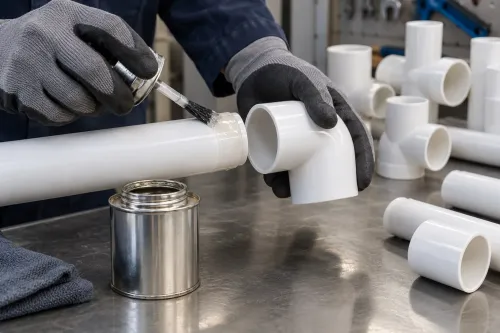
1. Cut the CPVC pipe square. An angled cut reduces socket contact and can leave part of the joint short of full insertion.
2. Remove external and internal burrs, then chamfer the pipe edge. A sharp internal ridge can scrape cement from the socket during insertion.
3. Clean the pipe and fitting socket with the materials specified by the system instructions. Remove dust, mud, grease and moisture, and let the surfaces dry.
4. Mark the required insertion depth around the pipe. This mark gives you visible proof that the pipe reached the socket bottom.
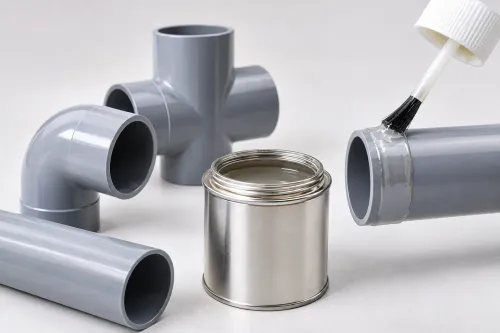
5. Apply CPVC-compatible solvent cement evenly to the specified surfaces. Use primer only when the cement label and pipe-and-fitting manufacturer’s instructions require or permit it for that system, size and cement type.
6. Insert the pipe fully to the mark. Rotate it only when the cement or pipe-system instructions direct that action.
7. Wipe away excess cement without twisting, pulling or otherwise disturbing the joint.
8. Hold or support the assembly against push-out and movement during initial set. Rain cannot turn a poorly prepared joint into a sound one.
Extra cement is not a cpvc solvent cement rainy weather solution. CPVC cement softens the mating surfaces and forms a solvent-welded joint, so contamination, gaps and poor preparation cannot be covered by a thicker application.
How Humidity Changes Cure Control
The joint needs the longer cure time listed by the cement manufacturer before it faces water, pressure or loading. High humidity, low temperature and falling temperature slow solvent evaporation, while a dry-looking surface or tacky cement does not prove that the solvent-welded joint has developed enough strength.
For cpvc solvent cement rainy weather work, compare the actual conditions with the specific product’s cure table:
| Condition | Cure-control decision | Protection required |
|---|---|---|
| Dry, warm, well-ventilated work | Use the table’s listed time for the pipe diameter | Keep rain and movement away |
| Cooler or wetter Bangalore conditions | Choose the longer listed time | Keep the joint dry and unloaded |
| Poorly ventilated enclosure | Treat the schedule as extended and improve ventilation | Do not seal solvent vapours inside |
Use a dry work enclosure or shield with controlled ventilation. A tent must not trap flammable solvent vapours; separate the work from flames, sparks and every other ignition source.
For a cpvc bond bangalore project, keep the joint protected from rain, standing water, movement, mechanical loading, burial, insulation and backfilling until the manufacturer-backed schedule is complete.
Do not accept “ready after 15 minutes” without the cement’s cure table and the actual pipe diameter, temperature, relative humidity and ventilation conditions. A dry surface is not a release criterion. Schedule jointing during a dry interval and extend protection whenever conditions worsen.
What to Inspect Before Pressure Testing
A CPVC bond for monsoon conditions in Bangalore is ready for commissioning only after the joint passes a physical inspection and the specified cure schedule is complete.
- Confirm a continuous insertion mark, or other evidence that the pipe reached full socket depth. Check full seating with no visible gap between the fitting and pipe.
- Inspect the joint for even cement coverage and contamination. Reject or investigate mud, water, stringy cement, or cement that appears contaminated.
- Check the fitting for displacement and the socket for cracks. Reject partial insertion, a displaced fitting, or a cracked socket.
- Confirm that the joint did not move during the complete cure period. Support failure can weaken the solvent-welded connection even when the pipe appears seated.
A dry outside cement bead is not an acceptance criterion. It does not prove that solvent has evaporated sufficiently or that the joint has developed enough strength for pressure, burial, insulation, backfilling, or loading.
Use the pipe-system manufacturer’s or applicable installation standard’s specified pressure, test duration, and procedure. Do not invent a pressure value. Prefer hydrostatic testing with clean water; do not replace it with compressed air because rain made water inconvenient, since compressed gas stores substantially more hazardous energy.
Record the cement product, batch or lot, application conditions, cure schedule used, and test result. This traceability connects a failed test to the actual CPVC bond for monsoon conditions Bangalore installation.
What to Require from a CPVC Bond Supplier in Bangalore
A supplier for monsoon work must prove compatibility, not merely promise waterproof performance. PVC and CPVC cements are not automatically interchangeable: reject a generic “PVC glue” label unless the pipe-and-fitting system manufacturer permits that product for CPVC. For a CPVC bond Bangalore project, request the following before purchase:
- Written CPVC compatibility and ASTM F493 applicability or confirmation.
- The current technical data sheet and safety data sheet.
- Batch or lot number, manufacture date and shelf-life information.
- Storage instructions, including the manufacturer’s temperature range.
- System-specific guidance on primer, application and cure requirements.
Inspect every container before use. Reject cement that is thickened, gelled, stringy or lumpy; never restore it with an unapproved solvent. Keep the can tightly closed except during application, pour small working quantities, recap promptly, and store it within the stated temperature range away from direct sunlight, flames, sparks and other ignition sources.
Repeated opening during humid work increases solvent loss and changes viscosity.
| Supplier evidence | Accept | Reject |
|---|---|---|
| Product identity | Explicit CPVC designation and system approval | Generic “PVC glue” claim |
| Material condition | Uniform cement within shelf life | Gelled, lumpy, stringy or thickened cement |
| Traceability | Batch, manufacture date and technical documents | Unmarked or undocumented container |
Dharani and Company can be assessed as a cpvc bond supplier bangalore buyers may approach by asking for these records and system-specific instructions, not by relying on the label alone. That is the defensible standard for a cpvc bond bangalore project.
Frequently asked questions
Can CPVC solvent cement be used during Bangalore monsoon weather?
Yes, when rain cannot reach the joint and the pipe and fitting surfaces remain dry during application, initial set and curing. Humid air alone does not equal liquid-water contamination.
How do you make a CPVC joint safely during rain?
Install a rain shelter, stop running water, dry the pipe exterior and fitting socket, then follow the cement label for cleaning, application, assembly and cure time.
How does humidity affect CPVC bond curing?
Humidity slows solvent evaporation when moisture condenses on the joint or the work area has poor airflow. Control the cure environment and use the manufacturer’s stated temperature and cure schedule.
What should you inspect before pressure testing a CPVC joint?
Check that the pipe reached the fitting shoulder, the joint has continuous cement coverage, there are no gaps or disturbed areas, and the full cure time has elapsed.
What should you ask a CPVC bond supplier in Bangalore?
Ask for the product technical data sheet, safety data sheet, batch number, shelf life, storage conditions, compatible CPVC systems and temperature-specific cure guidance.