
Coating buildup in threads, recesses, weld edges and internal corners can make sanding or blasting uneven, but chemical stripping introduces its own controls for substrate safety, residue and waste. You will be able to select a suitable process, run a controlled trial and compare the real cost per part or square metre before approving a production chemical.
Key takeaways
- Test every coating layer and substrate before selecting a paint stripper.
- Use a small test area to check swelling, staining, pitting, and adhesion loss.
- Record dwell time, temperature, film thickness, rinsing, and inspection results.
- Compare labour, rework, waste, consumption, and downtime—not product price alone.
Where chemical stripping improves coating-buildup removal
Chemical stripping improves coating-buildup removal when the coating is multilayered, strongly bonded, or located where abrasives cannot reach. A paint remover for manufacturers must be judged against the complete system: topcoat, primer, conversion coating, and aged residue—not just the visible finish.
| Coating system | Where chemical stripping helps | Where it stops being fastest |
|---|---|---|
| Alkyd enamel, acrylic, and NC lacquer | Softens organic films for scraping, including repeated buildup | Large, flat areas with thin films may be faster to sand or blast |
| Polyurethane and epoxy | Reaches bonded layers without embedding abrasive in the surface | Thick, cured films can require multiple applications and long dwell times |
| Powder coating | Useful on intricate parts and failed recoating batches | Heavy powder buildup can make blasting or thermal stripping quicker |
| Water-based coatings | Removes softened films with limited mechanical force | A thin, fresh film may come off faster by solvent wiping |
| Primer plus topcoat or conversion coating | Helps expose recesses and separate layers when the formulation matches them | A stripper that removes only the topcoat leaves an adherent primer behind |
Threads, weld edges, internal corners, blind recesses, and perforations justify chemical treatment because sanding cannot contact them uniformly and blasting can create uneven profiles. Selectivity is the advantage: the chosen chemistry can attack organic coatings while limiting attack on steel, stainless steel, or aluminium within a defined concentration, temperature, agitation, and dwell-time window.
Chemical stripping stops being the fastest option when the part is flat, the film is thin, and blasting or sanding can run continuously. Rinsing, residue removal, ventilation, waste handling, and repeated applications can outweigh the chemical’s apparent speed.
How to protect the substrate during compatibility testing
A stripper is suitable only after a hidden test patch proves that it removes the complete coating stack without attacking the substrate. Test the actual combination of substrate, primer, topcoat, coating thickness, temperature, concentration and dwell time; a laboratory panel cannot represent aged production buildup.
| Substrate | Coating combinations to test | Main compatibility risk |
|---|---|---|
| Mild steel or stainless steel | Alkyd enamel, polyurethane, epoxy, acrylic, powder coating, NC lacquer and water-based coatings | Flash rust, staining or residue after rinsing |
| Aluminium, zinc, galvanized steel or magnesium alloy | Acrylic, alkyd or selected polyurethane systems | Strong alkaline chemistry can etch or darken the metal |
| PVC or UPVC | Compatible acrylic, NC lacquer or water-based coatings | Solvent swelling, softening, whitening or dimensional change |
| Wood | Alkyd, acrylic, NC lacquer or water-based coatings | Fibre swelling, stain migration and raised grain |
| Concrete or composite surfaces | Compatible organic coatings after a small patch test | Porosity, binder attack or retained stripper in the surface |
Score a thick, multilayer coating only if the supplier’s instructions permit it. Apply the trial product at the proposed production rate, then record coating type and thickness, temperature, dwell time, removal method, rinse method, residue and substrate appearance. Repeat the test on an unexposed area if the first application leaves primer or conversion coating behind.
Before approval, measure post-strip cleanliness or rinse-water pH, inspect for pits, swelling, discoloration and softened markings, and run the intended repaint adhesion test. Confirm ventilation, worker controls and destination-market restrictions, including rules affecting methylene chloride.
These checks define the paint stripper benefits for manufacturers bangalore buyers expect rather than assuming every “paint remover for manufacturers” works on every part.
How to run a repeatable stripping cycle
1. Record the coating system, thickness, substrate, part temperature, air temperature, humidity, product batch, and intended application rate. Run a hidden test patch on every new combination: alkyd enamel, polyurethane, epoxy, acrylic, powder coating, NC lacquer, and water-based coatings behave differently.
Test mild steel, stainless steel, aluminium, galvanized steel, concrete, wood, PVC, UPVC, and composites separately.
2. Remove oil, loose scale, and dirt, then mask seals, bearings, labels, drains, and openings. Score a continuous coating film with a plastic abrasive pad or approved tool only when the technical data sheet requires it. Provide forced ventilation, chemical-resistant gloves, eye protection, and respiratory controls specified by the safety data sheet.
3. Apply an even measured film by brush, roller, or spray. Record the rate and keep the part and stripper within the supplier’s stated temperature range; do not improvise if the label gives no range. Keep rain and condensation away, because water can dilute the product and extend dwell.
4. Start timing when the whole surface is covered. Check a small area at the stated dwell time, then extend or repeat the application if the coating has not blistered or softened. Never leave the chemical beyond the qualified maximum dwell; exposed metal, aluminium, galvanized layers, plastics, and composites can stain, swell, or lose strength.
5. Lift softened coating with a plastic scraper or non-sparking tool. Collect sludge immediately rather than allowing it to dry in seams, threads, weld edges, or recesses.
6. Rinse or wipe using the specified method. For alkaline products, verify the final surface pH or another defined cleanliness limit, then dry completely with clean air before inspection and recoating. Residue that looks harmless can destroy adhesion or accelerate corrosion.
How stripping affects throughput, consumption and total cost
Compare cost per square metre or part, not drum price. Record cycle time, operator minutes, chemical consumption, waste treatment, rework and the surface condition required for repainting. A paint stripper bangalore trial is useful only if it uses production coating thickness and records these figures.
| Option | Speed and labour | Waste and surface quality |
|---|---|---|
| Chemical stripping | Dwell time slows the cycle, but one application can reach recesses, threads and weld edges with less manual abrasion. | Spent chemical and coating residue require controlled disposal; the surface stays dimensionally accurate and largely profile-free. |
| Abrasive blasting | Fast on open surfaces; needs masking, blast media handling and skilled operators. | Creates media waste and can alter profile, round edges or lodge abrasive in features. |
| Sanding | Slow for large areas and labour-heavy around corners. | Produces dust and uneven preparation; operator pressure can remove substrate. |
| Thermal stripping | Rapid on suitable metal parts. | Fumes, fire controls and softened residue are concerns; heat can distort parts or damage coatings and seals. |
| High-pressure water | Fast removal on accessible surfaces with little dry dust. | Generates contaminated wastewater and can drive water into joints or flash-rust steel. |
| Alkaline cleaning | Effective on selected coatings with controlled heating and immersion. | Often consumes more rinse water; strong chemistry can attack aluminium, zinc and magnesium. |
| Solvent wiping | Useful for thin films, touch-up and final residue removal, not heavy buildup. | High labour and VOC exposure; usually leaves the substrate intact. |
Calculate labour, ventilation, PPE, rinsing, wastewater treatment and disposal before choosing. Compare solvent, alkaline and semi-aqueous chemistry by total cost and regulatory controls, not claimed strength.
How to qualify a supplier and approve the process
Do not release a stripper for manufacturing until the supplier proves repeatable removal, substrate safety, and controlled supply. A laboratory panel is not enough: aged multilayer buildup can include epoxy primer, polyurethane topcoat, powder coating, acrylic, alkyd enamel, NC lacquer, or water-based coatings.
1. Request the technical data sheet, SDS, certificate of analysis, batch number, shelf life, application rate, dwell-time range, usable temperature range, ventilation requirements, rinse method, and repaint-adhesion results. Require testing on the complete coating stack and actual substrate, including mild steel, stainless steel, aluminium, galvanized steel, PVC, UPVC, wood, concrete, or composite where relevant.
2. Run a documented production-representative trial. Record coating thickness, temperature, humidity, scoring or abrasion, application method, dwell time, scraping tool, repeat applications, rinse or wipe method, residue, substrate appearance, drying time, and new-coating adhesion. Use a hidden test patch before approving plastics, elastomers, adhesives, markings, composites, aluminium, zinc, or magnesium.
3. Check the SDS for hazardous ingredients, flash point, PPE, exposure controls, ventilation, storage, spill response, transport classification, and disposal guidance. “Low odour” and “non-chlorinated” do not prove safe handling. Confirm destination-market restrictions, including rules affecting methylene chloride.
4. Set purchasing controls with the industrial paint stripper supplier: approved product code, batch COA, consistent packaging, minimum shelf life on delivery, lead time, batch traceability, change notification, and waste-document requirements. If Dharani and Company is the paint stripper manufacturer Bangalore buyer, apply the same evidence standard to every proposed source.
Related product
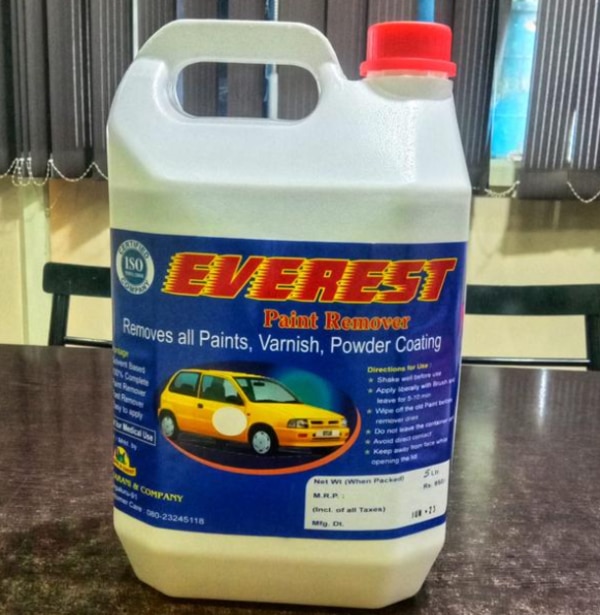
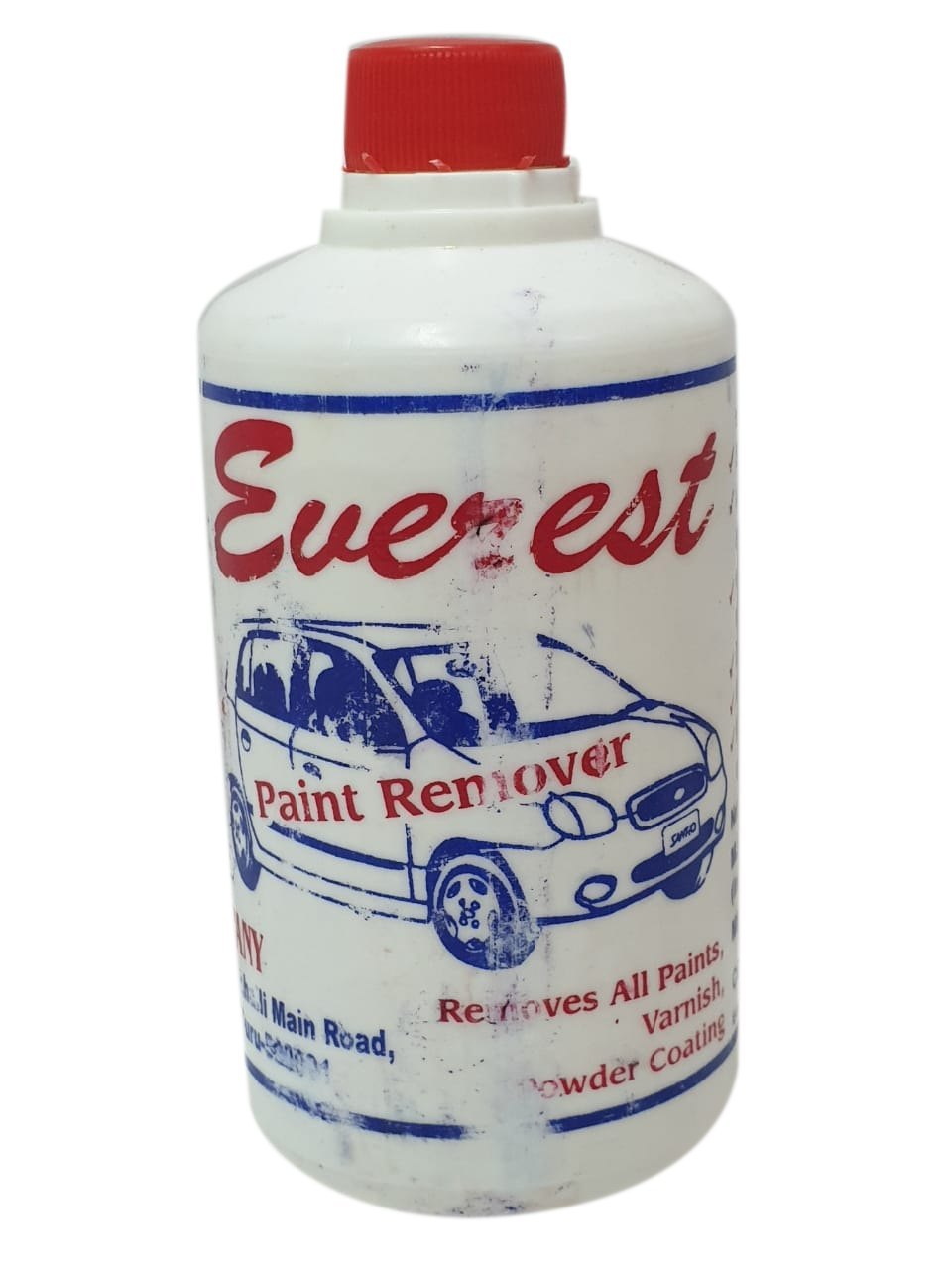 | Paint Remover Everest Paint Remover is a trusted solution for efficient paint removal. View product → |
Frequently asked questions
When does chemical stripping improve coating-buildup removal?
Use chemical stripping for multilayered or strongly bonded coatings and areas abrasives cannot reach. Test the complete system, including topcoat, primer, conversion coating, and aged residue.
How can you protect the substrate during compatibility testing?
Test an inconspicuous area or representative coupon first. Inspect for swelling, staining, pitting, softening, dimensional change, and loss of adhesion after stripping and rinsing.
What should a repeatable stripping cycle record?
Record coating condition, application amount, dwell time, temperature, agitation, removal method, rinsing, drying, and final inspection results for each trial.
How should manufacturers compare stripping costs?
Calculate chemical consumption, labour, masking, rinsing, waste handling, rework, equipment cleaning, and production downtime alongside the purchase price.