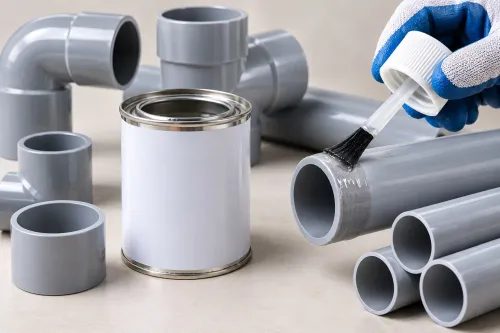
Stored PVC solvent cement is not restored by stirring alone: heat, evaporation, moisture, contamination, and resin settling can change how it wets surfaces and forms a joint. By the end, you will have a quarantine-to-release procedure, clear rejection triggers, a practical pipe-and-fitting test, and storage controls for the next batch.
Key takeaways
- Reject containers that are swollen, leaking, or badly damaged.
- Mix settled cement gently; do not alter its formulation with added solvent.
- Quarantine gelled, crystallised, separated, or persistently stringy material.
- Release recovered batches only after a representative PVC joint test.
Inspect the Container and Product Before You Attempt Recovery
A stored PVC cement is merely settled when gentle mixing restores a uniform liquid without skin, gel particles, crystals, phase separation, abnormal odour, or container damage. Persistent stringy gel, hard lumps, heavy skinning, irreversible separation, or a swollen or leaking container indicates deterioration, not a mixing problem.
1. Confirm what you have. PVC solvent cement contains dissolved PVC resin and a solvent blend; cleaner or primer may contain little or no resin. Never try to restore PVC solvent for performance Bangalore by adding cleaner, primer, generic thinner, THF, MEK, or cyclohexanone. That changes resin solids, solvent balance, working time, and joint performance.
2. Check the label for product name, batch number, manufacture date, expiry or retest date, and storage limits. Obtain the current TDS and SDS. An unopened container past its stated shelf life is not equivalent to fresh stock because it still flows.
3. Examine the unopened container for swelling, leaks, corrosion, a loose lid, damaged threads, or a failed seal. After it reaches the work area temperature, open it away from ignition sources and inspect colour, surface skin, sediment, crystals, phase separation, and flow.
4. Record the odour only as a screening observation. Stronger odour can mean solvent evaporation, while weaker odour can indicate containment or composition change; neither releases PVC solvent after storage.
Retain a labelled sample linked to the lot before any recovery attempt. Do not approve material by colour or viscosity alone: stirring can restore apparent flow while solvent balance or resin concentration remains wrong. That batch needs documented application and joint testing against the TDS and ASTM D2564 requirements.
Account for Bangalore Heat, Humidity, Sunlight, and Evaporation
Repeated high warehouse temperatures accelerate solvent loss, while daily heat cycles drive evaporation through loose lids and increase headspace concentration. Direct sunlight heats the container beyond room temperature, and poor ventilation lets flammable vapour accumulate. Monsoon humidity creates condensation when a cold container is opened in warm air.
Keep the container closed until it reaches the work area’s temperature.
For pvc solvent storage recovery bangalore, record:
- Batch number, manufacture date, expiry or retest date, and the current TDS and SDS
- Opening date, each transfer or partial use, remaining quantity, and headspace
- Highest and lowest storage temperatures, temperature cycling, sunlight exposure, and ventilation
- Monsoon dampness, condensation events, lid changes, seal damage, and container swelling
- Storage location, quarantine date, inspection findings, and the person who handled the lot
| Storage condition | Performance risk | Record or control |
|---|---|---|
| Sustained heat or sunlight | Faster evaporation and altered solvent balance | Temperature history and shade exposure |
| Loose lid or damaged seal | Solvent loss, stronger odour, skin formation | Closure inspection and opening history |
| Cool container opened in humid air | Condensed water entering the formulation | Equilibration time and visible water |
| Poor ventilation | Flammable vapour accumulation | Ventilation condition and ignition controls |
Do not add solvent because water is visible or the cement has thickened. Use only a manufacturer-approved adjustment; otherwise quarantine the lot. Odour and colour are screening observations, not release criteria. This record forms the basis of industrial pvc solvent maintenance.
Recover a Settled Batch Without Changing Its Formulation
Quarantine the lot and treat settling as recoverable only if the container, seal, odour, colour, and flow show no clear deterioration. Do not add generic thinner, THF, MEK, cyclohexanone, cleaner, primer, or water; changing the solvent balance can reduce resin solids and joint strength.
Use this industrial pvc solvent maintenance sequence:
- Record the batch number, opening date, storage temperatures, remaining quantity, and any leakage or evaporation.
- Let the closed container reach the work area’s temperature before opening; this reduces condensation when a cool pack enters warm, humid Bangalore air.
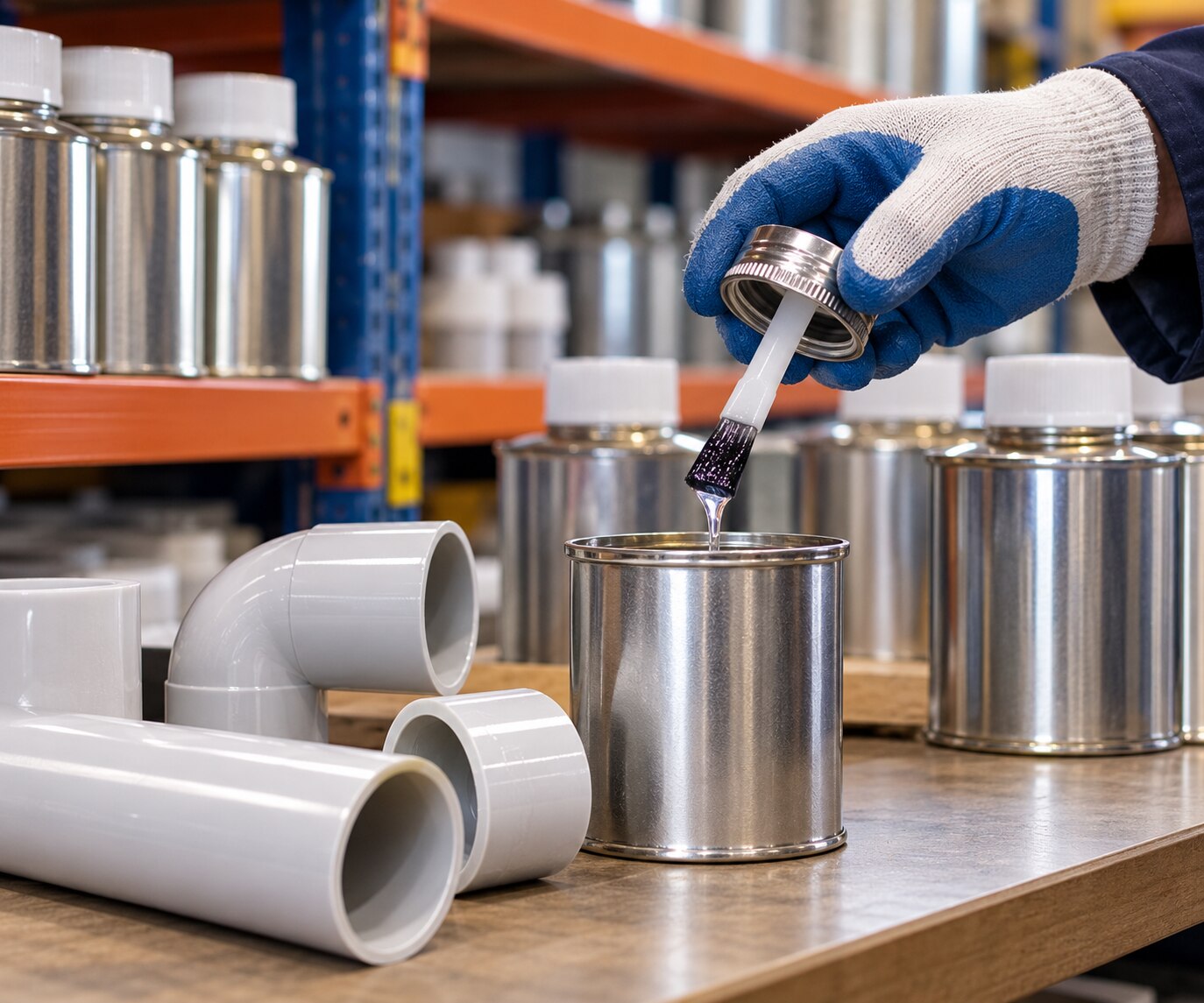
- Mix slowly with a clean, dry, chemically compatible tool until the settled layer is uniform. Do not shake, use high-speed dispersion, or inject compressed air because bubbles and flammable vapour increase.
- Filter only when the manufacturer approves the filter material and method. A compatible fine filter can remove foreign particles, but filtering gelled cement does not restore its formulation.
- Take a labelled retained sample after mixing, keeping the container closed between operations. Compare viscosity or flow, colour, odour, and sediment against the current technical data sheet.
Use the safety data sheet for gloves, eye protection, ventilation, ignition control, spill response, and waste handling. Collect rejected cement, contaminated wipes, filter residue, and washings as flammable solvent waste; never pour them into a drain or onto soil.
If adjustment is authorised, follow the manufacturer’s exact solvent and addition limit. Otherwise, do not attempt to restore pvc solvent for performance bangalore applications; hold the batch for technical evaluation.
Release the Batch Only After a Representative Joint Test
Release a recovered batch only when a representative joint test matches the product TDS and applicable ASTM D2564 requirements. A PVC cement can regain acceptable apparent viscosity after stirring while its solvent balance or PVC-resin concentration has changed.
- Take a documented sample from the recovered lot, retain a sealed portion, and record the batch number, manufacture date, storage history, and sample date.
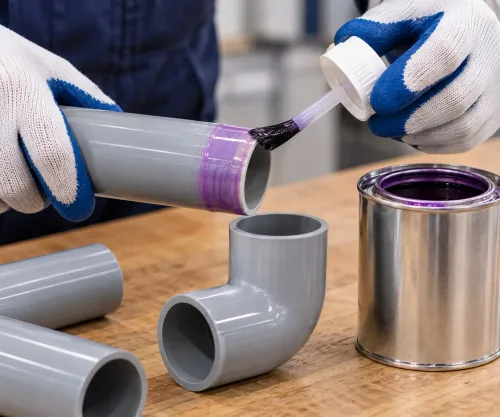
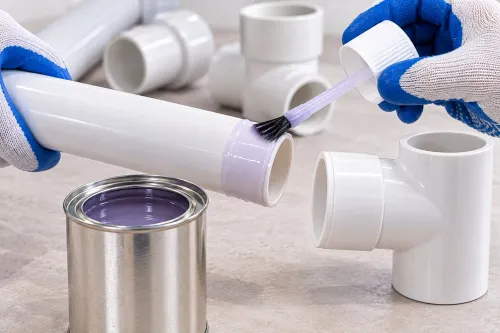
- Apply the cement to representative PVC or UPVC pipe and fittings using the specified surface preparation, applicator, assembly time, and cure period.
- Record wetting, spread, open time, stringing, application feel, and whether the cement skins, gels, or dries unevenly.
- Inspect the cured joint for incomplete coverage, soft areas, separation, and other failure against the manufacturer’s specified joint or lap-shear performance.
- Compare the result with a fresh approved sample of the same product when available, not with appearance alone.
Odour is only a screening observation for PVC solvent after storage. Stronger odour can indicate evaporation, while weaker odour can reflect containment or composition changes; neither result proves usability. Do not add thinner, THF, MEK, cyclohexanone, cleaner, or primer to force a passing result.
For pvc solvent storage recovery bangalore, keep the test records with lot traceability and the current TDS and SDS. Release the batch only when every required result passes. Quarantine it for manufacturer evaluation when results conflict; reject it when the joint test fails or visible contamination remains.
Quarantine Failed Material and Prevent Repeat Deterioration
Release a stored lot only when its identity, shelf-life status, physical checks, and representative pipe-and-fitting trial meet the product TDS and applicable ASTM D2564 requirements. Viscosity, colour, or odour alone cannot justify release.
- Release: The container and seal are sound, the batch is within its stated shelf life or retest date, no gel or phase separation remains after controlled mixing, and wetting, open time, application behaviour, and joint performance match the TDS. Retain a sample and record the approval.
- Send for manufacturer evaluation: The lot is within traceable date limits but shows unusual viscosity, sediment, skin, container swelling, corrosion, or poor application without a confirmed failure. Do not add thinner; obtain a written rework instruction before any adjustment.
- Reject: The container leaked, the seal failed, the batch is materially beyond its shelf life, or the trial joint fails the manufacturer’s specified acceptance criteria. Label it “Do not use” and collect it as flammable solvent waste; never pour cement, wipes, or washings into drains or soil.
Require a pvc solvent supplier bangalore to provide the batch number, manufacture date, expiry or retest date, original storage limits, current TDS, current SDS, certificate of analysis, and written rework or disposal instructions. Dharani and Company should supply those records for every lot, not only on request.
Your industrial pvc solvent maintenance procedure should log opening date, quantity, temperature history, and retain-sample location. Store sealed containers upright in a cool, dry, shaded, ventilated area with secondary containment, away from ignition sources and incompatible chemicals.
Related products
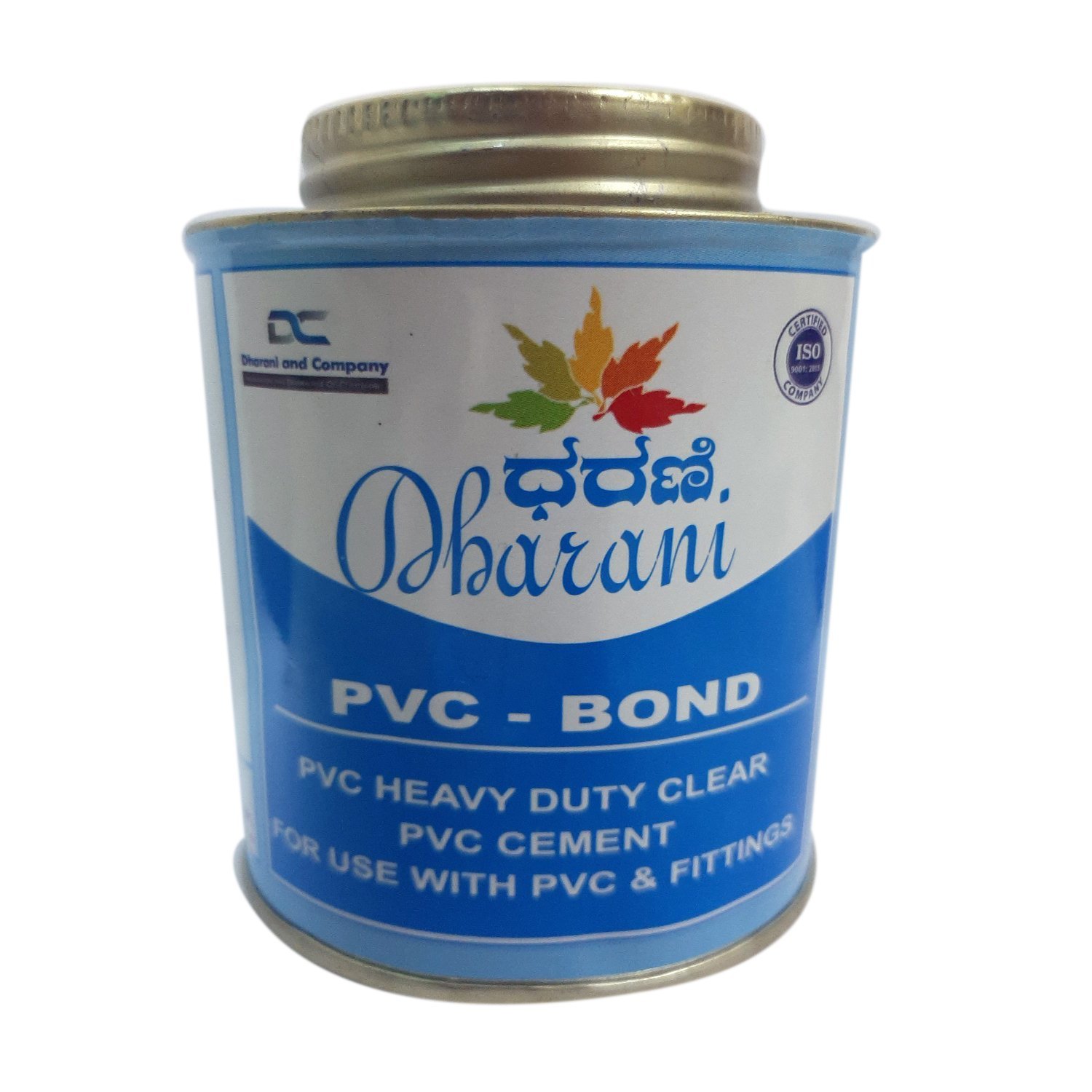 | PVC SOLVENT As a leading PVC solvent manufacturer, we take pride in delivering top-notch chemical solutions tailored to industrial needs. View product → |
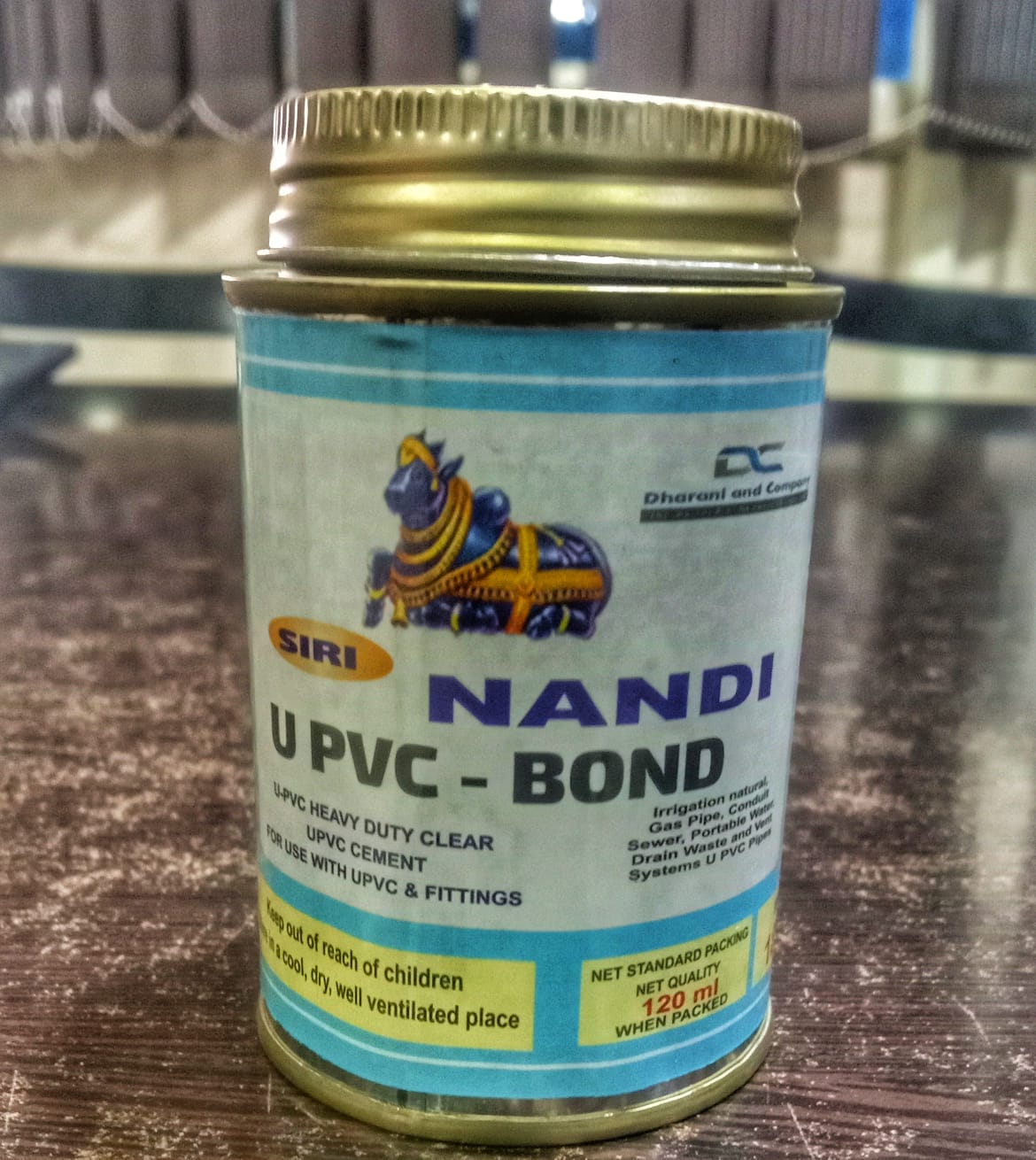 | UPVC SOLVEN CEMENT As a leading UPVC Solvent Cement manufacturer, we pride ourselves on delivering high-quality chemical solutions tailored to the specific needs of the... View product → |
Frequently asked questions
How do you tell whether stored PVC cement is settled or deteriorated?
Gentle mixing can recover settled cement when it becomes uniform without skin, gel particles, crystals, phase separation, abnormal odour, or container damage. Persistent gel, hard lumps, heavy skinning, irreversible separation, or a swollen or leaking container indicates deterioration.
How should Bangalore heat, humidity, sunlight, and evaporation affect storage checks?
Inspect for heat exposure, direct sunlight, moisture entry, seal damage, and evaporation. Compare the material’s appearance, odour, consistency, and container condition with its original specification before attempting recovery.
How can you recover a settled PVC solvent batch without changing its formulation?
Confirm the container is sound, then mix gently until the liquid is uniform. Do not add solvent, thinner, or other chemicals to compensate for thickening or evaporation.
When can a recovered PVC solvent batch be released for use?
Release it only after a representative joint test confirms the expected wetting, assembly, bond formation, and finished joint condition. Quarantine any batch that fails the test.
Related product
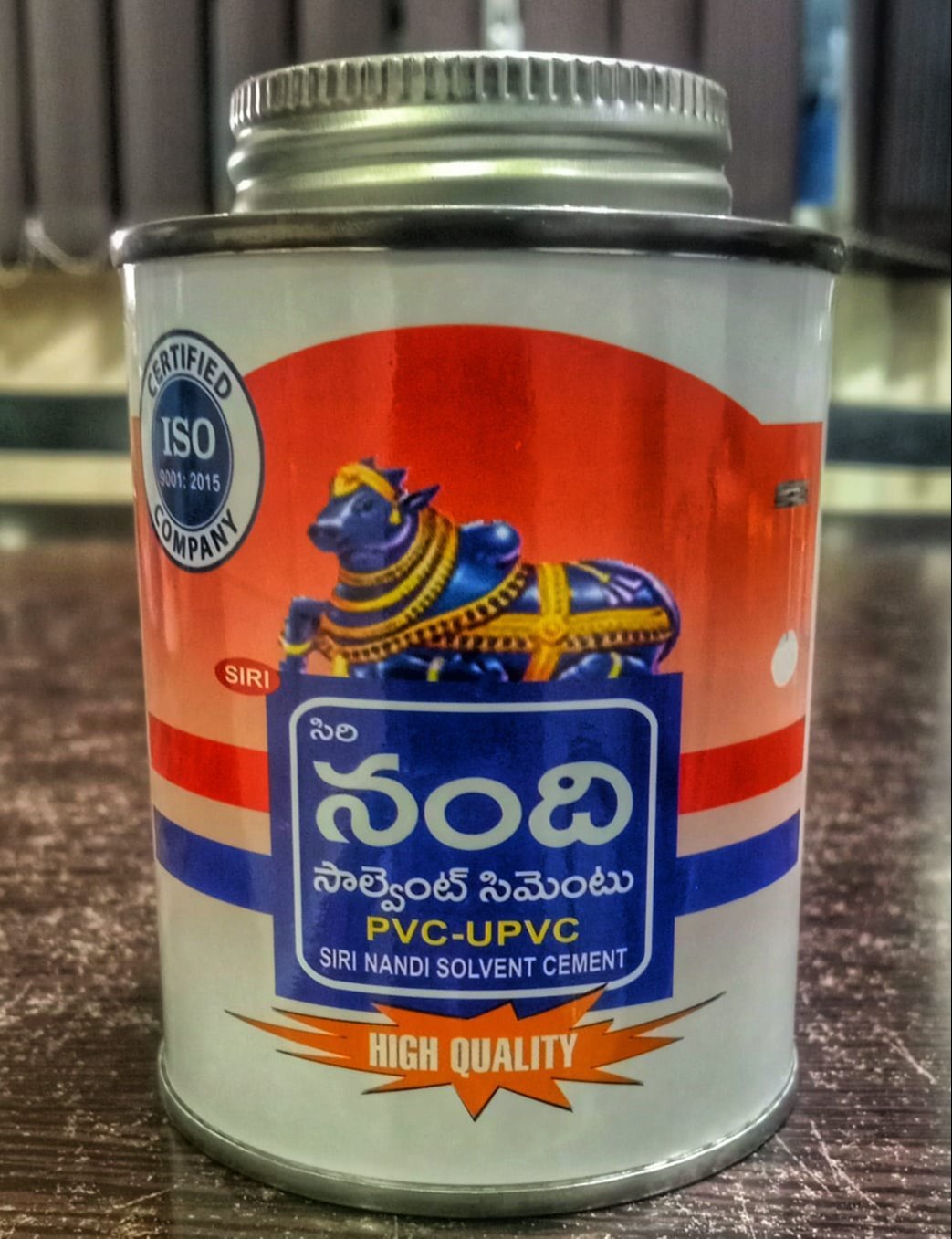 | PVC SOLVENT Siri Nandhi stands as a reputable PVC solvent manufacturer, delivering quality chemical solutions to meet industrial demands. View product → |
Keywords