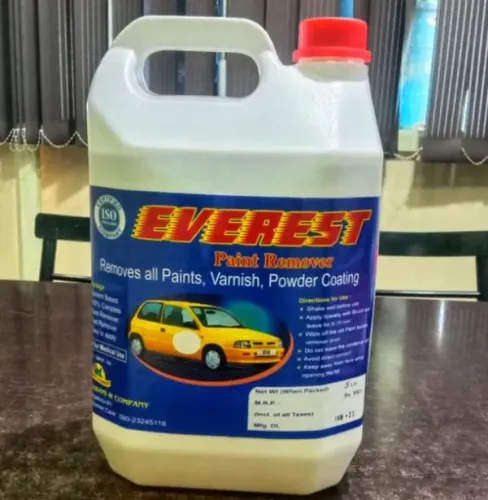
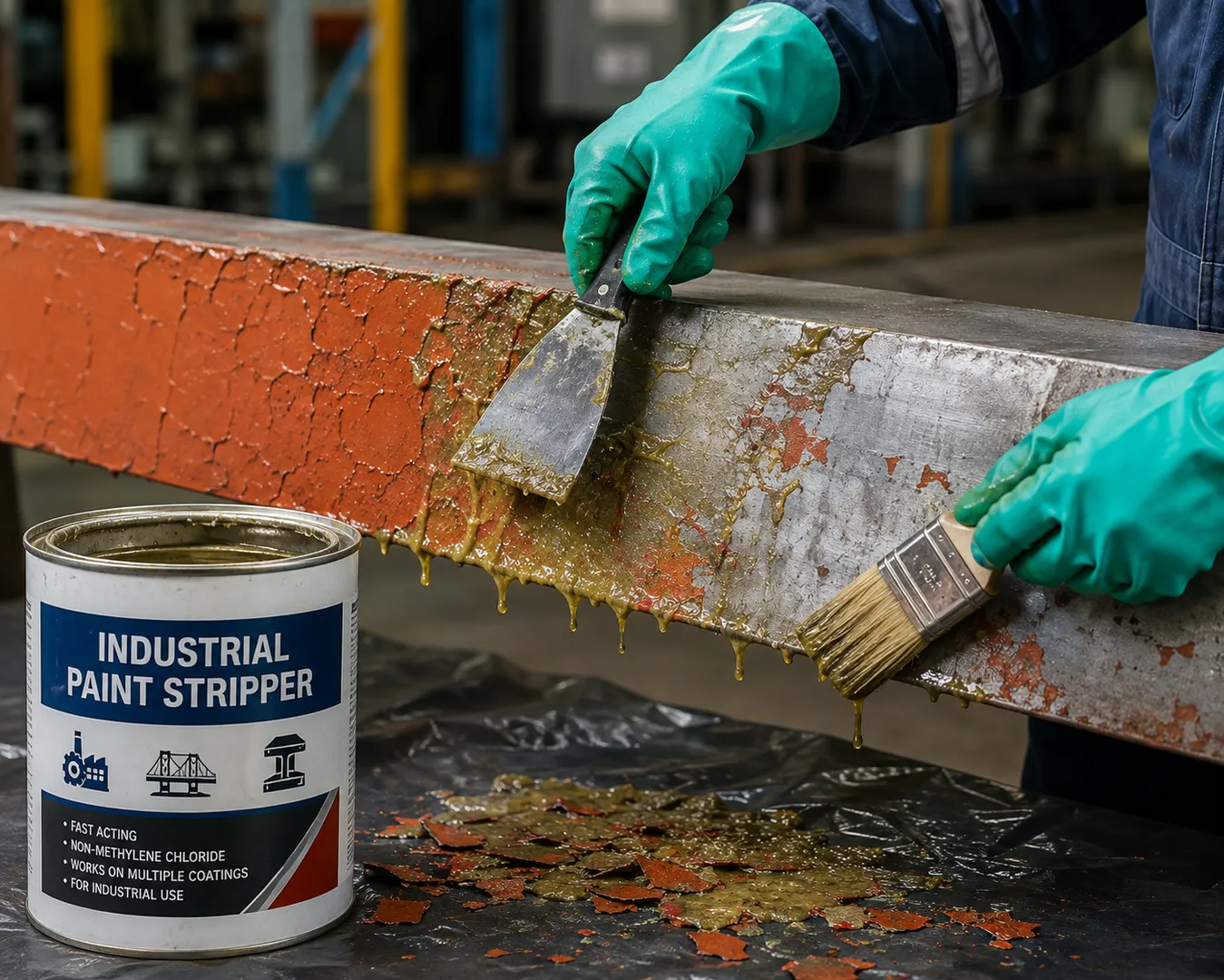
Industrial paint removal is not simply about finding the strongest chemical available. Different coatings, substrates and production environments require different approaches. For manufacturers, maintenance teams and engineering companies, understanding how industrial paint stripper formulations influence performance can lead to better process decisions.
When evaluating an Industrial Paint Stripper Manufacturer, buyers should look beyond basic removal claims and examine how the formulation fits their specific application.
Why Different Coatings Need Different Chemistry
Industrial coatings can include several layers and formulations. Enamel, lacquer, varnish, protective coatings and other finishes may respond differently to chemical stripping.
A stripper works by interacting with the coating and weakening its structure. The rate and extent of this process depend on the chemistry of the coating and the formulation of the stripper.
Variables such as coating thickness, age and previous surface treatments can also affect results.
Substrate Compatibility Is Equally Important
Removing the coating is only half the job. The underlying surface must remain suitable for whatever process follows.
For example, an industrial user may need to remove paint from a metal component before repainting, machining, inspection or refurbishment. The stripping process should therefore be selected with the base material in mind.
Important substrate considerations include:
- Steel
- Aluminium
- Compatible alloys
- Machinery components
- Automotive parts
- Industrial equipment
Each application should be assessed individually.
Factors That Influence Stripping Performance
A formulation's performance can be affected by:
- Chemical composition
- Coating thickness
- Temperature
- Contact duration
- Application thickness
- Agitation
- Removal technique
- Surface condition
This explains why laboratory or small-area testing can be valuable before implementing a chemical stripping process across a large production batch.
Why Manufacturing Consistency Matters
Industrial buyers often purchase chemicals repeatedly. A formulation that changes significantly from one batch to another can affect production processes.
Manufacturers should therefore consider whether their chemical supplier has appropriate quality-control practices and batch identification systems.
Consistent production can help businesses maintain predictable:
- Stripping performance
- Process time
- Material consumption
- Surface results
- Cleaning requirements
This is particularly relevant when the chemical forms part of a standardized manufacturing workflow.
What Procurement Teams Should Evaluate
When assessing an industrial paint stripper manufacturer, procurement managers can use a practical checklist:
Product suitability: Is the formulation designed for the coating and substrate?
Technical information: Are application and storage requirements clearly documented?
Packaging: Are containers suitable for transportation and warehouse storage?
Batch traceability: Can individual batches be identified?
Supply capacity: Can the manufacturer support recurring industrial demand?
Customization: Where applicable, can the supplier discuss application-specific requirements?
Technical communication: Can product-related questions be answered clearly?
These factors often have greater long-term importance than an initial price difference.
Bengaluru's Industrial Demand
Bengaluru has a strong ecosystem of engineering companies, automotive suppliers, manufacturing facilities and maintenance operations. These businesses may require chemical solutions for refurbishment, surface preparation and equipment maintenance.
Dharani and Company operates in the industrial chemical and adhesive segment, supporting businesses that require chemical products for diverse industrial applications.
For an industrial buyer, the best paint stripper is not necessarily the most aggressive formulation. It is the product that removes the required coating effectively while fitting the substrate, process, handling requirements and downstream operation.
A careful selection process, supported by product testing and technical documentation, can make chemical paint removal more controlled and repeatable.
Keywords